
Short Answer
Overview
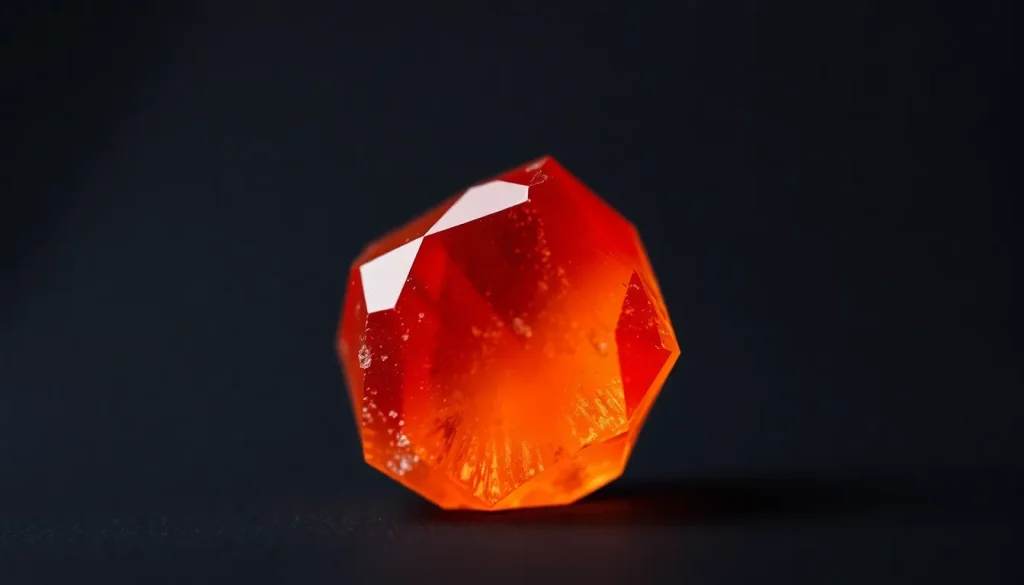
Austinite is a calcium‑zinc arsenate mineral that forms striking orange to red crystals. Its chemical composition, CaZn(AsO4)2·2H2O, places it in the arsenate class, and it crystallises in the orthorhombic system. With a Mohs hardness of 4.5–5, it is relatively soft for a gemstone, which influences its use in jewelry. The stone’s vivid colour and well‑developed crystal habit make it a collector’s favourite, though it is not a traditional birthstone.
History and Origin
The name “austinite” honours the American mineralogist Austin, who first described the mineral in the early 20th century. The type locality is the Franklin mining district of Arkansas, United States, where it occurs in oxidised zones of zinc‑rich arsenic deposits. Similar occurrences have been reported from Mexico, France, and Spain, where hydrothermal alteration of arsenic‑bearing ores produces the mineral.
Meaning and Symbolism
In folklore, austinite’s bright orange‑red hue is associated with vitality, courage, and creative energy. It is said to inspire confidence and help the wearer express personal power. Because of its vivid colour, it is sometimes linked to the element of fire and the concept of transformation.
Healing and Metaphysical Properties
Crystal‑healing practitioners attribute austinite with the ability to stimulate the Solar Plexus chakra, promoting self‑esteem and motivation. Traditional beliefs suggest it can aid in overcoming fear, encourage optimism, and support emotional balance. These claims are not medically verified and should not replace professional health advice.
Varieties and Types
Austinite is generally found in a single colour range, but variations in hue occur depending on trace impurities. Some specimens exhibit a more yellow‑orange tint, while others display a deep, ruby‑like red. The mineral is sometimes grouped with other arsenate specimens such as scorodite, though austinite remains distinct due to its calcium‑zinc composition.
Jewelry Uses and Care
Because of its modest hardness, austinite is best suited for pendants, earrings, and brooches where it is less likely to be subjected to abrasion. Protective settings such as bezel or glass‑backed mountings help safeguard the stone. Cleaning should be performed with a soft, damp cloth and mild soap; avoid ultrasonic cleaners, steam cleaning, or harsh chemicals, as they may damage the surface or alter the colour.
Buying Guide
When purchasing austinite, consider the following factors:
- Colour intensity: Deep, saturated orange‑red hues are most prized.
- Clarity: Look for stones with minimal inclusions that do not obscure the colour.
- Cut and shape: Well‑cut crystals display the orthorhombic habit and enhance brilliance.
- Treatment disclosure: Natural austinite is rarely treated, but confirm that no dyes or stabilisers have been applied.
- Certification: Reputable dealers will provide a gemological report confirming the mineral’s identity.
Given its limited occurrence, high‑quality austinite can be relatively expensive, but the price varies widely based on size, colour, and provenance.
FAQ
What is Austinite good for?
Austinite is prized for its vibrant orange‑red colour in jewelry and collectors’ pieces. Traditionally, it is believed to boost confidence and creative energy, though these metaphysical claims are not scientifically proven.
Is Austinite rare?
High‑quality austinite is relatively rare because it occurs in limited localities and only forms under specific oxidising conditions. Fine, saturated specimens are less common than lower‑grade material.
How can you tell if Austinite is real?
Authentic austinite shows orthorhombic crystal habit, a Mohs hardness of 4.5–5, and a vitreous luster. Refractive index testing and X‑ray diffraction can confirm its composition. Professional gemological appraisal is recommended for certainty.
What chakra is Austinite associated with?
In crystal‑healing traditions, austinite is linked to the Solar Plexus (Manipura) chakra, which is said to support personal power and self‑esteem.
How should you clean Austinite?
Clean austinite with a soft, damp cloth and mild soap. Avoid ultrasonic cleaners, steam, or harsh chemicals, as the stone’s relatively low hardness and possible water content make it sensitive to damage.
Leave a Reply