
Short Answer
Overview
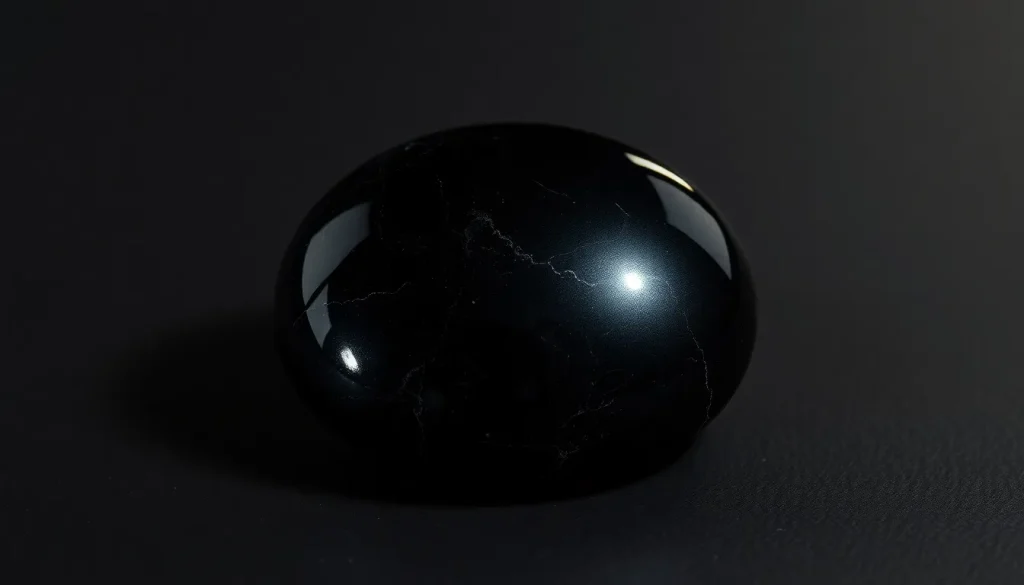
Shungite is a black, carbon‑rich mineraloid primarily found in the Karelia region of north‑western Russia. Though not a true crystal, it is valued for its distinctive metallic luster, high hardness, and alleged protective qualities.
History and Origin
Shungite was first described in the early 19th century and has been used historically by Russian builders and artisans. The name derives from the village of Shunga near the mineral’s primary deposit. Modern interest grew with the discovery of fullerenes within the stone in the 1990s.
Meaning and Symbolism
In folklore, shungite is considered a “protective stone” that absorbs negative energy. It is often associated with grounding, resilience, and purification. Traditional Russian culture used it as a talisman against electromagnetic disturbances.
Healing and Metaphysical Properties
Crystal‑healing practitioners claim that shungite can:
- Ground and stabilize the Root Chakra.
- Absorb and neutralize electromagnetic fields.
- Support emotional balance and stress reduction.
These claims are based on tradition and anecdotal experience; they are not supported by clinical research.
Varieties and Types
Shungite occurs in three primary grades:
- Regular (or “Noble”) Shungite – dark black with a glossy, metallic sheen.
- Elite Shungite – contains a higher percentage of fullerenes and displays a deep, almost iridescent black.
- Gold‑Plated Shungite – natural inclusions of pyrite give a speckled gold appearance.
All varieties are amorphous carbon, lacking a defined crystal lattice.
Jewelry Uses and Care
Because of its hardness (6.5–7 on the Mohs scale) and durability, shungite is suitable for rings, pendants, and beads. It is typically cut into cabochons or polished beads to showcase its sheen. Care recommendations:
- Clean with a soft, lint‑free cloth; mild soap and warm water are safe.
- Avoid ultrasonic cleaners and harsh chemicals that could affect surface polish.
- Store separately from softer gemstones to prevent scratching.
Buying Guide
When selecting shungite, consider the following:
- Color and Luster – genuine shungite is uniformly black with a metallic or vitreous shine.
- Weight – the specific gravity of 2.65–2.70 makes it feel slightly heavier than quartz of comparable size.
- Certification – reputable dealers provide laboratory reports confirming carbon content and the absence of synthetic fillers.
- Origin – stones sourced from Karelia, Russia, are generally regarded as the highest quality.
FAQ
What is shungite good for?
Practically, shungite is used in jewelry, decorative objects, and as a polishing abrasive due to its hardness. Traditionally, crystal‑healing enthusiasts attribute grounding, electromagnetic protection, and emotional balance properties to it, though these claims lack scientific verification.
Is shungite rare?
High‑quality shungite from the original Karelia deposits is relatively uncommon, especially elite grades rich in fullerenes. However, lower‑grade material is more widely available from various localities, making the stone moderately rare overall.
How can you tell if shungite is real?
Real shungite is uniformly black with a metallic or vitreous luster and feels slightly heavier than quartz. It lacks a crystalline structure, so it will not show facets like true crystals. Professional testing (e.g., Raman spectroscopy or carbon analysis) can confirm authenticity.
What chakra is shungite associated with?
Traditional crystal‑healing sources associate shungite with the Root Chakra, believing it helps grounding and protection. Some practitioners also link it to the Crown Chakra for its purported ability to filter electromagnetic energy.
How should you clean shungite?
Clean shungite with a soft, lint‑free cloth and warm, mildly soapy water. Rinse and pat dry. Avoid ultrasonic cleaners, harsh chemicals, or high‑pressure sprays that could damage the surface polish.
Leave a Reply