
Short Answer
Overview
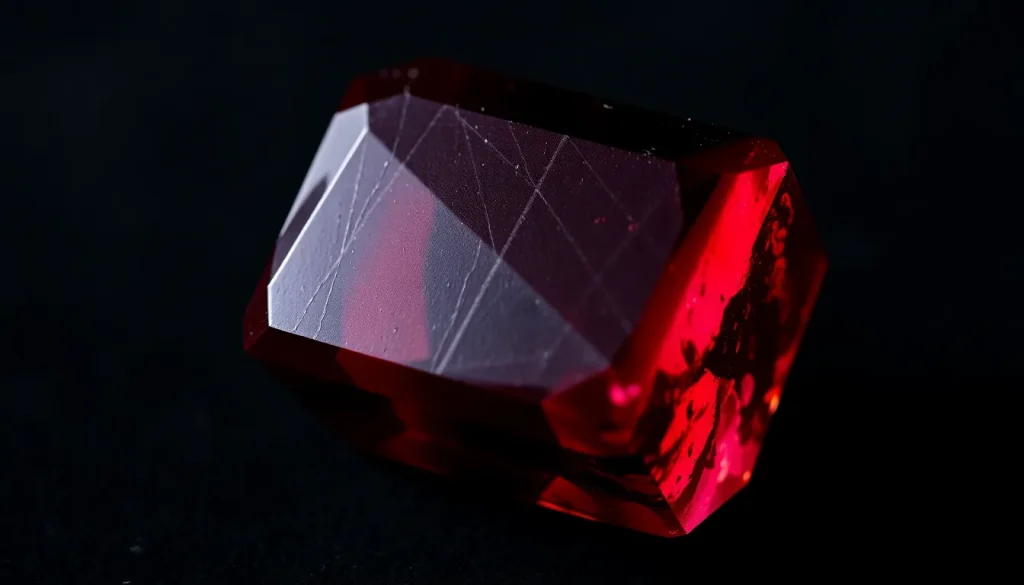
The garnet group comprises a family of nesosilicate minerals sharing a common crystal structure (isometric) but differing in chemical composition. The general formula X₃Y₂(SiO₄)₃ allows a wide range of cations, producing colors from deep red to vivid green, orange, brown, black, yellow, and pink. Garnets rank 6.5–7.5 on the Mohs scale, making them suitable for many types of jewelry while retaining good brilliance due to a high refractive index.
History and Origin
Garnet has been used since antiquity. Archaeological finds show red garnet beads in Mesopotamian graves dating to 3000 BCE, and Roman intaglios feature garnet cabochons. The name derives from the Latin granatus (“grain”), reflecting the stone’s grain‑like appearance in medieval stained‑glass windows. Modern gemology distinguishes six primary garnet species—pyrope, almandine, spessartine, grossular, andradite, and uvarovite—each named after its dominant chemical constituents.
Meaning and Symbolism
Across cultures, garnet symbolizes protection, commitment, and vitality. In Western tradition, red garnet is linked to courage and love, while green grossular (often called Tsavorite) represents renewal. The stone’s durability has also made it a talisman for travelers, believed to safeguard journeys and ensure safe return.
Healing and Metaphysical Properties
Crystal‑healing practitioners attribute garnet with energizing the root chakra, promoting physical stamina, and enhancing circulation. Traditional beliefs claim it can revitalize the blood, support the immune system, and aid in emotional grounding. These claims are not medically verified; garnet should never replace professional health care.
Varieties and Types
The garnet group is divided into six recognized species, each with characteristic colors and chemical makeup:
- Pyrope – Magnesium‑rich; deep ruby‑red.
- Almandine – Iron‑rich; dark red to brownish‑red.
- Spessartine – Manganese‑rich; orange‑to‑copper red.
- Grossular – Calcium‑aluminum; ranges from yellow to green (Tsavorite) and pink (Hessonite).
- Andradite – Calcium‑iron; includes the rare green demantoid and black melanite.
- Uvarovite – Calcium‑chromium; vivid emerald‑green, often found as inclusions in other minerals.
Mixed varieties such as Rhodolite (spessartine‑pyrope) and Mandarin Garnet (spessartine‑almandine) are also popular in the market.
Jewelry Uses and Care
Because of its hardness and resistance to scratching, garnet is set in rings, earrings, pendants, and watch bezels. However, some varieties (e.g., demantoid) are more brittle and may chip under impact. Care guidelines:
- Clean with warm, soapy water and a soft brush; avoid harsh chemicals.
- Dry with a lint‑free cloth; do not use ultrasonic cleaners on treated stones.
- Store separately from softer gems to prevent scratching.
- For heat‑treated or dyed garnets, limit exposure to extreme temperature changes.
Buying Guide
When selecting garnet, consider the following factors:
- Color saturation: Deep, vivid hues are most valued; secondary colors (e.g., brown) are less prized unless they exhibit exceptional clarity.
- Clarity: Inclusions are common but should not overly cloud the stone. Eye‑clean specimens fetch higher prices.
- Cut: Well‑proportioned cuts enhance brilliance. Common cuts include round, oval, cushion, and emerald.
- Treatment disclosure: Heat treatment is routine for many garnets to improve color; reputable dealers will disclose any enhancement.
- Origin: Certain localities (e.g., Tanzanian tsavorite, Russian demantoid) command premium prices.
Always request a gem‑ological certificate from a recognized laboratory (e.g., GIA, IGI) for high‑value purchases.
FAQ
What is garnet good for?
Garnet is prized for jewelry due to its durability and vibrant colors; traditionally it is also believed to promote grounding, vitality, and protection in crystal‑healing practices.
Is garnet rare?
Common red garnets are relatively abundant, but high‑quality varieties such as demantoid, tsavorite, and certain deep‑green uvarovite are rarer and command higher prices.
How can you tell if garnet is real?
Real garnet feels heavy for its size, shows a high refractive index, and lacks a glassy feel of synthetic substitutes. Professional testing with a refractometer, spectroscopy, or a gem‑lab report confirms authenticity.
What chakra is garnet associated with?
In crystal‑healing traditions, garnet is most commonly linked to the Root (Muladhara) chakra, supporting grounding and physical energy.
How should you clean garnet?
Clean garnet with warm, mildly soapy water and a soft brush; avoid ultrasonic cleaners on heat‑treated stones and dry with a lint‑free cloth. Store away from softer gems to prevent scratching.
Leave a Reply