
Short Answer
Overview
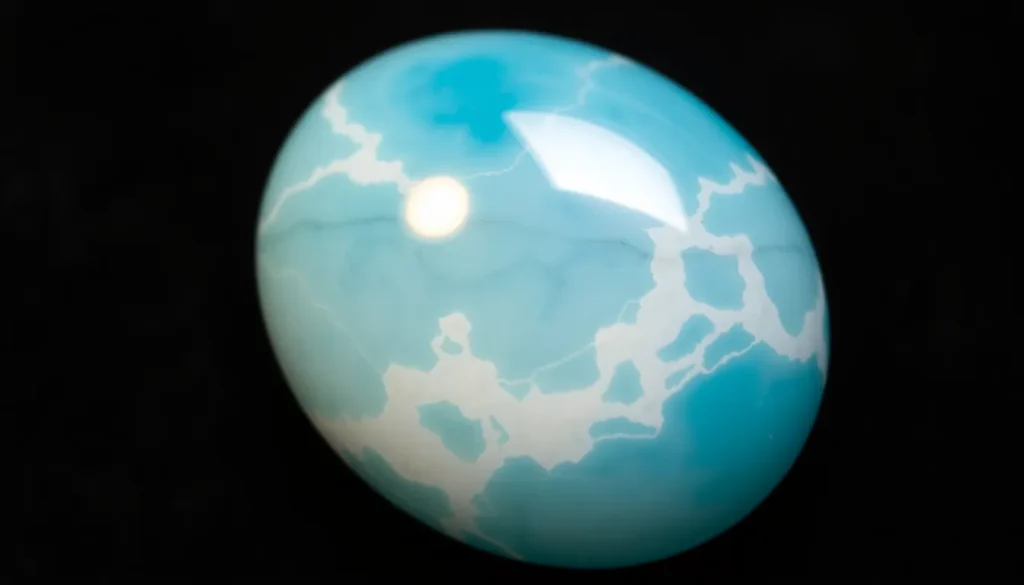
Pectolite is a sodium calcium silicate hydroxide mineral with the chemical formula NaCa2Si3O8(OH). It crystallises in the triclinic system and displays a vitreous to pearly luster. The stone ranges from translucent to transparent and is most famous in its blue‑green form, marketed as Larimar. Its Mohs hardness is 4.5–5, making it suitable for cabochons and bead work, though it requires gentle handling.
History and Origin
Pectolite was first described in 1808 for specimens from the Bohemian region of the Czech Republic. The spectacular blue variety, Larimar, was discovered much later, in 1974, in the Dominican Republic’s Bahía de las Águilas. Since then, the Dominican Republic remains the sole commercial source of natural Larimar, while white and pale pectolite occur in the United States (Arizona), Mexico, Canada (British Columbia) and other locations.
Meaning and Symbolism
In traditional gemstone lore, Larimar is associated with tranquility, emotional balance, and clear communication. The stone’s serene sea‑blue hue is said to evoke the calm of tropical waters, encouraging patience and soothing stress. It is often given as a gift to foster harmony in relationships and to inspire creative expression.
Healing and Metaphysical Properties
Crystal‑healing practitioners attribute pectolite with the ability to calm the mind, reduce anxiety, and aid in emotional expression. It is commonly linked to the Throat Chakra, supporting honest communication, and to the Heart Chakra for nurturing compassion. These claims are based on longstanding folklore and are not medical advice.
Varieties and Types
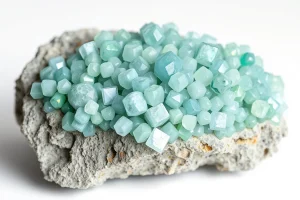
The most celebrated variety is Larimar, displaying sky‑blue to turquoise colors often with white veining. Other natural colors include milky white, pale gray, and occasionally a greenish tint. While untreated Larimar is valued for its natural hue, some specimens may be enhanced by heat or dye to intensify the blue.
Jewelry Uses and Care
Pectolite is popular in cabochons, bead strands, earrings, and pendants. Because of its relative softness and perfect cleavage in one direction, it should be set in protective settings that minimise impact. Cleaning is best performed with warm, soapy water and a soft brush; ultrasonic cleaners and harsh chemicals should be avoided. Store pieces separately to prevent scratching.
Buying Guide
When purchasing pectolite, consider the following:
- Color uniformity: High‑quality Larimar shows a consistent blue tone with minimal white veining.
- Clarity: Look for stones free of cracks or heavy inclusions that could weaken the gem.
- Treatment disclosure: Ask the seller if the stone has been heat‑treated or dyed.
- Certification: Reputable dealers often provide a gem‑ological report or guarantee of authenticity.
Because natural Larimar is limited to the Dominican Republic, it can be more expensive than other pectolite varieties. Compare prices per carat and verify that the stone’s provenance is documented.
FAQ
What is pectolite good for?
Pectolite is valued for jewelry such as cabochons and beads due to its attractive blue‑green color, and traditionally it is believed to promote calm communication and emotional balance.
Is pectolite rare?
Natural blue Larimar is relatively rare because it is sourced only from the Dominican Republic, while white and other colors occur more widely. Rarity depends on color quality, size, and whether the stone is untreated.
How can you tell if pectolite is real?
Real pectolite feels cool to the touch, shows a vitreous luster, and has a white streak. Its hardness (4.5–5) allows it to be scratched by quartz but not by a fingernail. Professional gemologists can confirm authenticity with refractive index measurements and microscopy.
What chakra is pectolite associated with?
In crystal‑healing traditions, pectolite (especially Larimar) is most commonly linked to the Throat Chakra, supporting clear expression, and is also associated with the Heart Chakra for emotional soothing.
How should you clean pectolite?
Clean pectolite with warm soapy water and a soft brush or cloth. Rinse thoroughly and pat dry. Avoid ultrasonic cleaners, steam, and harsh chemicals, as the stone’s perfect cleavage makes it vulnerable to damage.
Leave a Reply