
Short Answer
Overview
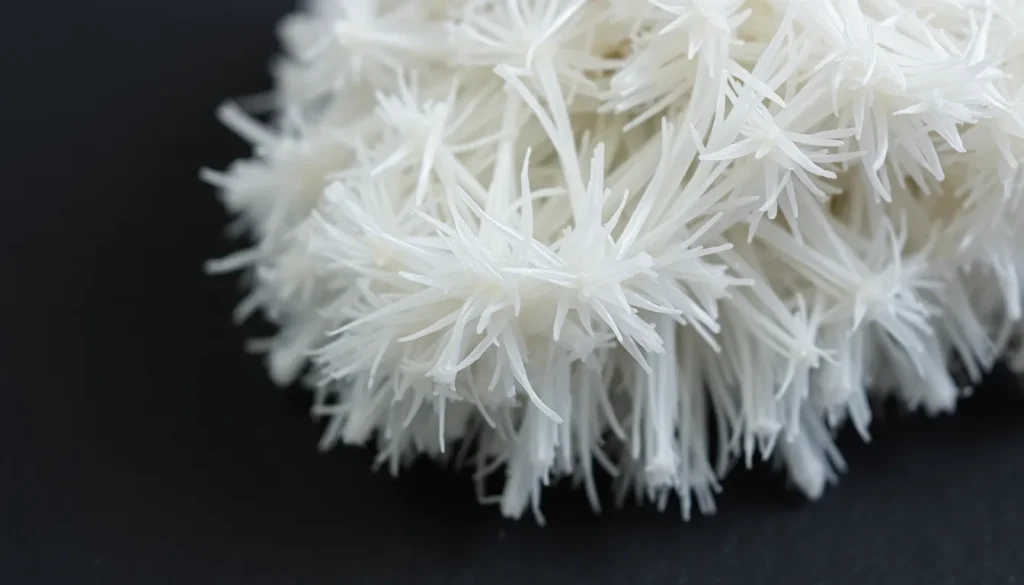
Palygorskite, also called attapulgite, is a magnesium‑aluminium silicate clay mineral belonging to the phyllosilicate group. It forms fine, hair‑like fibers that create a characteristic silky or pearly luster. The mineral is typically white, off‑white, gray, pale green or brown and is found in sedimentary deposits worldwide.
History and Origin
The name palygorskite derives from the Palygorskaya River in the Ural region of Russia, where the mineral was first described in the 19th century. Independently, the fibrous form was recognized in the United States and named attapulgite after the town of Attapulgus, Georgia, where large deposits were mined for industrial use. Historically the mineral has been employed as a drilling mud, absorbent, and as a component of traditional ceramics, but its aesthetic qualities have led to its recent use in jewelry and as a collector’s stone.
Meaning and Symbolism
In crystal‑healing traditions, palygorskite is associated with grounding, protection, and the absorption of negative energies. Its fibrous texture is said to symbolize resilience and the ability to “filter” unwanted influences, promoting emotional stability. These meanings are rooted in folklore rather than scientific evidence.
Healing and Metaphysical Properties
Traditional beliefs attribute the following properties to palygorskite:
- Grounding: Helps the holder feel more anchored to the physical world.
- Protection: Thought to create a subtle energetic shield.
- Emotional cleansing: Said to absorb and release stagnant emotions.
These claims are part of metaphysical practice and are not supported by medical research. The stone should not be used as a substitute for professional health care.
Varieties and Types
While the mineral itself is uniform, variations occur based on locality and impurity content. Common varieties include:
- Attapulgite – the commercial name for palygorskite mined in the United States.
- Brown or green‑tinged fibers – result from iron or manganese inclusions.
- Silky‑lustered aggregates – prized for decorative use.
Jewelry Uses and Care
Because of its low hardness (2.5–3.5 on the Mohs scale) and fibrous nature, palygorskite is best used in pendants, earrings, or as inlays rather than in rings that endure frequent impact. Care recommendations:
- Handle gently; avoid dropping or striking the stone.
- Clean with a soft, damp cloth; do not use ultrasonic cleaners.
- Store separately from harder gemstones to prevent scratching.
- Protect from prolonged exposure to acids or strong detergents, which can alter its surface.
Buying Guide
When purchasing palygorskite consider the following factors:
- Color and luster: Uniform, silky‑lustered specimens are most desirable.
- Origin: Stones from well‑documented deposits (e.g., Georgia, USA; Yunnan, China) often carry provenance information.
- Treatment: Verify whether the piece has been dyed or coated; untreated material retains its natural appearance.
- Certification: For high‑value pieces, request a gemological report confirming identity and any treatments.
n
Because palygorskite is relatively soft, expect it to be used primarily in ornamental or therapeutic contexts rather than in high‑impact jewelry.
FAQ
What is palygorskite good for?
Palygorskite is valued for its unique fibrous texture, silky luster, and use in ornamental jewelry. Traditional crystal‑healing beliefs associate it with grounding and protection, though these are not medically proven.
Is palygorskite rare?
The mineral is relatively common in sedimentary deposits, but high‑quality, untreated specimens with uniform color and luster are less common and can be more valuable.
How can you tell if palygorskite is real?
Real palygorskite exhibits a fibrous, silky appearance and a Mohs hardness of 2.5–3.5. A professional gemologist can confirm identity with a refractive index test and X‑ray diffraction analysis.
What chakra is palygorskite associated with?
In crystal‑healing traditions palygorskite is sometimes linked to the Root chakra for grounding, though there is no universally accepted chakra association.
How should you clean palygorskite?
Clean gently with a soft, damp cloth. Avoid ultrasonic cleaners, harsh chemicals, or abrasive materials. Store separately from harder gemstones to prevent scratching.
Leave a Reply