
Short Answer
Overview
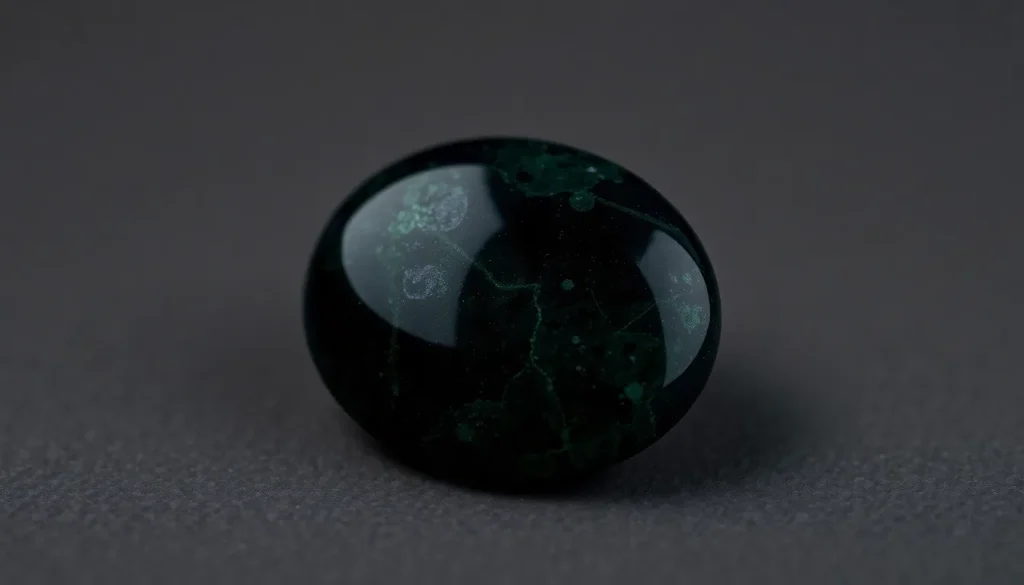
Neptunite is a complex silicate mineral most often found in deep green‑black to brownish‑black hues. It crystallizes in the monoclinic system and displays a sub‑adamantine to vitreous luster. With a Mohs hardness of 5.5–6, it is suitable for certain types of jewelry, especially cabochons and ornamental pieces. Its rarity and distinctive coloration make it a collector’s favorite.
History and Origin
The name “neptunite” was coined in 1893 after the planet Neptune, reflecting the mineral’s deep, ocean‑like coloration. First described from specimens in San Benito County, California, the mineral has since been reported from a handful of localities worldwide, including the Kola Peninsula in Russia, Sardinia in Italy, and the Yukon Territory in Canada. Historically, neptunite was primarily of interest to mineralogists rather than jewelers, but its striking appearance has gradually attracted the gemstone market.
Meaning and Symbolism
In traditional gemstone lore, neptunite is associated with protection, transformation, and the uncovering of hidden truths. It is believed to help the wearer confront deep‑seated fears and to foster resilience during periods of change. The stone’s dark coloration is often linked symbolically to the depth of the unconscious mind.
Healing and Metaphysical Properties
According to crystal‑healing beliefs, neptunite is said to balance the root and solar plexus chakras, encouraging grounding while also supporting personal power and confidence. Practitioners claim it can aid in emotional detoxification and enhance intuitive insight. These claims are part of traditional belief systems and are not medical advice.
Varieties and Types
Neptunite does not have widely recognized commercial varieties, but specimens can differ in color intensity and crystal habit. Some neptunite from the Kola Peninsula exhibits a more pronounced violet‑black hue, while Californian material tends toward deep green‑black. The presence of iron, magnesium, and titanium in varying proportions influences these subtle differences.
Jewelry Uses and Care
Because of its moderate hardness, neptunite is best suited for settings that protect its surface, such as bezel or pendant mounts. It is commonly cut as a cabochon to showcase its color and luster. Care recommendations include:
- Cleaning with a soft, lint‑free cloth and mild soapy water; avoid harsh chemicals.
- Do not expose to prolonged direct sunlight, which can cause fading over time.
- Avoid ultrasonic cleaners if the stone has any untreated fractures.
- Store separately from harder gemstones to prevent scratching.
Buying Guide
When purchasing neptunite, consider the following factors:
- Color and Transparency: Deep, even coloration with minimal inclusions is most valued.
- Cut Quality: Well‑polished cabochons reveal the stone’s sub‑adamantine luster.
- Origin: Provenance can affect price; specimens from classic localities like California or the Kola Peninsula are often more sought after.
- Treatment Disclosure: Natural neptunite is rarely treated, but verify that no heat or resin impregnation has been applied.
- Certification: Request a gem‑ological report from a reputable laboratory for high‑value pieces.
Because neptunite is relatively rare, prices can vary widely. Expect higher costs for large, vivid, and well‑cut specimens with documented origin.
FAQ
What is neptunite good for?
Neptunite is valued for its distinctive dark color and sub‑adamantine luster, making it a striking ornamental stone and collector’s item. Traditionally, it is believed to offer protection and aid in personal transformation, though these are spiritual concepts, not medical facts.
Is neptunite rare?
Neptunite is relatively rare, especially in gem‑quality material. High‑quality specimens with deep color, good transparency, and minimal inclusions are uncommon, and the best localities are limited to a few regions worldwide.
How can you tell if neptunite is real?
Real neptunite exhibits a high specific gravity (≈3.3‑3.5), a sub‑adamantine luster, and a characteristic monoclinic crystal habit. A professional gem‑lab can confirm identity using refractive index measurements, X‑ray diffraction, and chemical analysis.
What chakra is neptunite associated with?
In crystal‑healing traditions, neptunite is sometimes linked to the root and solar plexus chakras, but there is no universally accepted chakra assignment.
How should you clean neptunite?
Clean neptunite gently with warm soapy water and a soft cloth. Avoid ultrasonic cleaners and harsh chemicals, and store it separately from harder gemstones to prevent scratches.
Leave a Reply