
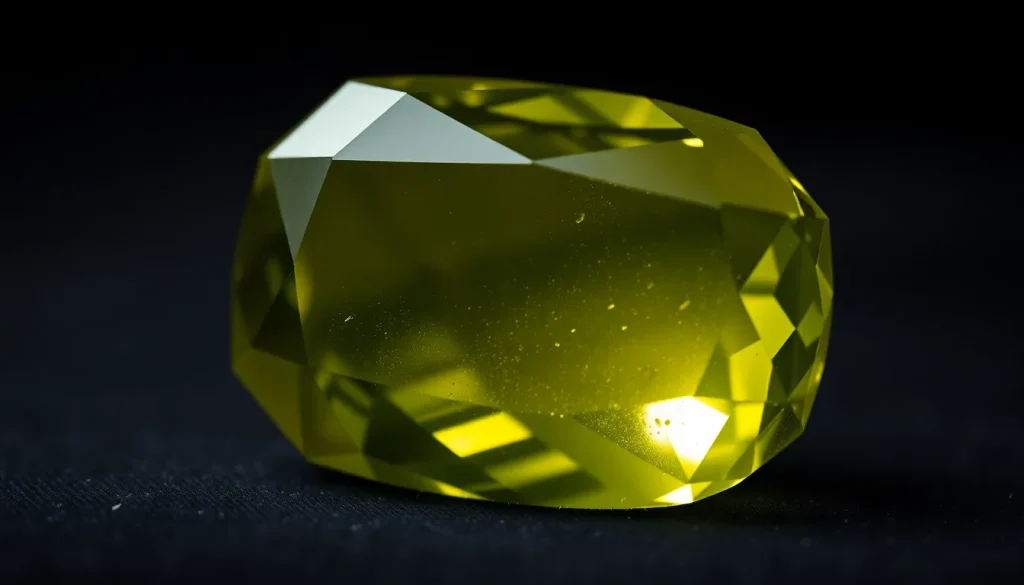
Short Answer
Overview
Forsterite (Mg2SiO4) is the magnesium‑rich endmember of the olivine solid‑solution series, which also includes fayalite (Fe2SiO4). In its gem‑quality form it is commonly called peridot, though peridot is a trade name for the transparent, bright green varieties. Forsterite crystals belong to the orthorhombic system and typically occur as granular aggregates or as well‑formed euhedral crystals in ultramafic rocks.
History and Origin
The name “forsterite” honors the German mineralogist Friedrich Georg Wilhelm von Forster, who described the mineral in the late 18th century. Naturally occurring forsterite forms deep within the Earth’s mantle under high‑temperature, low‑pressure conditions and is brought to the surface by volcanic activity, kimberlite pipes, or tectonic uplift. Historically, gem‑quality forsterite (peridot) has been mined in locations such as the ancient Egyptian mines of Zabargad Island, the Red Sea coast, and more recently in Afghanistan, Pakistan, the United States (California), Russia, and Australia.
Meaning and Symbolism
In traditional gemstone lore, forsterite is associated with renewal, growth, and abundance. Its vibrant green hue is said to echo the vitality of nature, encouraging optimism and a fresh perspective. The stone is often given as a token of friendship or to mark new beginnings, such as the start of a venture or a personal transformation.
Healing and Metaphysical Properties
Crystal‑healing practitioners attribute the following metaphysical qualities to forsterite:
- Balancing the heart chakra to promote emotional openness and forgiveness.
- Supporting the immune system and aiding detoxification processes.
- Encouraging personal growth, confidence, and the manifestation of goals.
These beliefs are rooted in tradition and should not be considered medical advice. Individuals seeking health treatment should consult qualified healthcare professionals.
Varieties and Types
Forsterite occurs in several varieties, distinguished primarily by color and clarity:
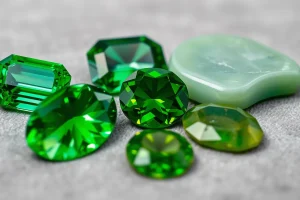
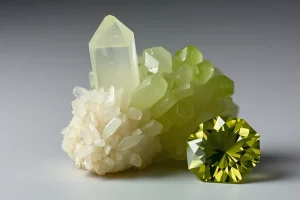
- Peridot (gem‑quality forsterite): Transparent to slightly translucent, ranging from yellow‑green to deep olive‑green.
- Green Olivine: Typically translucent with a slightly brownish tint, used more for ornamental purposes.
- Color‑less Forsterite: Rare, often found as inclusions in other minerals; not commonly used in jewelry.
n
Jewelry Uses and Care
Because of its moderate hardness (6.5–7 on the Mohs scale) and good cleavage resistance, forsterite is suited for a variety of jewelry settings, especially rings, pendants, and earrings. However, it can be prone to scratching if worn alongside harder gemstones.
Care guidelines:
- Clean with a soft, lint‑free cloth and mild soapy water. Avoid ultrasonic cleaners if the stone has any fractures.
- Store separately from diamonds, sapphires, or other hard stones to prevent abrasion.
- Limit exposure to harsh chemicals, high heat, and prolonged sunlight, which can cause fading in some treated specimens.
Buying Guide
When purchasing forsterite, consider the following factors:
- Color Saturation: The most valued hues are vivid, evenly distributed olive‑green to yellow‑green. Overly brown or dull colors are less desirable.
- Clarity: Inclusions are common; eye‑clean stones command higher prices.
- Cut: Well‑cut facets enhance brilliance and hide minor inclusions.
- Origin: Stones from historic sources like Egypt may carry a premium, though quality is determined by the stone itself rather than provenance.
- Treatment Disclosure: Some forsterite is heat‑treated to improve color. Reputable sellers should disclose any treatments.
Obtain a certification from a recognized gemological laboratory (e.g., GIA) for high‑value pieces to verify authenticity and any treatments applied.
FAQ
What is Forsterite good for?
Forsterite is valued for its attractive olive‑green color in jewelry, its use as a gemstone (peridot), and its traditional associations with growth, renewal, and emotional balance. It is also studied by geologists to understand mantle processes.
Is Forsterite rare?
High‑quality, vivid green forsterite (peridot) is less common than many other gemstones, especially in larger sizes. Bulk material is abundant in mantle‑derived rocks, but gem‑grade stones with excellent color and clarity are comparatively scarce.
How can you tell if Forsterite is real?
Real forsterite exhibits a specific gravity of 3.3, a refractive index around 1.65, and a characteristic olive‑green hue. A professional gemologist can verify authenticity with a refractometer, density test, and spectroscopic analysis.
What chakra is Forsterite associated with?
Traditionally, forsterite is linked to the Heart (Anahata) chakra, where it is believed to foster love, compassion, and emotional healing.
How should you clean Forsterite?
Clean forsterite gently with warm soapy water and a soft brush or cloth. Avoid ultrasonic cleaners if the stone has fractures, and store it separately from harder gemstones to prevent scratches.
Leave a Reply