
Short Answer
Overview
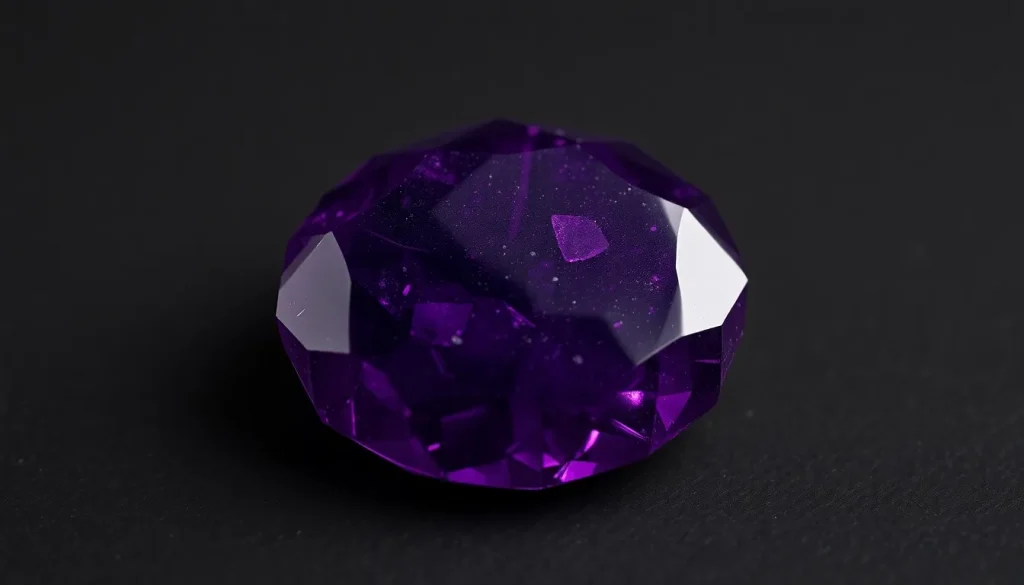
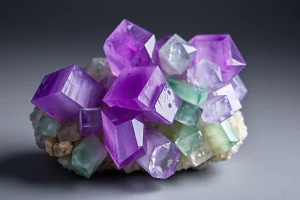
Manganaxinite is a member of the axinite group of sorosilicate minerals. It is recognized for its rich violet to purple hues, sometimes displaying brown, greenish, or pink overtones. Crystals are typically tabular to prismatic and may exhibit a distinctive bipyramidal habit. Its hardness (6.5‑7.5 on the Mohs scale) and vitreous luster make it suitable for certain types of jewelry, though it remains a collector’s stone due to its limited availability.
History and Origin
The axinite group was first described in the 19th century, with manganaxinite identified later as the manganese‑dominant variety. Significant finds have come from Brazil’s Minas Gerais region, where manganese‑rich pegmatites host well‑formed crystals. Additional occurrences are reported from Namibia and Madagascar, though these are less common. Historically, the stone has been valued by mineral collectors rather than as a mainstream gemstone.
Meaning and Symbolism
In traditional gemstone lore, manganaxinite’s deep violet color is associated with spiritual transformation, intuition, and inner wisdom. It is said to encourage personal growth and the ability to see beyond ordinary perception. The stone is sometimes linked to creative expression and the courage to pursue one’s true path.
Healing and Metaphysical Properties
Crystal‑healing practitioners attribute manganaxinite with the following qualities:
- Emotional balance: Helps release old emotional patterns and supports emotional resilience.
- Spiritual insight: Enhances meditation, intuition, and the ability to access higher states of consciousness.
- Physical well‑being: Believed to aid the nervous system and promote restful sleep, though these claims are not medically verified.
These properties are based on traditional beliefs and should not replace professional medical advice.
Varieties and Types
While manganaxinite is a specific manganese‑rich member of the axinite group, related varieties include:
- Axinite‑(Fe): Iron‑dominant, typically brown to reddish.
- Axinite‑(Mg): Magnesium‑dominant, often greenish.
- Axinite‑(Mn‑Fe): Mixed manganese‑iron composition, showing a range of violet to brown shades.
The term “Manganaxinite” is used for specimens where manganese is the dominant transition metal, giving the characteristic violet coloration.
Jewelry Uses and Care
Due to its hardness, manganaxinite can be set in rings, pendants, and earrings, but it should be protected from hard impacts. The stone is not highly resistant to scratching compared with harder gemstones like sapphire. Care recommendations include:
- Clean with a soft, lint‑free cloth and mild soap solution.
- Avoid ultrasonic cleaners if the stone has any fractures.
- Store separately from harder gemstones to prevent abrasion.
- Limit exposure to prolonged heat or harsh chemicals.
n
When set in jewelry, protective settings such as bezels or milgrain edges can help shield vulnerable facets.
Buying Guide
When purchasing manganaxinite, consider the following factors:
- Color intensity: Deep, even violet hues are most valued.
- Clarity: Inclusions are common; eye‑clean stones command higher prices.
- Cut and symmetry: Well‑cut specimens display the stone’s characteristic crystal habit.
- Origin documentation: Reputable dealers will provide provenance, especially for Brazilian material.
- Treatment disclosure: Natural manganaxinite is rarely treated, but any enhancements (e.g., heat) should be disclosed.
Because the market is niche, obtaining a certificate from a recognized gemological laboratory (e.g., GIA, IGI) adds confidence in authenticity.
FAQ
What is manganaxinite good for?
Manganaxinite is valued by collectors for its rare violet color and unique crystal habit. Traditionally, it is believed to support spiritual insight and emotional balance, though these uses are not medically proven.
Is manganaxinite rare?
Yes, high‑quality manganaxinite is rare. Good specimens are limited to a few localities, primarily Brazil, and are further limited by size, color intensity, and clarity.
How can you tell if manganaxinite is real?
Authentic manganaxinite displays a consistent violet hue, a vitreous luster, and a hardness of 6.5‑7.5. Professional testing—such as refractive index measurement, specific gravity, and spectroscopic analysis—provides definitive verification.
What chakra is manganaxinite associated with?
In crystal‑healing traditions, manganaxinite is linked to the Crown Chakra, supporting higher consciousness and spiritual connection.
How should you clean manganaxinite?
Clean gently with a soft cloth and mild soapy water. Avoid ultrasonic cleaners and harsh chemicals, and store the stone separately from harder gems to prevent scratches.
Leave a Reply