
Short Answer
Overview
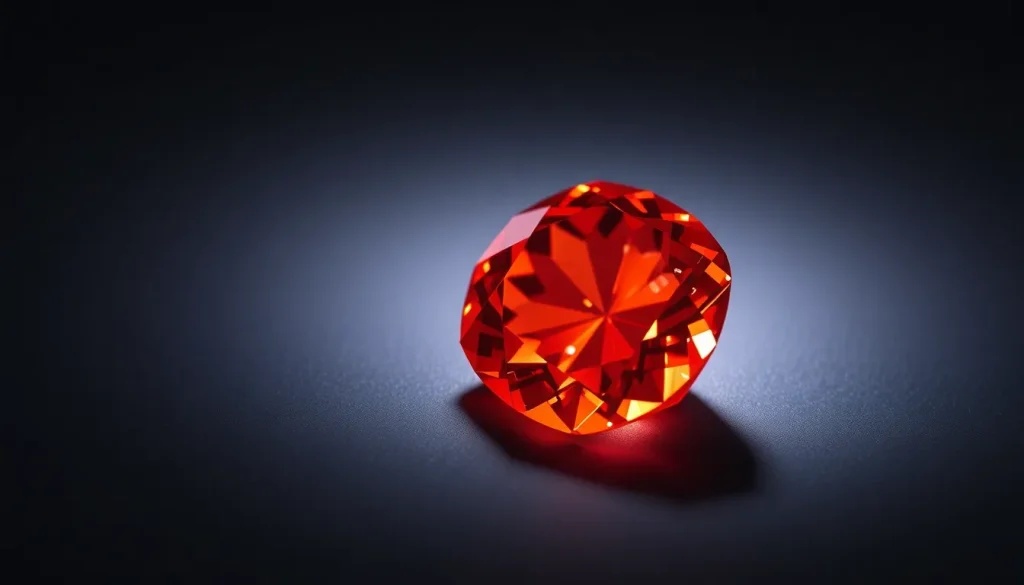
Spessartine is a member of the garnet group, distinguished by its manganese content. The gemstone typically displays bright orange to reddish‑orange colors, sometimes with brownish or pinkish overtones. With a Mohs hardness of 7 to 7.5 and a vitreous luster, spessartine is both durable and visually striking, making it a popular choice for rings, pendants, and high‑end collector pieces.
History and Origin
The name “spessartine” derives from the Spessart region of Germany, where the mineral was first described in the early 19th century, although the gemstone itself was not sourced from that area. Historically, spessartine specimens were prized by mineral collectors for their vivid coloration. Modern commercial production began in the mid‑20th century as mining operations in Brazil, India, and Africa yielded larger, gem‑quality crystals.
Meaning and Symbolism
In traditional gemstone lore, spessartine is associated with warmth, creativity, and personal empowerment. Its orange hue is said to inspire enthusiasm and confidence, while its durability symbolizes resilience. The stone is sometimes offered as a gift to celebrate milestones that involve personal growth or artistic achievement.
Healing and Metaphysical Properties
Crystal‑healing practitioners attribute spessartine with the ability to boost vitality and stimulate the sacral chakra, which governs creativity and emotional expression. Beliefs include enhancing motivation, supporting metabolic health, and helping the wearer to release emotional stagnation. These claims are part of traditional belief systems and are not supported by medical evidence.
Varieties and Types
Spessartine occurs in several color variants, most commonly:
- Vivid orange‑red (the classic spessartine color)
- Burnt orange or copper‑red tones
- Rare pinkish shades, sometimes marketed as “pink spessartine”
Specimens may be found as well‑formed octahedra or as massive aggregates. Heat treatment can deepen the orange hue, but untreated, high‑quality stones are increasingly sought after.
Jewelry Uses and Care
Because of its hardness and relatively high specific gravity, spessartine is suitable for everyday wear in settings such as:
- Solitaire or halo rings
- Beaded necklaces and bracelets
- Artistic cabochon pendants
Care instructions:
- Clean with warm soapy water and a soft brush; avoid harsh chemicals.
- Dry with a lint‑free cloth; do not expose to prolonged ultrasonic cleaning if the stone is fracture‑sensitive.
- Store separately from softer gems to prevent scratching.
Buying Guide
When purchasing spessartine, consider the following factors:
- Color intensity: Deep, uniform orange‑red is most valuable.
- Clarity: Inclusions are common; eye‑clean stones command higher prices.
- Cut: Well‑cut facets enhance brilliance; cabochon cuts are popular for opaque specimens.
- Treatment disclosure: Ask whether the stone has been heat‑treated; untreated material often carries a premium.
- Certification: Reputable labs (GIA, IGI) can provide a gem‑identification report.
Compare prices per carat based on color grade and clarity, and buy from trusted dealers who offer return policies and provenance information.
FAQ
What is spessartine good for?
Spessartine is prized for its vivid orange‑red color and durability, making it popular in rings, pendants, and collector pieces. Traditionally it is also associated with creativity and confidence in crystal‑healing circles.
Is spessartine rare?
High‑quality, intensely colored spessartine is less common than other garnet varieties, especially in larger carat sizes. The stone is more abundant in Brazil and India, but untreated, deep‑orange specimens are considered relatively rare.
How can you tell if spessartine is real?
Real spessartine exhibits a hardness of 7–7.5, a vitreous luster, and a refractive index between 1.80 and 1.94. Professional testing—such as a gemological microscope examination, refractometer reading, or spectroscopic analysis—provides definitive identification.
What chakra is spessartine associated with?
In traditional crystal‑healing belief, spessartine is linked to the sacral (Svadhisthana) chakra, which governs creativity, passion, and emotional expression.
How should you clean spessartine?
Clean spessartine with warm soapy water and a soft brush, avoiding abrasive cleaners. For heavily soiled pieces, a gentle ultrasonic bath may be used if the stone shows no fractures; otherwise, stick to hand cleaning.
Leave a Reply