
Short Answer
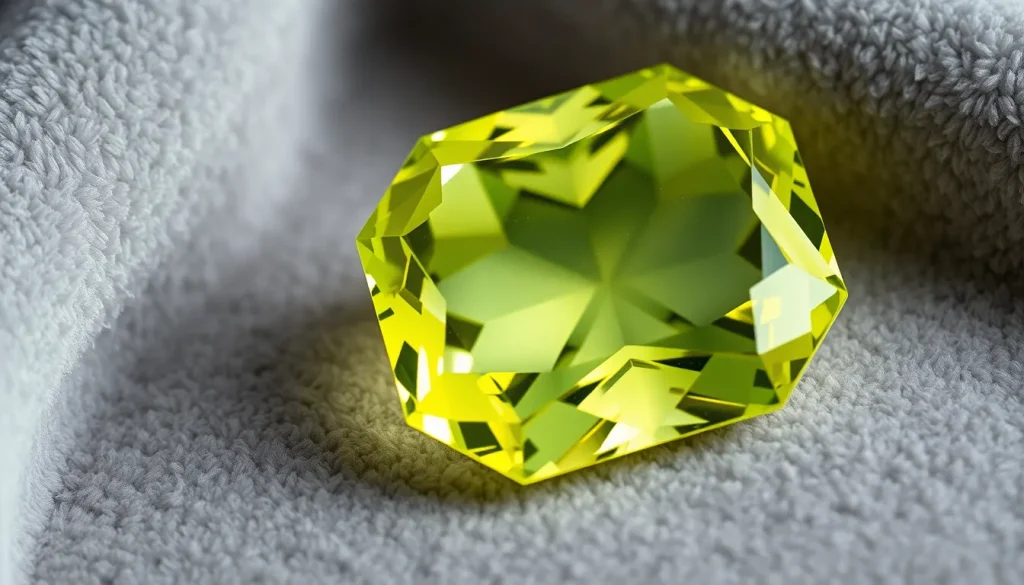
Lemon Amblygonite is a rare and visually captivating gemstone known for its vibrant, citrus-yellow hue and exceptional clarity. As a member of the phosphate mineral group, it occupies a niche yet prestigious position in the world of collector gemstones. While not commonly found in commercial jewelry stores, its brilliance and rarity make it a highly sought-after specimen for serious gemologists and connoisseurs of rare minerals.
What Is Lemon Amblygonite?
Lemon Amblygonite is a lithium aluminum phosphate mineral. In the gemstone trade, the term “Lemon” specifically refers to the vivid yellow to greenish-yellow variety of the mineral Amblygonite. Chemically, it is expressed as LiFe2(PO4)2 (in its ferro-amblygonite form) or LiAlPO4. It typically crystallizes in the monoclinic system and is often found in granitic pegmatites, where it forms alongside other rare minerals like spodumene and tourmaline.
Practical Uses and Limitations
Due to its specific physical properties, Lemon Amblygonite is primarily utilized as a collector’s stone rather than a mainstream jewelry gem. Its primary uses and limitations include:
- Collector Specimens: High-quality crystals are prized for mineralogical collections.
- Custom Jewelry: Occasionally cut into facets for bespoke rings or pendants for those who appreciate rare phosphates.
- Hardness Limitations: With a Mohs hardness of 5.5 to 6, it is softer than quartz or sapphire, making it susceptible to scratching if worn in high-impact jewelry.
- Cleavage: It possesses distinct cleavage, meaning it can split along certain planes if struck, requiring careful handling during the cutting and setting process.
Identification and Look-Alikes
Identifying Lemon Amblygonite requires a keen eye and professional equipment, as its color can overlap with several other yellow gemstones. Gemologists look for specific diagnostic features:
| Feature | Lemon Amblygonite | Yellow Topaz | Citrine (Quartz) |
|---|---|---|---|
| Hardness | 5.5 – 6 | 8 | 7 |
| Refractive Index | ~1.61 | ~1.61 – 1.64 | ~1.54 – 1.55 |
| Luster | Vitreous | Vitreous | Vitreous |
| Chemical Group | Phosphate | Silicate | Silicate |
Because the Refractive Index (RI) of Amblygonite is close to that of Topaz, the Mohs hardness test and specific gravity are critical for differentiation.
Jewelry Suitability and Care
If you are fortunate enough to own a piece of Lemon Amblygonite jewelry, specific care is required to maintain its luster and integrity.
Expert Tip: Avoid using ultrasonic cleaners or steam cleaners on Amblygonite. The mechanical vibrations and heat can exacerbate existing cleavage planes, potentially leading to fractures.
- Cleaning: Use only a soft cloth and lukewarm, soapy water.
- Storage: Store separately from harder gemstones (like diamonds or sapphires) to prevent surface scratches.
- Setting: Bezel settings are recommended over prong settings to provide more protection to the stone’s edges.
Quality and Value Factors
The value of Lemon Amblygonite is driven by three primary factors:
- Color Saturation: The most valuable stones exhibit a “neon” or “canary” yellow that is vivid and consistent throughout the crystal.
- Clarity: While many phosphate minerals are included, eye-clean specimens command a significant premium.
- Crystal Form: For collectors, well-defined, undamaged crystals are more valuable than faceted stones.
FAQ
Is Lemon Amblygonite a common gemstone?
No, it is very rare and primarily found in the hands of mineral collectors rather than in commercial jewelry.
Can Lemon Amblygonite be worn daily?
It is not recommended for daily wear in rings due to its relative softness (5.5-6 Mohs) and cleavage, which makes it prone to scratching and chipping.
How do I tell it apart from Citrine?
While they share a similar color, Lemon Amblygonite has a higher refractive index and a different hardness than Citrine.
Leave a Reply