
Short Answer
Overview
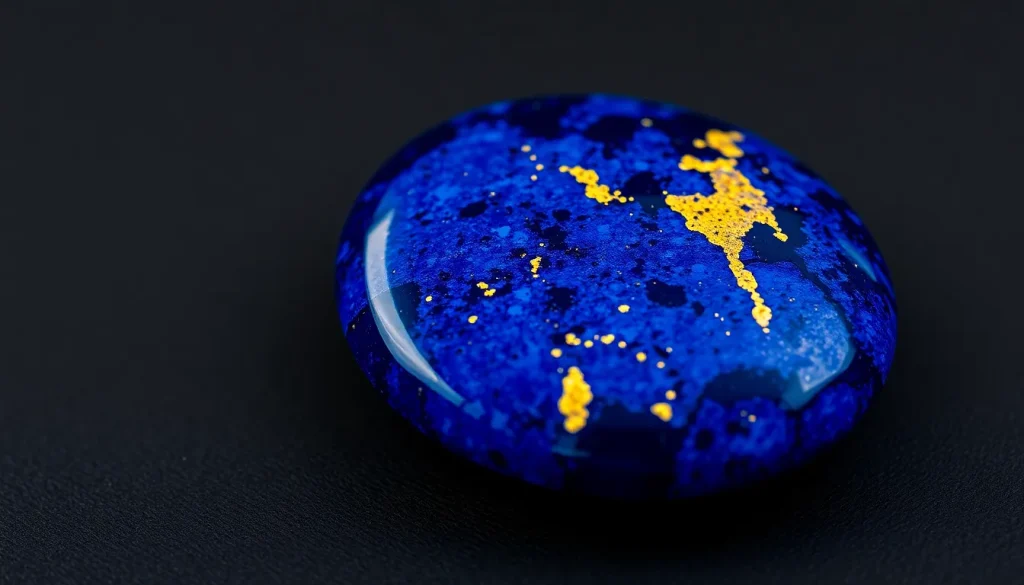
Lazurite is a deep‑blue tectosilicate mineral belonging to the sodalite group. Its intense azure hue, sometimes flecked with golden pyrite, is the primary source of the famous blue color in lapis lazuli. Chemically it is a complex sodium‑calcium aluminosilicate containing sulfide and chloride anions, giving it a distinctive composition and a relatively low hardness compared with many traditional gemstones.
Typical physical properties include a Mohs hardness of 5.5–6, a specific gravity of 2.40–2.45, and a vitreous luster. Lazurite crystals are isometric (cubic) and occur as massive aggregates rather than well‑formed individual crystals, which makes the mineral most commonly encountered as cut slabs, cabochons, or as part of the metamorphic rock lapis lazuli.
History and Origin
Historically, lazurite has been valued for millennia. The ancient Egyptians mined lapis lazuli—rich in lazurite—from the Badakhshan region of present‑day Afghanistan and used it for jewelry, amulets, and pigment (ultramarine). The stone traveled along the Silk Road, reaching Mesopotamia, the Indus Valley, and later Europe, where it became a prized material for illuminated manuscripts and royal regalia.
Modern scientific study identified lazurite as the distinct mineral responsible for the blue color, separating it from the other components of lapis lazuli such as calcite (white) and pyrite (metallic gold). Today lazurite is still extracted primarily from the historic Badakhshan deposits, but it also occurs in Chile, Siberian Russia, the United States (Colorado), Pakistan, and Canada.
Meaning and Symbolism
Across cultures, the deep blue of lazurite has symbolized truth, wisdom, and spiritual insight. In ancient Egypt it was associated with the heavens and the goddess Ma’at, representing balance and order. In medieval Europe the ultramarine pigment derived from lazurite was reserved for the robes of the Virgin Mary, signifying purity and divine favor.
Contemporary gemstone enthusiasts often view lazurite as a symbol of inner clarity and honest communication. Its striking color is thought to inspire confidence and encourage the expression of authentic thoughts.
Healing and Metaphysical Properties
Within crystal‑healing traditions, lazurite is believed to promote mental clarity, enhance intuition, and support effective communication. Practitioners claim that placing lazurite on the throat area can aid in expressing one’s truth and in resolving misunderstandings. Some also attribute calming, stress‑relieving qualities to the stone, suggesting it helps to quiet a racing mind.
These attributes are based on long‑standing folklore and are not intended as medical advice. Individuals seeking health treatment should consult qualified health professionals.
Varieties and Types
While lazurite itself is a specific mineral, it is often discussed in relation to other members of the sodalite group:
- Sodalite – a lighter blue to gray mineral with a similar crystal structure but lacking the intense sulfur‑derived coloration.
- Hauyne – typically pale blue to violet, containing more iron and less sulfide than lazurite.
- Scapolite – a related mineral that can appear in a range of colors but is generally less vivid than lazurite.
In the gemstone market, lazurite is most commonly encountered as part of lapis lazuli. High‑quality lapis contains a high proportion of lazurite (often >90 % by volume) with minimal calcite and pyrite, resulting in a uniform, deep blue appearance.
Jewelry Uses and Care
Because of its relatively modest hardness, lazurite is best suited for jewelry that does not endure heavy wear. Popular applications include:
- Cabochons set in rings, pendants, and earrings—often with protective bezels.
- Inlays in metalwork, such as watch dials or decorative inlays on high‑end handbags.
- Beaded jewelry when cut into small, polished beads.
When caring for lazurite:
- Clean with a soft, lint‑free cloth; avoid ultrasonic cleaners that could cause micro‑fractures.
- Use mild soap and warm water for deeper cleaning; rinse thoroughly and dry.
- Avoid prolonged exposure to high heat, harsh chemicals, or acidic environments, as these can alter the stone’s surface.
- Store separately from harder gemstones (e.g., quartz, sapphire) to prevent scratching.
Buying Guide
When selecting lazurite or lapis lazuli containing lazurite, consider the following factors:
-
- Color Uniformity – The most valuable stones display a consistent, saturated azure with minimal white calcite or gray veining.
n
- Inclusion Pattern – Fine, evenly distributed pyrite flecks add value, but large, irregular inclusions may detract from the stone’s appearance.
- Treatment Disclosure – Some lapis is artificially dyed or stabilized. Reputable sellers should disclose any enhancements.
- Cut and Finish – Well‑polished cabochons reveal the stone’s depth of color; rough or poorly finished pieces may look dull.
- Certification – For high‑value items, request a gemological report from a recognized laboratory (e.g., GIA, IGI) confirming lazurite content and any treatments.
Because lazurite is relatively abundant in its primary source regions, rarity is more a function of color quality and lack of treatment than of geological scarcity.
FAQ
What is lazurite good for?
Lazurite is valued for its striking blue color in jewelry, as a decorative stone, and in traditional crystal‑healing practices where it is believed to aid communication and mental clarity.
Is lazurite rare?
High‑quality, uniformly blue lazurite is less common than lower‑grade material, but the mineral itself is not exceptionally scarce; rarity depends on color depth, lack of treatment, and clarity.
How can you tell if lazurite is real?
Authentic lazurite displays a deep, even azure hue with natural pyrite specks and a slightly porous feel. Professional testing—such as refractive index measurement or spectroscopic analysis—confirms its identity and reveals any dyeing or stabilization.
What chakra is lazurite associated with?
In crystal‑healing traditions lazurite is most commonly linked to the Throat (Vishuddhi) chakra, supporting clear expression and truthful communication.
How should you clean lazurite?
Clean lazurite gently with a soft cloth and mild soapy water; avoid ultrasonic cleaners, harsh chemicals, and prolonged heat. Dry thoroughly and store separately from harder gemstones to prevent scratches.
Leave a Reply