
Short Answer
Overview
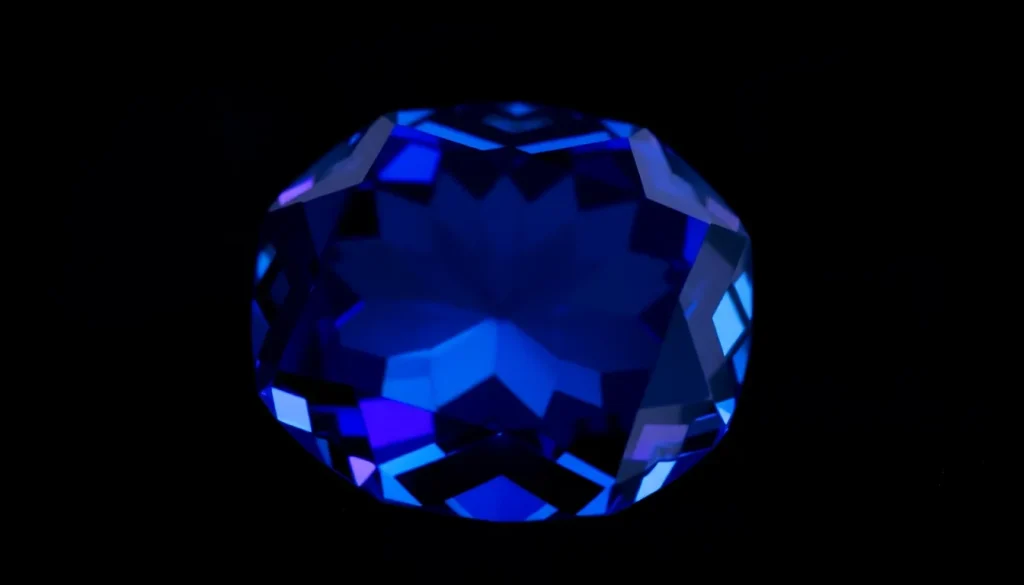
Cordierite is a magnesium‑iron aluminium silicate mineral with the ideal formula (Mg,Fe)₂Al₄Si₅O₁₈. In its gem‑quality form it is best known as iolite, a gemstone celebrated for its vivid blue‑violet to deep indigo coloration and pronounced pleochroism. The stone belongs to the orthorhombic crystal system and rates 7–7.5 on the Mohs hardness scale, making it suitable for many types of jewelry.
History and Origin
The mineral was first described in 1813 by French mineralogist François Sulpice Beudant and named after the French geologist Louis Cordier. Historically, iolite was used as a navigational aid by Scandinavian sailors, who called it “pilot’s stone” because the stone’s color change helped determine the direction of the sun on overcast days. Major deposits have been documented in Brazil, Madagascar, Sri Lanka, India, the United States (North Carolina), Canada, Afghanistan, and Myanmar.
Meaning and Symbolism
Traditional gemstone lore associates iolite with vision, inner wisdom, and the ability to see beyond illusion. Its shifting colors are said to symbolize adaptability and the opening of new perspectives. In contemporary jewelry marketing, iolite is often promoted as a more affordable alternative to sapphire while offering a unique color play.
Healing and Metaphysical Properties
Within crystal‑healing traditions, iolite is believed to enhance intuition, support clear communication, and aid in overcoming fear. Practitioners claim it aligns the throat chakra, encouraging honest self‑expression, and may assist in meditation by fostering mental clarity. These attributes are considered spiritual beliefs and are not supported by scientific medical evidence.
Varieties and Types
The most common gem‑quality variety is iolite, displaying strong trichroic pleochroism—typically showing blue, violet, and clear or gray shades when viewed from different angles. Less common forms include colorless cordierite and greenish‑gray specimens. Trade names such as “water sapphire” or “dichroic sapphire” are sometimes used for iolite, though the stone is distinct from true sapphire (corundum).
Jewelry Uses and Care
Because of its hardness and attractive color, iolite is cut into faceted gems for rings, pendants, earrings, and bracelets. It accepts most standard gemstone settings, though its perfect cleavage in two directions warrants careful handling during cutting and setting. Iolite should be cleaned with warm, soapy water and a soft brush; ultrasonic cleaners are generally safe, but prolonged exposure to high‑temperature steam should be avoided. Store the stones separately to prevent scratching against harder gems such as quartz or topaz.
Buying Guide
When purchasing iolite, consider the following factors:
- Color intensity: Deep, saturated blues and violets are most valued.
- Pleochroism: Look for stones that display distinct color changes under different lighting.
- Clarity: Inclusions are common but should not dominate the surface.
- Cut: Well‑cut stones maximize the stone’s natural color play.
- Treatment: Most iolite is untreated; if heat‑treated, it should be disclosed.
Request a certificate of authenticity from a reputable gem‑ological laboratory if buying high‑value pieces. Reputable dealers will provide provenance information, especially for larger or unusually vivid stones.
FAQ
What is cordierite good for?
Cordierite, in its iolite form, is valued for jewelry due to its striking blue‑violet hues and durability. Traditionally, it is believed to support intuition, clear communication, and emotional balance, though these are spiritual beliefs rather than medical facts.
Is cordierite rare?
High‑quality iolite with deep, vivid color and strong pleochroism is less common than many other gemstones, but cordierite itself is not considered rare. Rarity depends on color saturation, clarity, and the presence of untreated, well‑cut material.
How can you tell if cordierite is real?
Real iolite exhibits pronounced pleochroism—changing color when rotated under a light source. It has a hardness of 7–7.5, feels cool to the touch, and shows a white streak. Professional gemologists can confirm authenticity with refractive index measurements and spectroscopic analysis.
What chakra is cordierite associated with?
In crystal‑healing traditions, iolite is most commonly linked to the Throat (Vishuddhi) chakra, supporting honest expression and effective communication.
How should you clean cordierite?
Clean iolite with warm, soapy water and a soft brush. It can be safely cleaned in an ultrasonic cleaner for short periods. Avoid prolonged exposure to high heat or harsh chemicals, and store the stones separately to prevent scratching.
Leave a Reply