
Short Answer
Overview
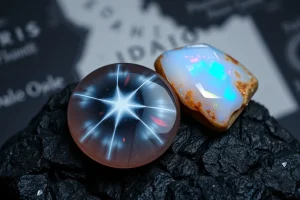
Fire opal is a distinct variety of the mineraloid opal that is celebrated for its uniform, warm coloration ranging from bright yellow through vivid orange to deep red. Unlike the classic opal known for its play‑of‑color, fire opal typically lacks a rainbow effect; instead, the stone appears to glow from within the silica matrix, giving the impression of a flickering flame. Chemically, fire opal is a hydrated form of silicon dioxide (SiO₂·nH₂O) and, because it lacks a true crystal lattice, it is classified as a mineraloid rather than a true mineral.
History and Origin
The most renowned fire opal deposits are situated in the state of Hidalgo, Mexico, especially in the historic mining districts of Pirituba, La Vuelta, and the nearby La Trinidad area. Mexican fire opal has been mined since the early 1900s and quickly entered the international market, becoming a favored gemstone for Art‑Deco jewelry and later for contemporary designs. Smaller, but still noteworthy, occurrences have been documented in Brazil (particularly in the states of Minas Gerais and Bahia), the United States (Nevada’s Virgin Valley), and a few locations in Canada and Austria. While fire opal is found worldwide, Mexican material remains the benchmark for color intensity and transparency.
Meaning and Symbolism
In traditional gemstone folklore, fire opal is associated with vitality, passion, and creative expression. Its bright, flame‑like hues are said to represent an inner spark that fuels ambition, confidence, and personal transformation. The stone is often given as a gift to celebrate milestones such as new ventures, artistic achievements, or the rekindling of a romantic relationship. Because of its warm energy, fire opal is also linked to the element of fire and the sun, symbolizing illumination and the courage to pursue one’s goals.
Healing and Metaphysical Properties
Crystal‑healing practitioners attribute a range of energetic qualities to fire opal. These claims are part of longstanding belief systems and are not supported by clinical medical evidence.
- Emotional balance: Traditionally believed to help release suppressed emotions, promote joy, and reduce feelings of stagnation.
- Physical vitality: Said to stimulate metabolism, support circulation, and invigorate the nervous system.
- Creativity and sexuality: Connected to the Sacral (Svadhisthana) chakra, fire opal is thought to enhance artistic inspiration and sexual confidence.
- Manifestation: Often used in meditation to focus intention, attract prosperity, and reinforce personal power.
These properties are regarded as metaphysical and should not replace professional medical advice.
Varieties and Types
Fire opal can be categorized according to its transparency and the intensity of its colour:
- Transparent fire opal: Light passes through the stone, revealing a vivid internal glow that can appear almost luminous.
- Translucent fire opal: Allows partial light transmission, producing a soft, glowing effect that is highly prized for cabochon settings.
- Opaque fire opal: Colour is uniform throughout the stone; these specimens are commonly cut into beads or low‑profile cabochons.
Heat treatment is sometimes applied to enhance the red component of lower‑intensity material. Untreated stones with natural, vivid colour are generally more valuable and are preferred by collectors.
Jewelry Uses and Care
With a Mohs hardness of 5.5–6.5 and a porous structure, fire opal requires protective settings to guard against knocks, chemicals, and prolonged sunlight exposure. Typical jewelry applications include:
- Rings set in protective bezels or low‑profile prongs that shield the stone’s surface.
- Pendant and necklace cabochons that showcase the stone’s internal glow.
- Earrings where the stone sits close to the ear, minimizing impact risk.
- Bracelet charms and brooches where the stone is set in a metal backing.
Care recommendations:
- Clean gently with a soft, damp cloth; avoid ultrasonic cleaners, steam, or harsh chemical detergents.
- Store fire opal separately from harder gemstones such as quartz or diamonds to prevent scratching.
- Limit exposure to direct sunlight for extended periods, as intense UV can fade the warm hues over time.
- Consider applying a light, breathable sealant if the stone will be worn daily, but always test on a small area first.
Buying Guide
When selecting fire opal, evaluate the following criteria to ensure quality and value:
- Color intensity and hue: Deep, uniform orange‑red tones are most sought after. Look for a consistent colour without visible zoning.
- Transparency: Transparent and high‑translucent stones command premium prices; opaque material is more common and less expensive.
- Origin verification: Mexican fire opal is the industry standard for quality. Reputable sellers should disclose provenance and any treatments.
- Treatment disclosure: Ask whether the stone has been heat‑treated, dyed, or otherwise enhanced. Untreated stones are generally more valuable.
- Cut and finish: Well‑cut cabochons that maximize light interaction enhance the stone’s fire‑like appearance.
- Certification: While formal gem‑ological certificates are rare for opal, a detailed sales receipt or dealer‑provided authenticity statement is advisable.
Purchasing from established gem dealers, auction houses, or reputable online platforms that offer clear return policies will reduce the risk of receiving low‑quality or misrepresented material.
FAQ
What is fire opal good for?
Fire opal is prized for its striking warm colour in jewelry, and traditionally it is believed to boost creativity, confidence, and emotional vitality. These attributes belong to crystal‑healing lore and are not medical claims.
Is fire opal rare?
High‑quality fire opal with vivid, uniform colour and good transparency is relatively rare, especially from Mexican sources. Lower‑grade material is more common, and many stones are heat‑treated to improve colour.
How can you tell if fire opal is real?
Real fire opal feels cool, shows a uniform warm hue, and may display internal translucency. Look for a slightly porous surface and an absence of synthetic rainbow play‑of‑color. Professional testing such as specific gravity or refractive index measurement is recommended for certainty.
What chakra is fire opal associated with?
In traditional chakra systems, fire opal is most often linked to the Sacral (Svadhisthana) chakra, which governs creativity, passion, and personal power.
How should you clean fire opal?
Gently wipe fire opal with a soft, damp cloth. Avoid ultrasonic cleaners, steam, harsh chemicals, and prolonged direct sunlight. Store it separately from harder gemstones to prevent scratches.
Leave a Reply