
Short Answer
Overview
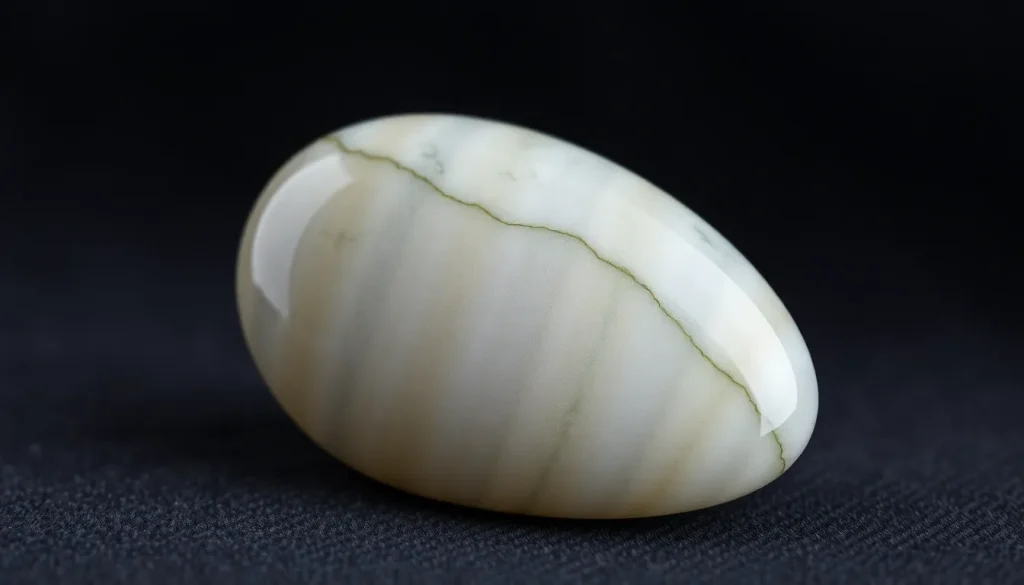
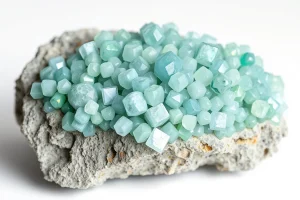
Pyrophyllite is a phyllosilicate mineral composed principally of aluminum, silicon, oxygen, and hydroxyl groups (Al₂Si₄O₁₀(OH)₂). It forms in low‑grade metamorphic environments where clay minerals recrystallize. The stone typically appears in shades of grey, green‑grey, or whitish tones, exhibiting a waxy to pearly luster. Because of its low hardness (1.5–2.5 on the Mohs scale) it is easily carved and is sometimes used as a decorative or ornamental material rather than a traditional gemstone.
History and Origin
The name “pyrophyllite” derives from the Greek words pyro (fire) and phyllon (leaf), referring to its leaf‑like crystal habit and its historical use in fire‑proofing applications. Deposits have been documented worldwide, with notable localities in the United States (California, Idaho), Brazil, China, India, Finland, and Russia. Throughout the 19th and early 20th centuries, pyrophyllite was employed in the production of refractory bricks, polishing powders, and as a talc substitute in various industrial processes.
Meaning and Symbolism
In crystal‑healing traditions, pyrophyllite is associated with grounding, adaptability, and the release of stagnant energy. Its smooth, matte surface is said to symbolize emotional calmness and the ability to flow around obstacles. While not a conventional gemstone, collectors often value it for its understated elegance and the subtle symbolism of resilience.
Healing and Metaphysical Properties
Traditional beliefs attribute the following metaphysical qualities to pyrophyllite:
- Grounding: Helps anchor the wearer’s energy to the Earth, fostering stability.
- Emotional Balance: Said to soothe irritability and promote a sense of inner peace.
- Adaptability: Encourages flexibility in thought and action, assisting during periods of change.
These claims are rooted in cultural practices and are not supported by medical science. Individuals who use pyrophyllite for meditation typically place a polished piece on the root chakra area or hold it while visualizing calm.
Varieties and Types
Pyrophyllite occurs in several forms, distinguished mainly by color and impurity content:
- Standard Grey: The most common variety, displaying a uniform medium‑grey hue.
- Greenish‑Grey (Serpentine‑Stained): Contains minor amounts of serpentine, giving a subtle green tint.
- White/Colourless: Rare, highly pure specimens that may appear almost translucent when thinly sliced.
Commercially, the stone is sometimes marketed under trade names such as “candle stone” or “phyllite” when used for ornamental carvings.
Jewelry Uses and Care
Because of its softness, pyrophyllite is best suited for pendants, earrings, and brooches where the stone can be set in protective metal bezels. It is rarely used for rings or bracelets that endure heavy wear. When incorporated into jewelry, the following care guidelines are recommended:
- Cleaning: Use a soft, lint‑free cloth and mild soap water. Avoid ultrasonic cleaners and harsh chemicals.
- Storage: Keep separate from harder gemstones to prevent scratching.
- Handling: Because it can fracture along its perfect cleavage, handle pieces gently and avoid sudden impacts.
Buying Guide
When purchasing pyrophyllite, consider these factors:
- Clarity and Color: Look for even coloration without excessive veining, unless a natural pattern is desired.
- Cut and Finish: Polished cabochons showcase the stone’s pearly luster best. Verify that the cut respects the mineral’s cleavage direction.
- Origin Disclosure: Reputable sellers will provide locality information; major sources include the United States and Brazil.
- Treatment Disclosure: Some specimens are dyed to enhance color; ask the dealer if any treatments have been applied.
n
For valuable ornamental pieces, request a gemological report or at least a basic mineral identification from a qualified laboratory.
FAQ
What is pyrophyllite good for?
Pyrophyllite is valued for ornamental carvings, decorative jewelry, and as a collector’s mineral. Traditionally, it is also believed to aid grounding and emotional balance in crystal‑healing practices.
Is pyrophyllite rare?
The mineral is relatively common in metamorphic terrains, but high‑quality, uniformly colored specimens suitable for jewelry are less abundant, making fine pieces moderately rare.
How can you tell if pyrophyllite is real?
Real pyrophyllite feels soft (like talc), has a pearly to waxy luster, and exhibits perfect cleavage in one direction. A professional gemologist can confirm identity with X‑ray diffraction or microscopy.
What chakra is pyrophyllite associated with?
In traditional crystal lore, pyrophyllite is linked to the Root Chakra, reflecting its grounding properties, though no single standard chakra is universally recognized.
How should you clean pyrophyllite?
Clean gently with warm soapy water and a soft cloth. Avoid ultrasonic cleaners, harsh chemicals, and high‑impact abrasion, as the stone is soft and can fracture along its cleavage.
Leave a Reply