
Short Answer
Overview
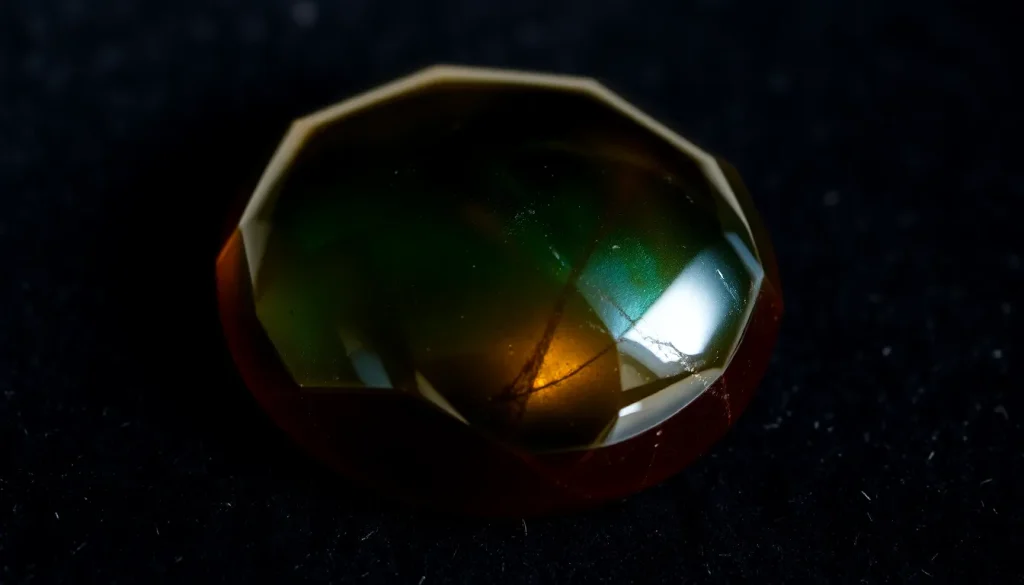
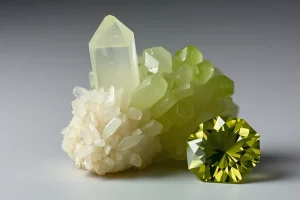
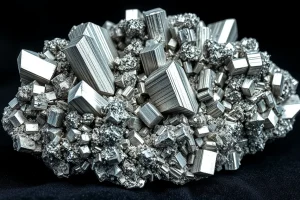
Fergusonite is a rare hydrous phosphate mineral composed principally of yttrium (Y) and a suite of rare‑earth elements (REE) such as cerium, neodymium, and dysprosium. Its general formula is expressed as (Y,REE)2(PO4)2·2H2O. The mineral crystallises in the monoclinic system and typically forms prismatic to tabular crystals that may be transparent to translucent. Coloration varies widely, ranging from deep greens and browns to yellow‑orange and reddish tones, often depending on the dominant REE present.
History and Origin
The name “fergusonite” honours Robert Ferguson of Enfield, a 19th‑century British mineral collector. The mineral was first described in 1870 from specimens collected in the United States, notably the Granite Springs district of California. Since then, notable localities have been identified in Brazil, Madagascar, Tanzania, the Ural region of Russia, and parts of Canada. These occurrences are typically associated with pegmatitic or granitic environments where phosphate‑rich fluids concentrate rare‑earth elements during late‑stage crystallisation.
Meaning and Symbolism
In gemstone folklore, fergusonite is thought to embody transformation and intellectual curiosity. Its varied colour palette is said to reflect the inner diversity of the wearer, encouraging adaptability and a willingness to explore new ideas. Because the stone contains rare‑earth elements, it is sometimes linked symbolically to “hidden potential” and the discovery of unseen talents.
Healing and Metaphysical Properties
Traditional crystal‑healing practitioners attribute fergusonite with the following beliefs:
- Mind‑body balance: It is said to aid mental clarity and promote focused thought.
- Energy amplification: The stone is believed to amplify the intentions set during meditation.
- Emotional grounding: Some claim it helps release stagnant emotions, fostering a sense of calm.
These properties are based on long‑standing cultural beliefs and are not supported by scientific medical evidence. The stone should never replace professional medical advice or treatment.
Varieties and Types
Fergusonite occurs in several compositional varieties, distinguished primarily by the dominant rare‑earth element:
- Fergusonite‑(Y): Yttrium‑rich, typically green to brown.
- Fergusonite‑(Ce): Cerium‑rich, often yellowish‑orange.
- Fergusonite‑(Nd): Neodymium‑rich, displaying reddish‑brown hues.
All varieties share the same crystal structure but may differ subtly in refractive index and specific gravity.
Jewelry Uses and Care
Because of its moderate hardness (5–5.5 on the Mohs scale) and perfect cleavage in one direction, fergusonite is best suited for pendants, earrings, and cabochon settings where the stone can be protected from impact. It should be kept away from harsh chemicals and prolonged exposure to sunlight, which can fade some colour zones.
Cleaning recommendations:
- Use a soft, lint‑free cloth to wipe away dust.
- For deeper cleaning, soak briefly in warm, mildly soapy water and rinse with distilled water.
- Avoid ultrasonic cleaners and steam cleaning, as vibrations may cause cleavage fracture.
Buying Guide
When purchasing fergusonite, consider the following factors:
- Colour quality: Uniform, vivid colours without heavy zoning are prized.
- Clarity: Inclusions are common; however, large, cloud‑like fractures reduce value.
- Cut: Cabochon cuts that minimise stress on cleavage planes are preferred.
- Origin documentation: Reputable dealers provide provenance, especially for specimens from classic localities such as California or Madagascar.
- Treatment disclosure: Natural fergusonite is rarely treated, but any heat or irradiation must be disclosed.
Because the market for fergusonite is niche, prices can vary widely. Certified specimens from accredited gemological laboratories offer the greatest assurance of authenticity.
FAQ
What is fergusonite good for?
Fergusonite is prized by collectors for its rarity and distinctive colours, and it is occasionally used in fine jewelry as a cabochon. Traditional crystal‑healing beliefs associate it with mental clarity and emotional grounding, though these claims are not medically verified.
Is fergusonite rare?
Yes, fergusonite is considered a rare mineral. High‑quality, vivid specimens are especially scarce and are typically sourced from a few well‑known localities such as California, Brazil, and Madagascar. Rarity increases with size, colour uniformity, and lack of treatment.
How can you tell if fergusonite is real?
Authentic fergusonite exhibits a monoclinic crystal habit, a specific gravity around 4.0–4.5, and a refractive index near 1.71–1.73. Professional gemologists use a combination of visual examination, refractometry, and possibly X‑ray diffraction to confirm identity.
What chakra is fergusonite associated with?
In crystal‑healing traditions, fergusonite is sometimes linked to the Third Eye chakra for its purported ability to enhance intuition, though there is no universally accepted chakra assignment.
How should you clean fergusonite?
Clean fergusonite with a soft, lint‑free cloth. For deeper cleaning, soak briefly in warm, mild soapy water, then rinse with distilled water. Avoid ultrasonic cleaners, steam, and harsh chemicals, as the stone’s moderate hardness and perfect cleavage make it vulnerable to damage.
Leave a Reply