Short Answer
Overview
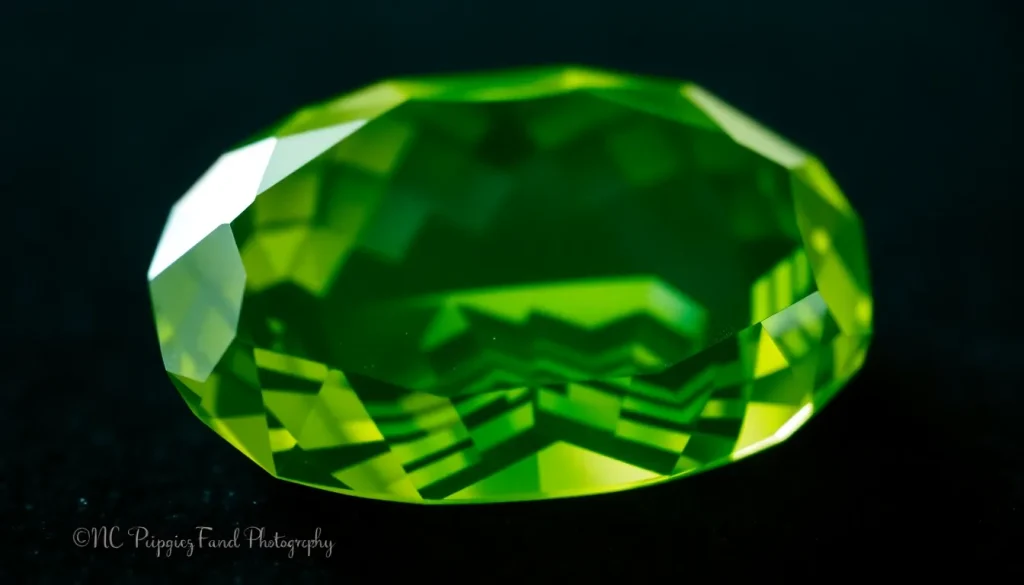
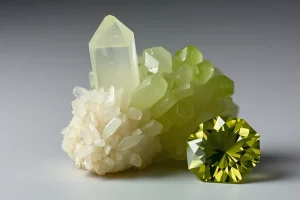
Peridot is the gem‑quality variety of the mineral olivine, a magnesium‑iron silicate with the formula (Mg,Fe)₂SiO₄. It is best known for its distinctive olive to bright green hue, which can range from yellow‑green to a deep forest green. On the Mohs scale it rates 6.5–7, making it suitable for many types of jewelry while still requiring careful handling. Peridot occurs in crystal clusters and massive granular forms, typically showing a vitreous luster and a white streak.
History and Origin
Peridot has been treasured since antiquity. The ancient Egyptians called it the “gem of the sun” and mined it from the Zabargad (St. John’s) Island in the Red Sea. The Romans referred to it as “topaz of the ancients.” Historically it was also known as chrysolite, meaning “golden stone,” because lighter specimens can appear yellow‑green. Major historic sources include Egypt, Pakistan, and the United States (Arizona and California). Modern production continues in Pakistan, the United States, Myanmar, China, Saudi Arabia, Tanzania, and Brazil.
Meaning and Symbolism
In many cultures peridot is associated with renewal, abundance, and protection. It is believed to bring joy, reduce stress, and promote a sense of well‑being. Symbolically, the stone’s vibrant green is linked to growth, fertility, and the heart’s capacity for love. It is also considered a stone of good fortune and is often given as a gift to celebrate new beginnings.
Healing and Metaphysical Properties
Traditional crystal‑healing beliefs attribute the following properties to peridot:
- Emotional balance – helps release negative patterns and encourages optimism.
- Physical support – thought to aid digestion and the liver, though these claims are not medically verified.
- Energetic cleansing – said to clear stagnant energy and protect against negativity.
These attributes are part of folklore and should not replace professional medical advice.
Varieties and Types
All gem‑quality peridot belongs to the same mineral species, but variations occur due to iron content, origin, and treatment:
- Natural (untreated) peridot – exhibits the stone’s original color, ranging from pale yellow‑green to deep forest green.
- Heat‑treated peridot – heating can deepen the green and reduce brownish inclusions; the treatment is stable and widely accepted.
- “Sea peridot” – peridot recovered from marine sediments; often exhibits a slightly more subdued hue.
Jewelry Uses and Care
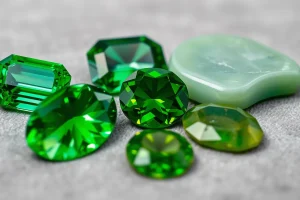
Because of its brilliance and relatively high hardness, peridot is popular in rings, pendants, earrings, and bracelets. It is commonly cut in oval, round, cushion, and emerald shapes to maximize color display. Care recommendations:
- Cleaning: Use warm, soapy water and a soft brush. Avoid ultrasonic cleaners if the stone is heavily included.
- Avoid scratches: Though harder than many gemstones, peridot can be scratched by quartz, topaz, or other peridot.
- Heat sensitivity: High temperatures can alter color; keep away from direct flame or prolonged sun exposure.
- Storage: Store separately in a soft pouch or lined compartment to prevent contact with harder stones.
Buying Guide
When selecting peridot, consider the following factors:
- Color: The most valuable stones display a vivid, saturated green without brown or gray overtones.
- Clarity: Minor inclusions are common; however, large cracks or cloudiness reduce value.
- Cut: Well‑proportioned cuts enhance brilliance and hide minor flaws.
- Origin: Certain locales, such as Pakistan and the United States, are known for higher‑quality material.
- Treatment disclosure: Reputable dealers will state if the stone has been heat‑treated.
- Certification: For larger stones, a gemological report (e.g., GIA) provides assurance of authenticity.
Always purchase from a trusted jeweler who offers a return policy and clear grading information.
FAQ
What is peridot good for?
Peridot is valued for its bright green color in jewelry and is traditionally believed to promote emotional balance, protect against negativity, and foster abundance. These metaphysical claims are cultural beliefs, not medical facts.
Is peridot rare?
High‑quality, vivid green peridot is less common than lower‑grade material, but the stone itself is not among the rarest gems. Rarity depends on color saturation, clarity, size, and whether the stone is untreated.
How can you tell if peridot is real?
Real peridot typically shows a consistent green color, a vitreous luster, and a hardness of 6.5–7. Simple tests include checking for a white streak and observing that it is not easily scratched by quartz. For certainty, have the stone evaluated by a certified gemologist.
What chakra is peridot associated with?
In crystal‑healing traditions peridot is most often linked to the Heart chakra, and some sources also associate it with the Solar Plexus chakra.
How should you clean peridot?
Clean peridot with warm, mildly soapy water and a soft brush. Avoid ultrasonic cleaners if the stone has significant inclusions, and keep it away from extreme heat or prolonged direct sunlight.
Leave a Reply