
Short Answer
Overview
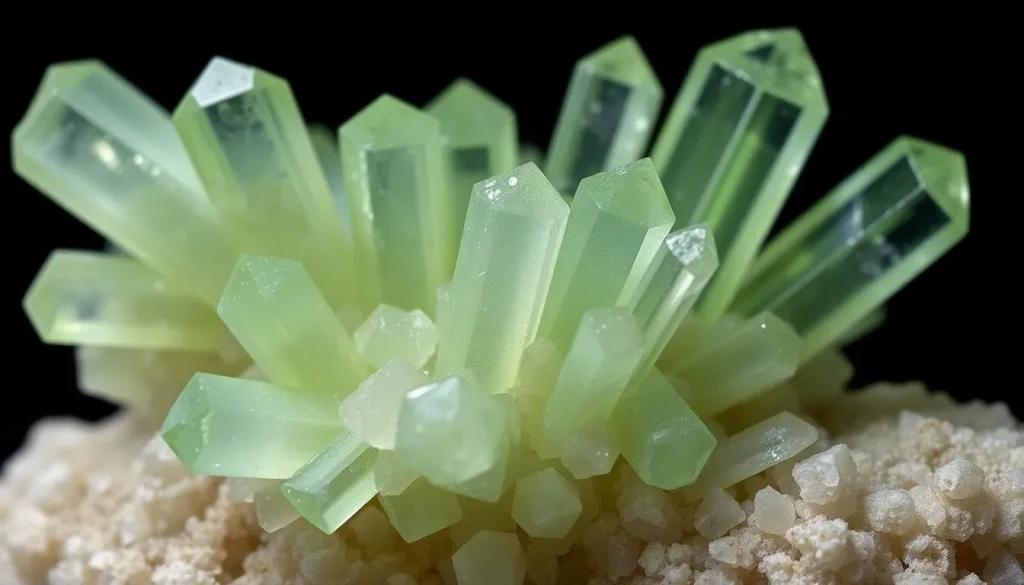
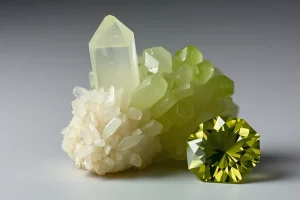
Eosphorite is a manganese‑aluminium phosphate mineral that typically occurs in light to medium green shades, sometimes with yellow‑green or brownish overtones. Crystallizing in the monoclinic system, it forms prismatic to tabular crystals and is prized by collectors and occasional jewelry makers for its vivid colour and relative rarity.
History and Origin
The name “eosphorite” derives from the Greek words eos (dawn) and phoros (bringing), a reference to its sunrise‑like green colour. First described in the early 19th century from deposits in the Ural Mountains of Russia, the mineral has since been identified in several localities worldwide, including Brazil, Madagascar, Namibia, and the United States (California). Historically, eosphorite has been a collector’s specimen rather than a mainstream gemstone, but its attractive hue has led to limited use in ornamental pieces.
Meaning and Symbolism
In traditional gemstone lore, eosphorite is associated with renewal, growth, and the energy of new beginnings, echoing the “dawn” imagery of its name. Its green colour links it symbolically to nature, fertility, and the heart’s emotional openness. Wearers often select eosphorite to represent personal transformation or to encourage optimism during periods of change.
Healing and Metaphysical Properties
Crystal‑healing practitioners attribute a range of metaphysical qualities to eosphorite. It is believed to stimulate the heart chakra, fostering compassion, forgiveness, and emotional balance. Some traditions claim it can aid in clearing mental fog, enhancing focus, and supporting the body’s detoxification processes. These assertions are part of spiritual belief systems and are not medical advice.
Varieties and Types
Eosphorite is generally encountered as a single variety, distinguished primarily by colour intensity and crystal habit. Specimens may range from pale, almost colourless green to a richer, saturated green. In rare cases, trace impurities can impart a brownish tint. No widely recognised commercial treatments are applied to enhance its colour, though careful cutting can maximise brilliance.
Jewelry Uses and Care
Because of its Mohs hardness of approximately 5.5, eosphorite is suitable for pendants, earrings, and brooches where the stone is protected from heavy impact. It should be set in protective mounts such as bezel or channel settings. Care recommendations include:
- Avoid harsh chemicals, ultrasonic cleaners, and steam cleaning.
- Wipe gently with a soft, lint‑free cloth after use.
- Store separately from harder gemstones to prevent scratching.
- Limit exposure to prolonged sunlight, which can fade the green hue over time.
Buying Guide
When purchasing eosphorite, consider the following factors:
- Colour Saturation: Deeper, even green is usually more desirable.
- Clarity: Look for stones free of large inclusions that could weaken the crystal.
- Cut and Setting: Well‑cut stones with protective settings reduce the risk of chipping.
- Origin Documentation: Reputable dealers often provide provenance from known localities such as Brazil or Madagascar.
- Certification: For high‑value pieces, request a gemological report confirming identity and any treatments.
Because eosphorite is not widely produced for the jewelry market, prices can vary significantly based on colour, size, and quality. Always purchase from a trusted source and request return policies.
FAQ
What is eosphorite good for?
Eosphorite is valued for its attractive green colour in jewelry and as a collector’s specimen. Traditionally, it is believed to promote emotional renewal and heart‑centered balance, though these are spiritual concepts rather than scientific facts.
Is eosphorite rare?
Eosphorite is uncommon in gem‑quality form. High‑quality, vivid green stones are rarer than lighter or more included material, and large, well‑cut specimens are especially scarce.
How can you tell if eosphorite is real?
Real eosphorite exhibits a monoclinic crystal habit, a Mohs hardness around 5.5, and a characteristic green colour with a white streak. Professional gemologists can confirm identity with refractive index measurements, specific gravity tests, and X‑ray diffraction.
What chakra is eosphorite associated with?
In crystal‑healing traditions, eosphorite is commonly linked to the Heart chakra, supporting love, compassion, and emotional openness.
How should you clean eosphorite?
Clean eosphorite gently with a soft, damp cloth. Avoid ultrasonic cleaners, steam, or harsh chemicals, and store the stone separately from harder gemstones to prevent scratches.
Leave a Reply