
Short Answer
Overview
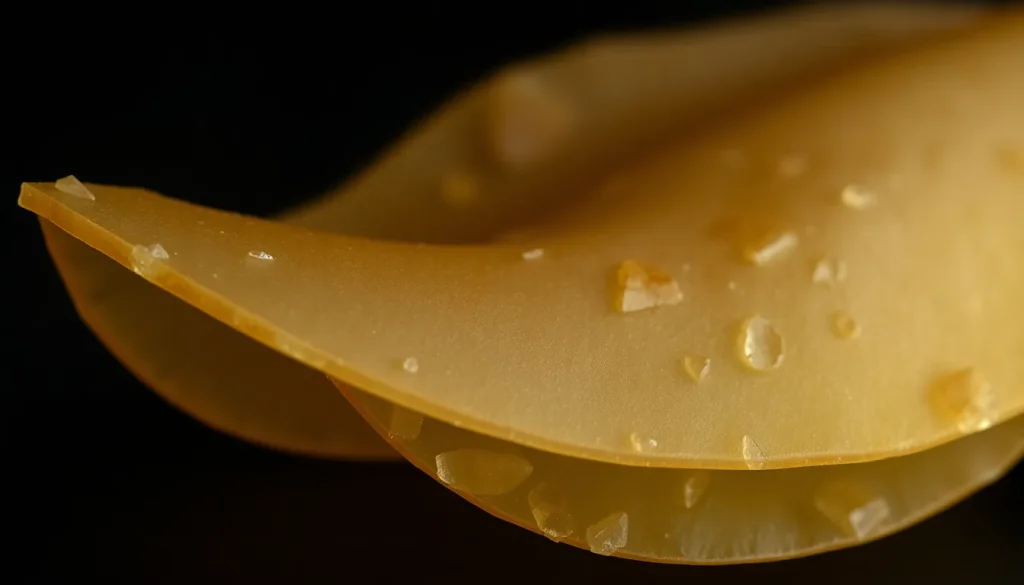
Clintonite is a member of the mica group of phyllosilicate minerals. Its chemical composition is Ca(Mg,Al)3(Al,Si)4O10(OH)2, placing it within the calcium‑magnesium rich micas. The mineral crystallises in the monoclinic system and typically forms thin, flexible sheets or platy crystals with a vitreous to pearly luster. Color ranges from earthy brown and green‑brown to gray‑yellow, often appearing translucent to opaque.
History and Origin
The name “clintonite” honors De Witt Clinton, an American geologist who first described the mineral in the late 19th century. Initial specimens were reported from metamorphic schists in New York State, USA. Since then, clintonite has been identified in a variety of metamorphic environments worldwide, including the western United States (California, New York), Ontario in Canada, the Ural Mountains of Russia, the Massif Central of France, and parts of Australia.
Meaning and Symbolism
In the context of gemstone meaning, clintonite is associated with grounding and emotional balance. Its earthy tones are thought to reflect stability, while its flexible sheet structure symbolizes adaptability. Collectors value clintonite for its rarity as a decorative mineral and for its subtle, natural beauty in cabochon or inlay work.
Healing and Metaphysical Properties
Traditional crystal‑healing beliefs attribute the following properties to clintonite:
- Emotional grounding: Helps calm scattered thoughts and promotes a sense of inner stability.
- Heart‑centered healing: Believed to open the heart chakra, encouraging forgiveness and compassion.
- Physical support: Some practitioners claim it assists with joint comfort and reduces inflammation, though these claims are not medically verified.
These meanings are based on folklore and contemporary crystal‑healing literature, not on scientific evidence.
Varieties and Types
Clintonite occurs in several visual varieties, primarily distinguished by color and degree of alteration:
- Brown clintonite: The most common, displaying uniform brown to chocolate tones.
- Green‑brown clintonite: Shows a subtle greenish hue, often found in higher‑grade metamorphic zones.
- Yellowish‑gray clintonite: Rare, with pale yellow or gray undertones, prized by collectors.
All varieties share the same basic chemistry; differences arise from trace element substitution and exposure to varying metamorphic conditions.
Jewelry Uses and Care
Because clintonite ranks 2.5–4 on the Mohs scale, it is relatively soft compared to traditional gemstones. Its primary jewelry applications are:
- Cabochons set in protective bezels or as inlays in earrings and pendants.
- Artistic mosaics and decorative objects where its sheet‑like habit can be showcased.
When wearing clintonite, avoid abrasive activities, impact, and prolonged exposure to chemicals. Cleaning should be gentle: use lukewarm water with a mild soap, a soft brush, and dry with a lint‑free cloth. Ultrasonic cleaners and steam are discouraged, as they can cause delamination or surface damage.
Buying Guide
When purchasing clintonite, consider the following factors:
- Origin: Reputable sources will disclose the locality (e.g., California, Ontario). Provenance helps confirm natural origin.
- Color consistency: Look for even coloration without excessive zoning, which can indicate higher aesthetic value.
- Cut and finish: Well‑polished cabochons display the characteristic pearly luster; low‑quality pieces may appear dull.
- Treatment disclosure: Some specimens are stabilized with resin; ensure any treatment is fully disclosed.
- Certification: For larger or high‑value pieces, request a gemological report from an accredited laboratory.
n
Because high‑grade, transparent clintonite is uncommon, prices are modest compared with more durable gemstones. Always buy from established dealers who offer return policies and authenticity guarantees.
FAQ
What is Clintonite good for?
Clintonite is prized by collectors for its unique sheet habit and subtle earthy colors, and it is occasionally used in cabochon jewelry. In crystal‑healing circles, it is believed to promote emotional grounding and heart‑centered balance, though these claims are not medically verified.
Is Clintonite rare?
Clintonite is not considered a rare mineral in the earth’s crust, but gem‑quality, translucent specimens are uncommon. High‑grade material suitable for jewelry is limited, making it a niche collector’s stone.
How can you tell if Clintonite is real?
Authentic clintonite shows perfect basal cleavage, a Mohs hardness of 2.5‑4, and a pearly luster on fresh surfaces. It will feel slightly greasy to the touch. Professional gemological testing, such as X‑ray diffraction or microscopy, provides definitive verification.
What chakra is Clintonite associated with?
Traditional crystal‑healing beliefs associate Clintonite with the Heart chakra, where it is said to encourage compassion and emotional stability.
How should you clean Clintonite?
Clean clintonite gently with lukewarm water, a few drops of mild dish soap, and a soft brush. Rinse and pat dry with a lint‑free cloth. Avoid ultrasonic cleaners, steam, or harsh chemicals, as the mineral’s low hardness makes it vulnerable to damage.
Leave a Reply