
Short Answer
Overview
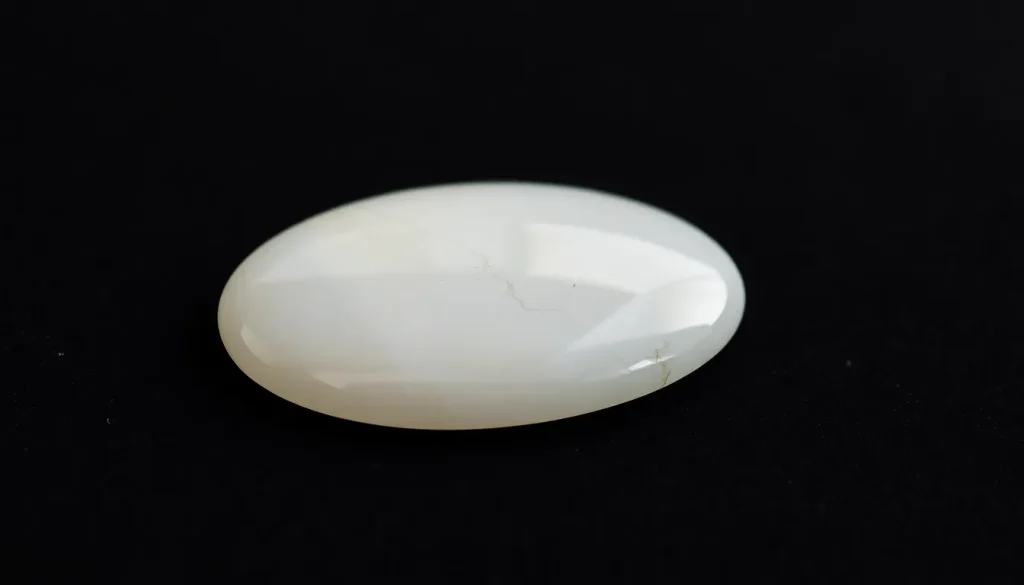
Magnesite (MgCO₃) is a magnesium carbonate mineral that forms in a variety of colors ranging from pure white to gray, brown, pink, and greenish hues. Though primarily known as an industrial mineral, certain high‑clarity specimens are cut for ornamental use and occasionally appear in jewelry.
History and Origin
The name derives from the ancient region of Magnesia in Thessaly, Greece, where the mineral was first described by ancient scholars. Naturally occurring magnesite forms through the alteration of magnesium‑rich rocks in hydrothermal veins, sedimentary basins, and metamorphic environments. Significant deposits are found in Greece, China, Russia, the United States (New Mexico), Austria, and Spain.
Meaning and Symbolism
In folklore, magnesite has been associated with grounding and stability, symbolizing the ability to “stay rooted” during change. It is sometimes regarded as a stone of perseverance, encouraging patience and steady progress.
Healing and Metaphysical Properties
Crystal‑healing traditions attribute magnesite with the following qualities:
- Promoting emotional balance and reducing anxiety.
- Supporting the physical body’s magnesium needs, believed to aid muscle relaxation.
- Enhancing focus and mental clarity, especially for study or detailed work.
These claims are based on traditional beliefs and are not a substitute for professional medical advice.
Varieties and Types
Magnesite occurs in several varieties distinguished by color and formation:
- Pure White Magnesite: Transparent to translucent, often used for carving.
- Grey Magnesite: Common in massive aggregates, typically opaque.
- Pink or Reddish Magnesite: Colored by trace iron or manganese, prized by collectors.
- Brown/Chocolate Magnesite: Contains organic inclusions, used mainly for ornamental pieces.
Jewelry Uses and Care
Because of its relatively low hardness (3.5–4.5 on the Mohs scale) and perfect basal cleavage, magnesite is best suited for pendants, earrings, and beads rather than rings or bracelets that endure heavy wear. When set in protective bezels or cabochons, it can showcase its subtle glow.
Care instructions:
- Clean with a soft, damp cloth; avoid ultrasonic cleaners.
- Do not expose to harsh chemicals, acids, or prolonged heat.
- Store separately from harder gemstones to prevent scratching.
Buying Guide
When selecting magnesite, consider the following:
- Clarity and Color: Look for uniform color and minimal surface inclusions.
- Cut Quality: Well‑polished cabochons display the stone’s natural luster.
- Treatment Disclosure: Some specimens are dyed or stabilized; reputable dealers will disclose any enhancements.
- Certification: For valuable pieces, request a gem‑ological report from a recognized laboratory.
Because magnesite is relatively abundant, price is generally modest, but rare pink or exceptionally clear specimens may command higher values.
FAQ
What is magnesite good for?
Magnesite is used industrially for refractory products and as a source of magnesium. In jewelry, it provides a subtle, earthy aesthetic. Traditionally, it is believed to promote grounding and emotional balance, though these are not medical claims.
Is magnesite rare?
Magnesite is relatively common in the earth’s crust, but high‑clarity, well‑colored specimens suitable for jewelry are less frequent, making quality pieces moderately rare.
How can you tell if magnesite is real?
Real magnesite feels relatively soft (Mohs 3.5–4.5) and may show perfect basal cleavage. It has a white streak and a vitreous to pearly luster. Professional gemologists can confirm identity using refractive index, specific gravity, and spectroscopy.
What chakra is magnesite associated with?
In crystal‑healing traditions magnesite is sometimes linked to the Root (Muladhara) chakra for grounding, though there is no single standard chakra association.
How should you clean magnesite?
Gently wipe magnesite with a soft, damp cloth and mild soap if needed. Avoid ultrasonic cleaners, harsh chemicals, and high heat. Store it separately from harder stones to prevent scratches.
Leave a Reply