
Short Answer
Overview
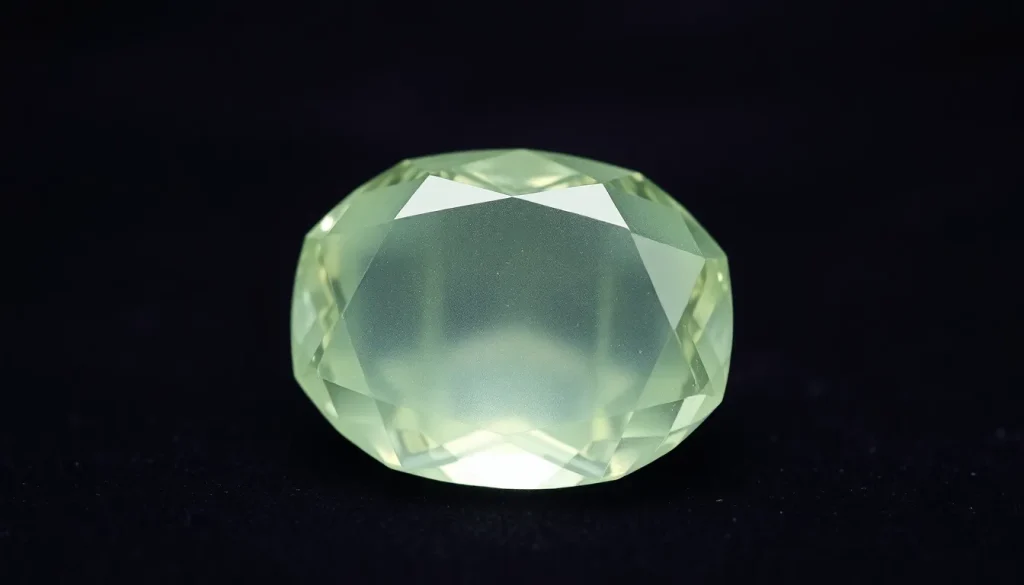
Clinozoisite is a member of the epidote group of sorosilicate minerals. It crystallises in the monoclinic system and is the monoclinic polymorph of zoisite. In gemstone form it is valued for its subtle colour palette ranging from colourless to pale green, yellow, brown or pink. Although not as widely known as its counterpart zoisite, clinozoisite is used in fine jewellery, collectors’ pieces, and as a material in crystal‑healing practices.
History and Origin
The name clinozoisite derives from the Greek klinos meaning “inclined”, referring to its monoclinic crystal symmetry, and the mineral name zoisite. It was first described in the early 20th century from specimens collected in the Alpine region of Austria. Natural deposits are found in metamorphic skarns and gneisses where calcium‑rich rocks have been altered by heat and pressure. Notable localities include Austria (Zell am See), Norway (Kongsberg), the United States (California and New York), Canada (Ontario), and Tanzania where vanadium‑rich varieties are called tanzanite (a distinct species of zoisite, not clinozoisite).
Meaning and Symbolism
In traditional gemstone lore, clinozoisite is associated with clarity of thought and emotional balance. Its gentle green hues are said to symbolize growth, renewal, and the soothing influence of nature. The stone is thought to encourage honest communication and to aid in the expression of personal truth.
Healing and Metaphysical Properties
Crystal‑healing practitioners attribute the following properties to clinozoisite, based on longstanding belief rather than scientific evidence:
- Emotional grounding: Supports the heart centre, helping to release past emotional wounds.
- Mental clarity: Assists in focusing the mind during meditation or study.
- Physical support: Traditionally linked to the respiratory system and the spine, though no medical claims are made.
These attributes are considered complementary to personal wellness practices and should not replace professional medical advice.
Varieties and Types
Clinozoisite occurs in several colour varieties, each influenced by trace elements and geological conditions:
- Colourless to white – the most common, often used in faceted cabochons.
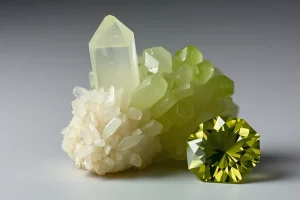
- Pale green – caused by iron and manganese, prized for its soothing hue.
- Yellow to brown – iron‑rich specimens that may develop a warm, honey‑like tone.
- Pink – rare, resulting from trace chromium.
Untreated clinozoisite is usually transparent to translucent. Heat treatment is rarely applied, unlike its cousin zoisite, because the colour range is already subtle.
Jewelry Uses and Care
With a Mohs hardness of 6.5–7, clinozoisite is suitable for many types of jewellery, including rings, pendants, earrings, and brooches. Its modest cleavage (perfect in one direction) means that setting should protect against impact.
Care Guidelines
- Clean with warm, soapy water and a soft brush; avoid ultrasonic cleaners if the stone has any fractures.
- Dry with a lint‑free cloth; do not expose to harsh chemicals or acids.
- Store separately from harder gemstones (e.g., diamonds, sapphires) to prevent scratching.
Buying Guide
When purchasing clinozoisite, consider the following factors:
- Colour and clarity: Look for even colour distribution and minimal inclusions. Pale green specimens are generally the most sought after.
- Cut: Well‑cut facets enhance brilliance; cabochon cuts are common for colourless stones.
- Origin: Reputable sources from known localities (Austria, Norway, USA) add confidence to authenticity.
- Certification: Request a gemological report from a recognized laboratory if the stone is of high value.
- Treatment disclosure: Genuine clinozoisite is usually untreated; any heat‑treated specimens should be disclosed.
Buying from a trusted jeweller or mineral dealer ensures that the stone is genuine and ethically sourced.
FAQ
What is clinozoisite good for?
Clinozoisite is used in jewelry for its subtle colour and durability, and in crystal‑healing practices for its traditional associations with emotional balance and mental clarity.
Is clinozoisite rare?
High‑quality, well‑coloured clinozoisite is less common than many popular gemstones, but the mineral itself is not extremely rare; it occurs in several countries and is found in moderate quantities.
How can you tell if clinozoisite is real?
Authentic clinozoisite exhibits a monoclinic crystal habit, a Mohs hardness of 6.5–7, and a vitreous luster. Professional gemological testing, such as refractive index measurement, can confirm its identity.
What chakra is clinozoisite associated with?
Traditionally, clinozoisite is linked to the Heart (Anahata) chakra, reflecting its green hues and associations with love, compassion, and emotional healing.
How should you clean clinozoisite?
Clean clinozoisite with warm, mildly soapy water and a soft brush, then dry with a lint‑free cloth. Avoid ultrasonic cleaners and harsh chemicals, and store it separately from harder gemstones.
Leave a Reply