
Short Answer
Overview
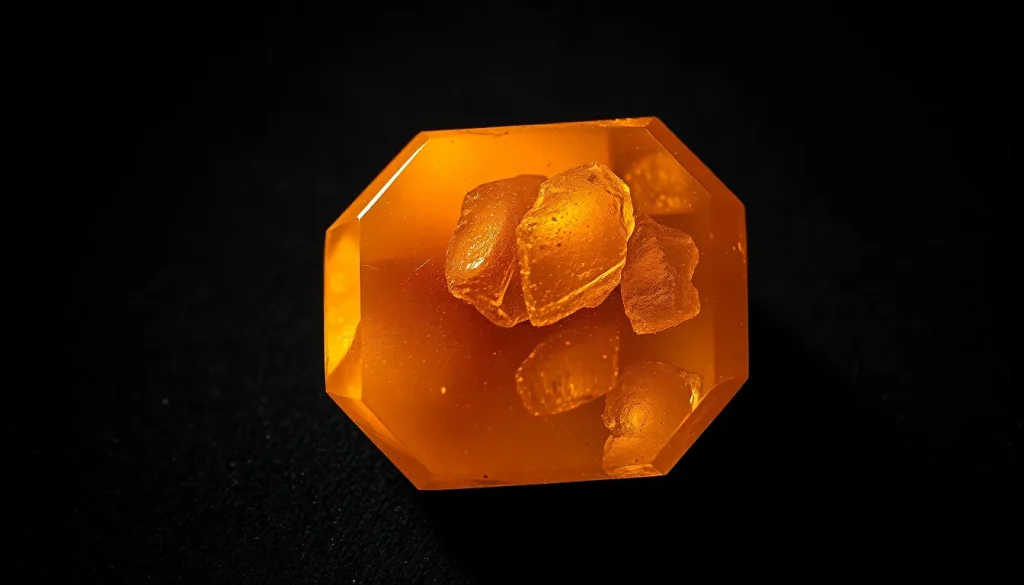
Bastnaesite is a rare-earth fluorocarbon mineral primarily composed of cerium, lanthanum, and yttrium carbonates with fluorine. Its chemical formula is commonly expressed as (Ce,La,Y)CO3F. The mineral crystallizes in the orthorhombic system and is known for its high specific gravity, adamantine luster, and colors ranging from pale yellow to deep brown. Although it is best known as a source of rare‑earth elements, bastnaesite can be cut and polished for use in specialty jewelry and as a collector’s gemstone.
History and Origin
The name “bastnaesite” derives from the Swedish village of Bastnäs in Västmanland, where the mineral was first described in 1840 by the mineralogist Wilhelm Hisinger. Early samples were studied for their unusual composition and bright fluorescence under ultraviolet light. In the 20th century, bastnaesite gained industrial importance as a major ore of cerium, lanthanum, and other light rare‑earth elements. Major deposits are found in carbonatite and alkaline igneous complexes, notably the Bayan Obo deposit in Inner Mongolia (China), the Mountain Pass deposit in California (USA), and the Kvanefjeld project in Greenland. Small, gem‑quality crystals have also been reported from Madagascar, Russia’s Kola Peninsula, and certain pegmatitic veins in Brazil.
Meaning and Symbolism
In modern gemstone lore, bastnaesite is associated with clarity of purpose and the ability to “illuminate” one’s path. Its bright, sometimes golden‑yellow hues are said to represent inner light and the uncovering of hidden potential. Collectors often view bastnaesite as a symbol of scientific progress because of its pivotal role in the production of high‑tech magnets, batteries, and lighting.
Healing and Metaphysical Properties
Traditional crystal‑healing beliefs attribute bastnaesite with the following properties:
- Grounding and stability: Thought to help anchor scattered mental energy, promoting focus and determination.
- Enhancement of intellect: Believed to stimulate mental clarity, support learning, and aid in problem‑solving.
- Support for the thyroid: Some practitioners claim it can balance thyroid function, though this is not a medical claim.
These attributes are based on cultural and metaphysical traditions and should not replace professional medical advice.
Varieties and Types
Bastnaesite occurs in several compositional varieties, distinguished mainly by the dominant rare‑earth element:
- Bastnaesite‑(Ce): The most common variety, rich in cerium.
- Bastnaesite‑(La): Lanthanum‑rich, often lighter in color.
- Bastnaesite‑(Y): Yttrium‑dominant, typically found in more evolved alkaline complexes.
All varieties share the same crystal structure but may display subtle differences in hue, from pale yellow (La‑rich) to reddish‑brown (Ce‑rich).
Jewelry Uses and Care
Because of its moderate hardness (5.5–6 on the Mohs scale) and perfect cleavage on {010}, bastnaesite is considered a semi‑precious gemstone that requires careful handling. It is most often used in pendants, earrings, and cabochon settings where the stone can be protected from impact.
Care recommendations:
- Clean with a soft, lint‑free cloth; avoid ultrasonic cleaners that may cause fracture.
- Use mild soap and lukewarm water for deeper cleaning, never harsh chemicals.
- Store separately from harder gemstones such as quartz or diamond to prevent scratches.
- Avoid prolonged exposure to direct sunlight, which can fade some yellow tones over time.
Buying Guide
When selecting bastnaesite for jewelry or collection, consider the following criteria:
- Color and Saturation: Deep, even coloration without visible zoning is most valued.
- Clarity: Inclusions are common; however, large, clear zones increase cut quality.
- Cut: Cabochon or polished oval shapes are preferred to minimize stress on cleavage planes.
- Certification: Request a gemological report that confirms identity, chemical composition, and any treatments (e.g., heat or irradiation).
- Origin: Reputable sources from known localities such as Bayan Obo or Mountain Pass add provenance value.
Because bastnaesite is not a mainstream gemstone, prices can vary widely. High‑quality, transparent specimens may command premium prices, while lower‑grade material is often sold for industrial or ornamental purposes.
FAQ
What is bastnaesite good for?
Bastnaesite is primarily valued as a source of light rare‑earth elements for magnets, batteries, and catalysts. In gemstone circles, it is used decoratively in pendants and collectors' pieces for its unique color and rarity.
Is bastnaesite rare?
High‑grade, gem‑quality bastnaesite is relatively rare because most deposits are mined for industrial REE extraction. Fine, transparent specimens are uncommon, while lower‑grade material is more abundant.
How can you tell if bastnaesite is real?
Real bastnaesite displays an adamantine luster, a specific gravity above 5, and perfect cleavage on {010}. It may fluoresce under UV light. Professional gemological testing, including refractive index measurement and spectroscopic analysis, is recommended for certainty.
What chakra is bastnaesite associated with?
In crystal‑healing traditions, bastnaesite is sometimes linked to the Root chakra for grounding and focus, though there is no universally accepted chakra assignment.
How should you clean bastnaesite?
Clean bastnaesite with a soft, lint‑free cloth and mild soap in lukewarm water. Avoid ultrasonic cleaners and harsh chemicals, and store it separately from harder gemstones to prevent scratches.
Leave a Reply