
Short Answer
Overview
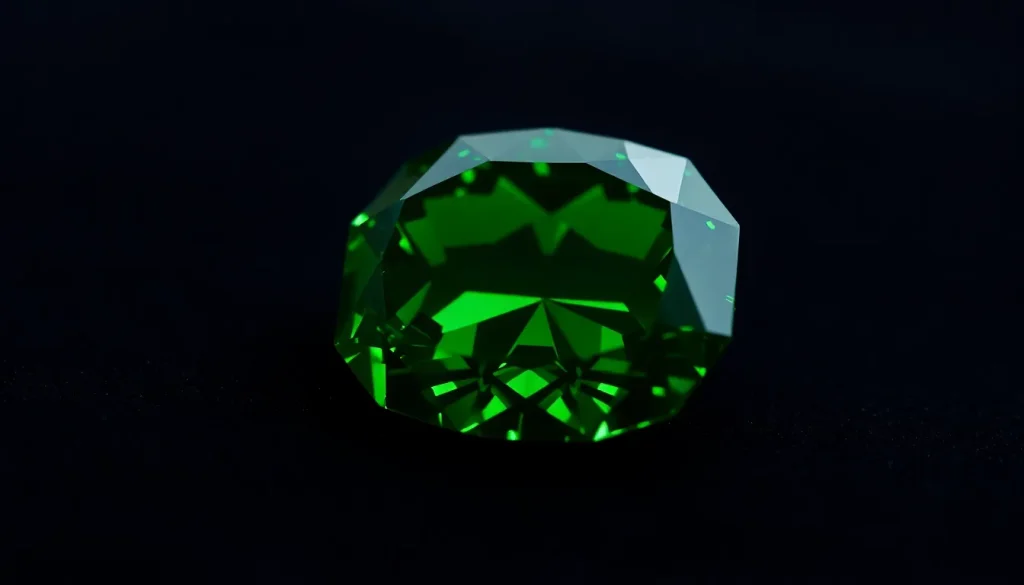
Andradite is a calcium‑iron garnet belonging to the garnet group of silicate minerals. Its chemical formula is Ca₃Fe₂(SiO₄)₃ and it crystallises in the cubic system. The species is best known for its vivid green variety, demantoid, and its deep‑black form, melanite. Because of its high refractive index and dispersion, high‑quality specimens are prized in fine jewelry.
History and Origin
The mineral was first described in 1868 and named after the Brazilian mineralogist José Bonifácio de Andrada e Silva. Early documented sources include the Langesundsfjord area of Norway, where the brilliant green demantoid was discovered in the late 19th century. Since then, significant deposits have been identified in Italy (Sardinia), Russia (Ural Mountains), the United States (California), Canada (Ontario), Madagascar, Tanzania, and several Scandinavian localities.
Meaning and Symbolism
In traditional gemstone lore, andradite is associated with protection, clarity of thought, and the encouragement of personal transformation. The green demantoid is often linked to hope and renewal, while the black melanite is said to absorb negativity. These symbolic meanings make the stone a popular talisman for those seeking emotional balance.
Healing and Metaphysical Properties
Crystal‑healing practitioners attribute the following properties to andradite, describing them as traditional beliefs rather than medical facts:
- Emotional balance: Helps to release old patterns and foster optimism.
- Physical support: Said to aid the circulatory and respiratory systems.
- Spiritual growth: Believed to enhance intuition and promote inner vision.
These claims are based on centuries‑old folklore and are not supported by scientific evidence.
Varieties and Types
Andradite occurs in several color varieties, each with its own trade name:
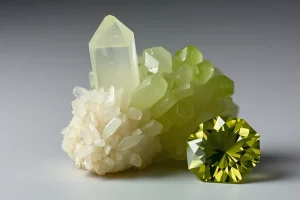
- Demantoid: A vivid, emerald‑green variety prized for its exceptional fire and brilliance.
- Melanite: A deep black or dark brown form, often used as a contrasting gemstone.
- Other colors: Yellow, orange, brown, and reddish hues occur, though they are less common in the gem market.
Jewelry Uses and Care
Because of its hardness (6.5–7.5 on the Mohs scale) and high refractive index, andradite is suitable for rings, pendants, earrings, and high‑end watch bezels. Care recommendations include:
- Clean with warm, soapy water and a soft brush; avoid harsh chemicals.
- Dry with a lint‑free cloth; do not ultrasonic clean if the stone has known fractures.
- Store separately from softer gems to prevent scratching.
- Avoid prolonged exposure to high heat, which can cause thermal shock in stones with inclusions.
Buying Guide
When purchasing andradite, consider the following factors:
- Color saturation: The most valuable demantoids display a vivid, saturated green without brown overtones.
- Clarity: Inclusions are common; a clean eye‑clean stone commands higher prices.
- Cut: Well‑proportioned facets enhance the stone’s fire and brilliance.
- Treatment disclosure: Some stones are heat‑treated to improve color; reputable dealers should disclose any enhancement.
- Certification: Request a gem‑ological report from a recognized laboratory (e.g., GIA, IGI).
Buying from a reputable jeweller or gem dealer reduces the risk of misidentification with similar garnets or synthetic materials.
FAQ
What is Andradite good for?
Andradite is valued for its high brilliance in jewelry and is traditionally believed to promote emotional balance and protection. These metaphysical claims are part of folklore and not medically verified.
Is Andradite rare?
High‑quality demantoid and black melanite are relatively rare, especially in large, eye‑clean stones. Rarity depends on color saturation, clarity, cut, and whether the specimen is untreated.
How can you tell if Andradite is real?
Real andradite shows a high refractive index, strong fire, and a cubic crystal habit. Professional testing with a refractometer, spectroscope, or gem‑lab certification is recommended for certainty.
What chakra is Andradite associated with?
In crystal‑healing traditions, Andradite is most often linked to the Heart (Anahata) chakra, thought to support love and emotional healing.
How should you clean Andradite?
Clean with warm, mildly soapy water and a soft brush, then dry with a lint‑free cloth. Avoid harsh chemicals, ultrasonic cleaners if the stone has fractures, and prolonged high heat.
Leave a Reply