
Short Answer
Overview
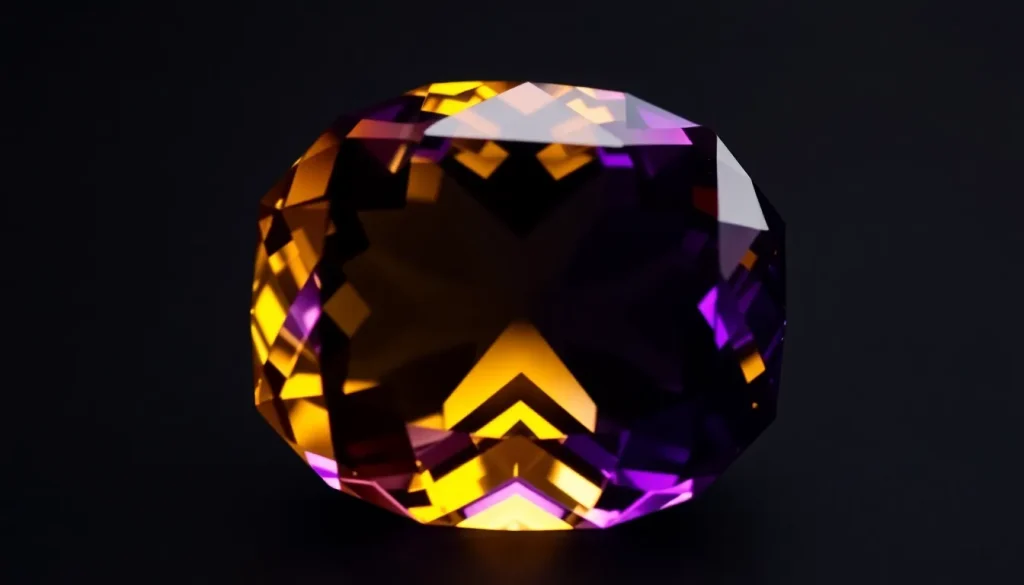
Ametrine is a naturally occurring variety of quartz that exhibits distinct zones of amethyst (purple) and citrine (yellow to orange) within the same crystal. The name combines “amethyst” and “citrine,” reflecting its dual coloration. Chemically it is silicon dioxide (SiO2) and shares the hardness and crystal structure of all quartz specimens.
History and Origin
The most famous deposits of true natural Ametrine are found in the Anzaldo region of Bolivia, where the unique geological conditions allow the simultaneous formation of both amethystic and citrine zones during crystal growth. Historically, Bolivian Ametrine was exported to Europe in the early 20th century, where it quickly became a collector’s favorite for its vivid bicolor appearance. While some Ametrine on the market is produced by heat‑treating amethyst, the untreated natural variety remains prized for its rarity.
Meaning and Symbolism
In traditional gemstone lore, amethyst is associated with spiritual insight and calm, while citrine is linked to personal power and abundance. Ametrine is therefore said to combine these qualities, offering a balance between inner tranquility and outward confidence. It is often presented as a stone that helps integrate intuition with practical action.
Healing and Metaphysical Properties
Crystal‑healing practitioners describe Ametrine as a stone that aligns the Crown and Solar Plexus chakras, encouraging the flow of higher‑dimensional wisdom into personal willpower. It is believed to aid in overcoming fear, enhancing creativity, and manifesting goals. These claims are part of traditional belief systems and are not intended as medical advice.
Varieties and Types
While the classic Ametrine shows a sharp contrast between purple and yellow zones, variations exist:
- Heat‑treated Ametrine – Amethyst crystals that have been partially heated to develop citrine coloration. The treatment is widely used but should be disclosed by sellers.
- Cat’s Eye Ametrine – Rare specimens that exhibit chatoyancy (a cat‑eye effect) in addition to the bicolor pattern.
- Gradient Ametrine – Stones where the color transition is more blended, creating a subtle shift from purple to yellow.
Jewelry Uses and Care
With a Mohs hardness of 7, Ametrine is suitable for most jewelry settings, including rings, earrings, pendants, and bracelets. However, its conchoidal fracture means it can chip if struck sharply. Recommended care:
- Clean with warm, soapy water and a soft brush; avoid ultrasonic cleaners if the stone has been heat‑treated.
- Store separately from softer gemstones to prevent scratches.
- Avoid prolonged exposure to high heat or direct sunlight, which can alter the delicate color balance.
Buying Guide
When purchasing Ametrine, consider the following factors:
- Origin – Natural Bolivian Ametrine is more valuable than heat‑treated alternatives.
- Color Balance – Look for a clear, sharp division between purple and yellow; a well‑balanced stone displays both colors prominently.
- Clarity – Inclusions are common in quartz; however, excessive cloudiness can diminish brilliance.
- Cut – Faceted cuts enhance the dual‑tone effect, while cabochon cuts may emphasize the stone’s translucency.
- Certification – Reputable dealers provide gem‑ological reports indicating whether the stone is natural or heat‑treated.
By evaluating these aspects, collectors and jewelry lovers can ensure they acquire a genuine, high‑quality Ametrine specimen.
FAQ
What is Ametrine good for?
Ametrine is valued for its striking dual color in jewelry and is traditionally believed to blend the calming influence of amethyst with the energizing qualities of citrine, supporting both inner reflection and outward confidence.
Is Ametrine rare?
Natural, untreated Ametrine from Bolivia is relatively rare, especially in larger sizes with a clear color division. Heat‑treated versions are more common and less expensive.
How can you tell if Ametrine is real?
Examine the stone for a natural, sharp boundary between purple and yellow zones, and look for typical quartz inclusions. Professional testing, such as spectroscopy or a certified gem‑lab report, confirms authenticity and whether any heat treatment has occurred.
What chakra is Ametrine associated with?
Traditional crystal‑healing beliefs associate Ametrine with the Crown Chakra for spiritual insight and the Solar Plexus Chakra for personal power, though there is no universally accepted single chakra.
How should you clean Ametrine?
Clean Ametrine with warm, mildly soapy water and a soft brush. Avoid ultrasonic cleaners if the stone has been heat‑treated, and store it separately from softer gems to prevent scratches.
Leave a Reply