
Short Answer
Overview
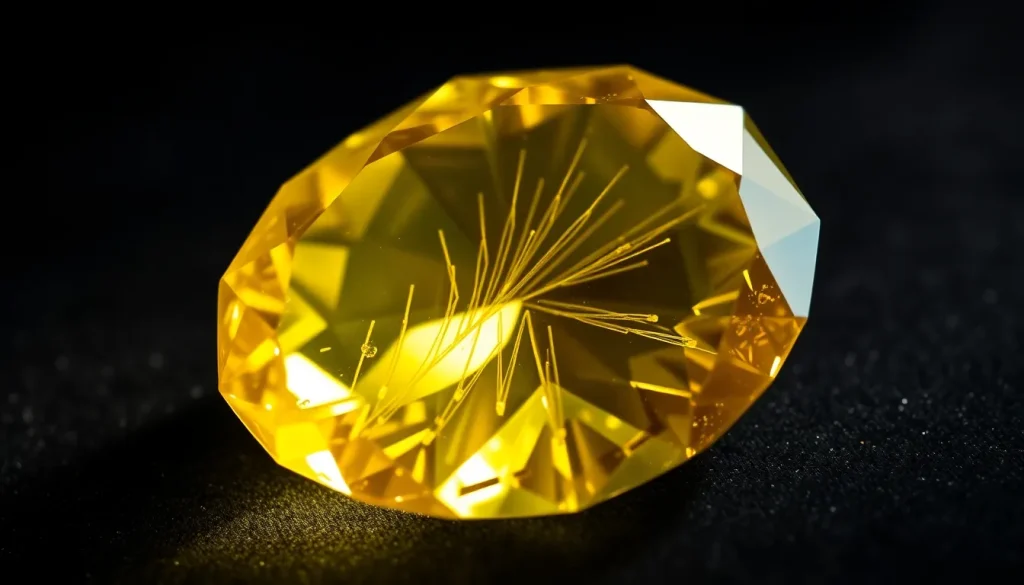
Rutile is a naturally occurring oxide of titanium (TiO₂) that forms in a tetragonal crystal system. It is best known for its high refractive index and strong dispersion, which give it an adamantine luster and a brilliant, fire‑like sparkle. Rutile occurs as transparent to translucent crystals in shades of golden yellow, brown, reddish‑brown, and black, and is also famous for the needle‑like inclusions it creates in quartz, known as rutilated quartz.
History and Origin
The name “rutile” derives from the Latin word rutilus, meaning “shining” or “glittering.” Historically, rutile was used as a pigment (known as “titanium white”) before the development of synthetic titanium dioxide. Natural rutile crystals have been collected since antiquity, but their use as gemstones became popular in the 20th century, especially when faceted specimens began to be cut for jewelry. Major deposits are found in Australia, Spain, the United States, Madagascar, Myanmar, and Sri Lanka, among other locations.
Meaning and Symbolism
In traditional gemstone lore, rutile is associated with clarity of purpose, personal power, and the ability to transform ordinary experiences into something radiant. Its needle‑like structure is said to symbolize focused energy and the capacity to cut through obstacles.
Healing and Metaphysical Properties
Crystal‑healing practitioners attribute the following properties to rutile:
- Energy amplification: Believed to intensify the wearer’s intentions and support personal transformation.
- Confidence and willpower: Associated with the Solar Plexus chakra, it is thought to boost self‑esteem and determination.
- Mental clarity: Linked to the Third Eye, it is said to enhance focus, insight, and spiritual awareness.
These claims are based on traditional beliefs and are not medical advice.
Varieties and Types
Rutile is encountered in several forms:
- Faceted rutile: Cut into gemstones, displaying golden to reddish hues and high brilliance.
- Rutilated quartz: Quartz that contains abundant rutile needles, creating striking star‑like patterns.
- Black rutile: Rare, opaque specimens prized for their deep color and metallic luster.
Jewelry Uses and Care
Rutile’s hardness (6–6.5 on the Mohs scale) makes it suitable for rings, pendants, earrings, and brooches, though its perfect basal cleavage can cause chipping if struck. When set in protective mounts, rutile pieces showcase their fire without excessive wear.
Care guidelines:
- Clean with a soft, lint‑free cloth and warm soapy water; avoid ultrasonic cleaners that may stress internal inclusions.
- Store separately from softer gemstones to prevent scratches.
- Avoid prolonged exposure to strong acids or alkalis, which can affect surface polish.
Buying Guide
When purchasing rutile, consider the following factors:
- Color and clarity: Deep golden or rich brown hues with minimal surface blemishes are most desirable.
- Cut quality: Well‑cut stones exhibit strong dispersion and minimal facet loss.
- Origin: Reputable sources such as Australia, Spain, or Madagascar often guarantee natural, untreated material.
- Certification: Request a gemological report from a recognized laboratory (e.g., GIA) to confirm authenticity and any treatments.
Because synthetic rutile (titanium dioxide) can be produced, verification by a qualified gemologist is advisable for high‑value purchases.
FAQ
What is rutile good for?
Rutile is valued for its brilliant fire and golden hues in jewelry, and it is also used as a pigment and in high‑performance optics. In crystal‑healing traditions, it is believed to amplify personal power and mental clarity.
Is rutile rare?
High‑quality faceted rutile is relatively uncommon because large, color‑stable crystals are limited. However, rutile inclusions in quartz are more abundant. Rarity depends on color, clarity, and whether the stone is natural or treated.
How can you tell if rutile is real?
Authentic rutile displays a high refractive index (≈2.61) and strong dispersion. Look for needle‑like inclusions in rutilated quartz and an adamantine luster. Professional testing with a gemologist, including spectroscopy or a microscope, provides definitive verification.
What chakra is rutile associated with?
Traditional crystal‑healing sources associate rutile primarily with the Solar Plexus (Manipura) chakra for confidence, and also with the Third Eye chakra for insight.
How should you clean rutile?
Clean rutile gently with warm, soapy water and a soft cloth. Avoid ultrasonic cleaners and harsh chemicals. Store separately from softer stones to prevent scratches, and keep it away from prolonged acid exposure.
Leave a Reply