
Short Answer
Overview
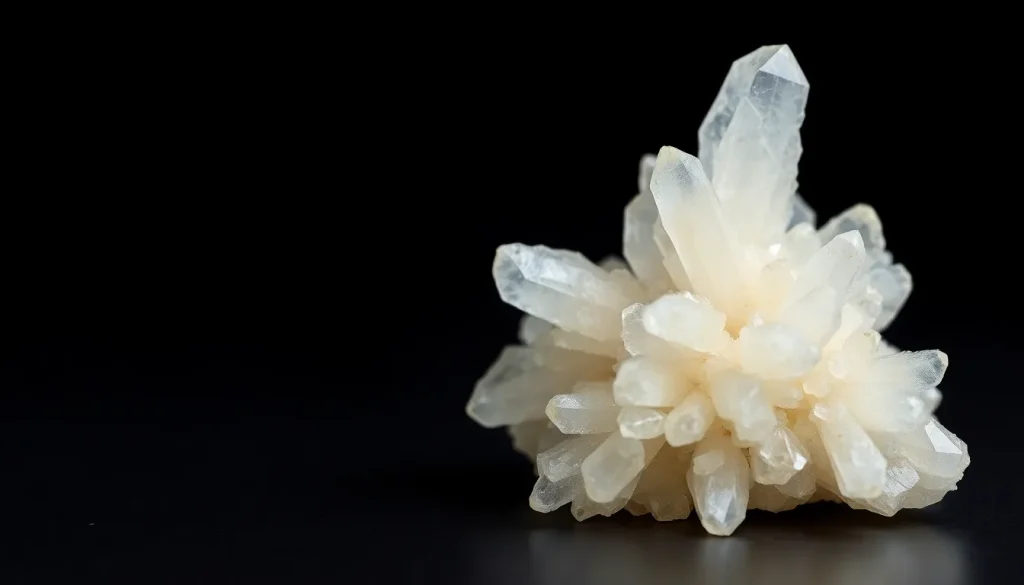
Stellerite is a member of the zeolite group of hydrated aluminosilicate minerals. It typically forms in the cavities of volcanic rocks as radiating, fibrous or tabular crystals. The stone is most often colourless to white, but can appear in pale yellows, pinks, or brownish tones. With a Mohs hardness of about 5.5, Stellerite is relatively soft compared with many traditional gemstones, which influences how it is set and cared for.
History and Origin
The mineral was first described in the early 19th century and named after the Russian naturalist Georg Wilhelm Steller. It occurs in volcanic tuff and basaltic lava flows where hydrothermal fluids deposit zeolite minerals. Notable localities include the United States (especially California and Nevada), Japan, Russia (Siberian deposits), and the French Alps. Historical use of Stellerite in jewelry is limited, but the stone has been collected by mineral enthusiasts for its distinctive crystal habit.
Meaning and Symbolism
In traditional gemstone lore, Stellerite is said to embody clarity of thought and the ability to express truth. Its translucent appearance is associated with openness and purification. Some cultures view the stone as a symbol of inner balance and a bridge between the physical and subtle realms.
Healing and Metaphysical Properties
Crystal‑healing practitioners attribute the following qualities to Stellerite, describing them as beliefs rather than medical facts:
- Communication: Thought to aid clear verbal expression and support the throat chakra.
- Emotional Release: Believed to help release suppressed feelings and promote emotional cleansing.
- Physical Support: Some claim it assists the respiratory system and helps alleviate allergies, though no clinical evidence supports these uses.
Practitioners often place the stone on the throat during meditation or wear it as a pendant to encourage open communication.
Varieties and Types
Stellerite is generally uniform in composition, but variations in colour and crystal size lead to informal types:
- Pure White Stellerite – colourless to milky, most common in museum specimens.
- Yellow Stellerite – pale amber tones caused by trace iron or organic inclusions.
- Pink Stellerite – subtle pink hue from manganese impurities.
All varieties share the same zeolitic framework and physical properties.
Jewelry Uses and Care
Because of its moderate hardness and porous nature, Stellerite is best suited for earrings, pendants, and brooches where the stone can be set with protective backing. It should be avoided in rings or bracelets that endure frequent impact.
Cleaning: Use a soft, damp cloth and mild soap. Avoid ultrasonic cleaners, steam, or harsh chemicals, as they can damage the crystal lattice and any surface treatments.
Storage: Keep the stone in a padded pouch or a soft-lined jewelry box, separate from harder gemstones that could cause scratches.
Buying Guide
When purchasing Stellerite, consider the following factors:
- Clarity and Colour: Look for specimens with uniform colour and minimal visible inclusions. Pale, even hues are generally more valued.
- Cut and Setting: Because the stone is soft, a protective bezel or bezel‑set design helps preserve its surface.
- Origin Documentation: Reputable dealers will provide information on locality and any treatments (e.g., stabilization or dye).
- Certification: For high‑value pieces, request a gemological report from an accredited laboratory.
Remember that natural Stellerite is relatively rare in gem‑quality size, so price may reflect scarcity and craftsmanship rather than intrinsic value alone.
FAQ
What is Stellerite good for?
Stellerite is valued for its unique zeolitic crystal habit and is used in jewelry as pendants or earrings. Traditionally, crystal‑healing practitioners believe it supports clear communication and emotional release, but these are not medical claims.
Is Stellerite rare?
Natural, high‑quality Stellerite is relatively uncommon because sizeable, clear crystals are limited to a few localities. Rarity depends on colour, clarity, and whether the stone has been untreated.
How can you tell if Stellerite is real?
Real Stellerite feels light, has a vitreous‑pearly luster, and may show a perfect {010} cleavage under magnification. A professional gemologist can confirm identity with X‑ray diffraction or infrared spectroscopy.
What chakra is Stellerite associated with?
In crystal‑healing lore, Stellerite is most commonly linked to the Throat Chakra, where it is thought to aid verbal expression and honest communication.
How should you clean Stellerite?
Clean Stellerite gently with a soft, damp cloth and mild soap. Avoid ultrasonic cleaners, steam, harsh chemicals, or prolonged exposure to water, as its porous structure can be damaged.
Leave a Reply