
Short Answer
Overview
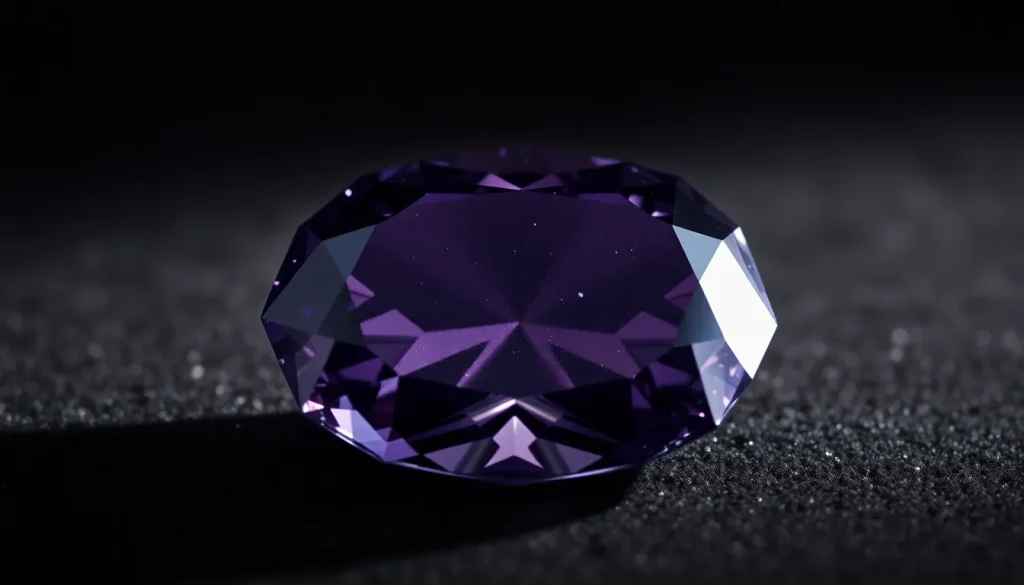
Musgravite is an ultra‑rare gemstone that belongs to the taaffeite family of beryllium‑aluminium oxides. It is most often found in shades of violet, gray‑violet, or greenish‑gray and exhibits an adamantine to vitreous luster. With a Mohs hardness of 8–8.5 and a high refractive index, musgravite is both durable and optically striking, making it a prized material for high‑end jewelry and collector pieces.
History and Origin
The mineral was first discovered in 1967 in the Musgrave Ranges of South Australia, from which it derives its name. The find was initially mistaken for a spinel, but detailed analysis revealed a new, distinct gemstone. Subsequent specimens have been identified in Madagascar, Sri Lanka, Tanzania, and a few other locations, each adding to the stone’s mystique and rarity.
Meaning and Symbolism
Traditionally, musgravite is associated with rare and refined qualities. It is said to symbolize personal transformation, inner strength, and the discovery of hidden talents. Because of its scarcity, the stone is often linked to exclusivity and the value of perseverance in achieving one’s goals.
Healing and Metaphysical Properties
In crystal‑healing circles, musgravite is believed to amplify spiritual awareness and support the Crown Chakra, fostering a deeper connection to higher consciousness. Practitioners claim it can aid in emotional balance, enhance intuition, and assist in the release of old patterns. These attributes are described as traditional beliefs and are not medical advice.
Varieties and Types
Musgravite is a magnesium‑bearing member of the taaffeite group. While the most common colour is a vivid violet, the stone can also appear in gray‑violet, lavender, or occasionally a faint greenish hue. The variations are caused by trace elements and differences in crystal lattice structure. All varieties share the same basic chemical composition, but their visual characteristics differ.
Jewelry Uses and Care
Because of its hardness (8–8.5) and brilliance, musgravite is suitable for rings, pendants, earrings, and high‑value watch settings. However, its rarity means that most faceted pieces are small, often under 2 carats. Care instructions include:
- Clean with a soft, lint‑free cloth and mild soap solution; avoid harsh chemicals.
- Use ultrasonic or steam cleaning only if the stone is set securely and is untreated.
- Store separately from softer gems to prevent scratching, though musgravite itself is relatively scratch‑resistant.
Buying Guide
When purchasing musgravite, consider the following factors:
- Origin documentation: Reputable dealers should provide country of origin and any available mining reports.
- Certification: Look for gem‑ological certificates from GIA, IGI, or a recognized laboratory confirming identity and any treatments.
- Colour and clarity: Deep, even violet with minimal inclusions commands higher value.
- Cut and proportions: A well‑cut stone maximizes brilliance and showcases the stone’s natural fire.
- Price per carat: Expect a premium price; musgravite is among the world’s most expensive gemstones, often exceeding several thousand dollars per carat for high‑quality material.
Because the market is limited, buying through an established jeweler or specialist dealer reduces the risk of misidentification.
FAQ
What is musgravite good for?
Musgravite is prized for high‑end jewelry due to its rarity and brilliance; traditionally it is also believed to support spiritual insight and emotional balance.
Is musgravite rare?
Yes. Musgravite is one of the world’s rarest gemstones, with only a few known sources and limited gem‑quality material, making high‑quality stones extremely scarce.
How can you tell if musgravite is real?
Authentic musgravite exhibits a high refractive index (≈1.75) and strong dispersion. Professional testing with a gem‑ological laboratory, including spectroscopy and density measurements, is recommended for certainty.
What chakra is musgravite associated with?
In crystal‑healing traditions, musgravite is linked to the Crown Chakra, supporting higher consciousness and spiritual connection.
How should you clean musgravite?
Clean musgravite with warm soapy water and a soft brush or cloth. Avoid harsh chemicals and ultrasonic cleaners unless the stone is set securely and confirmed untreated.
Leave a Reply