
Short Answer
Overview
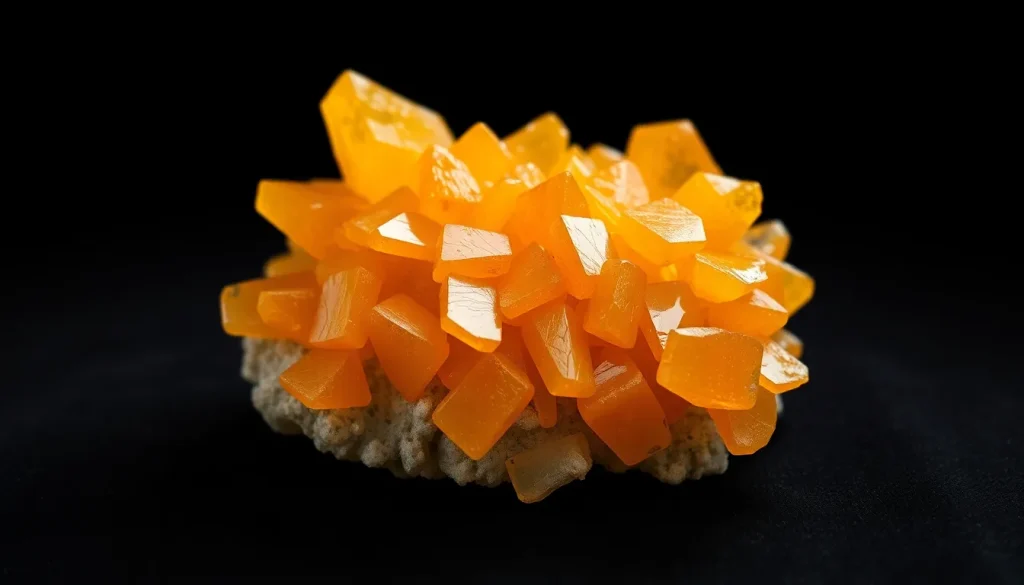
Wulfenite (PbMoO4) is a lead molybdate mineral that crystallises in the tetragonal system. It is best known for its vivid orange‑yellow to reddish‑orange plates and its high, adamantine luster. While not a traditional birthstone, it is valued by collectors and designers for its striking colour and relatively low hardness, which allows it to be cut into faceted gems and cabochons.
History and Origin
The mineral was first described in 1845 from the mining district of St. Andreasberg in the Harz Mountains of Germany and named after the Austrian mineralogist Franz Xaver von Wulfen (1728‑1805). Significant deposits have since been found in oxidised lead‑molybdenum ore zones worldwide, particularly in Namibia’s Tsumeb Mine, the Santa Eulalia district of Mexico, and in several localities in the United States such as New Mexico and Arizona. The bright colour of wulfenite makes it a popular specimen for mineral collectors, and its plate‑like habit often produces attractive, tabular crystals.
Meaning and Symbolism
In traditional gemstone lore, wulfenite is associated with ambition, personal power and the ability to seize opportunities. Its bright colour is thought to reflect inner vitality and the drive to pursue goals. The stone is sometimes linked to the solar plexus chakra, symbolising confidence and self‑esteem.
Healing and Metaphysical Properties
Crystal‑healing practitioners attribute the following properties to wulfenite, based on longstanding belief rather than scientific evidence:
- Energy amplification: Said to boost the wearer’s personal energy and motivation.
- Emotional balance: Believed to help release fear and promote optimism.
- Physical support: Traditional claims suggest assistance with digestion and metabolism, though no medical claims are endorsed.
These uses are rooted in folklore and should not replace professional medical advice.
Varieties and Types
Wulfenite occurs in several colour varieties, the most common being:
- Orange‑yellow: Bright, sunny hue, most frequently used in jewelry.
- Red: Deep, ruby‑like tones, rarer and highly prized.
- Brown‑orange: Earthier shades, often found in oxidised zones.
- Colourless: Rare, transparent crystals used mainly by collectors.
Specimens may also display zoning or iridescent surface effects due to thin‑film interference.
Jewelry Uses and Care
Because wulfenite rates only 3.5–4 on the Mohs scale, it is relatively soft and can be scratched by harder gemstones or metals. It is therefore most suitable for pendants, earrings, and brooches where the stone can be set away from frequent impact. When set in protective bezels or as a cabochon, wulfenite can showcase its colour without excessive risk.
Care recommendations:
- Clean with a soft, lint‑free cloth; avoid abrasive cleaners.
- Use mild soap and lukewarm water for deeper cleaning; do not soak for prolonged periods.
- Avoid ultrasonic cleaners and steam cleaning, as rapid temperature changes can cause fracturing.
- Store separately from harder gemstones to prevent scratches.
Buying Guide
When purchasing wulfenite, consider the following factors:
- Colour intensity: Vivid orange‑yellow or deep red hues command higher prices.
- Clarity: Look for stones without heavy inclusions or surface cracks.
- Cut and shape: Well‑cut facets or smooth cabochons enhance brilliance; avoid overly thin plates that may be fragile.
- Origin: Specimens from Tsumeb (Namibia) and Santa Eulalia (Mexico) are especially sought after by collectors.
- Treatment disclosure: Some stones are heat‑treated to improve colour; reputable dealers should disclose any treatments.
For valuable pieces, request a gemological report from a recognized laboratory (e.g., GIA or IGI) to verify authenticity and any treatments.
FAQ
What is wulfenite good for?
Wulfenite is prized for its vivid colour and high luster, making it popular in ornamental collections and as a decorative gemstone in pendants and earrings. Traditional beliefs also associate it with motivation and confidence, but these are not medically proven.
Is wulfenite rare?
High‑quality, vivid orange‑yellow or deep red wulfenite is relatively rare, especially from classic localities such as Tsumeb (Namibia). Common, lighter‑coloured material is more abundant, but large, inclusion‑free crystals are uncommon.
How can you tell if wulfenite is real?
Real wulfenite has a high refractive index (≈2.13) giving an adamantine shine, a yellow streak, and a specific gravity over 6.0. It is also soft (Mohs 3.5‑4). Professional testing with a refractometer, density measurement, or gemological laboratory report confirms authenticity.
What chakra is wulfenite associated with?
In crystal‑healing traditions wulfenite is most often linked to the Solar Plexus (Manipura) chakra, reflecting personal power and confidence.
How should you clean wulfenite?
Clean wulfenite gently with a soft cloth and mild soapy water. Avoid ultrasonic or steam cleaners, and keep the stone away from harsh chemicals and high‑impact activities to prevent scratching or fracture.
Leave a Reply