
Short Answer
Overview
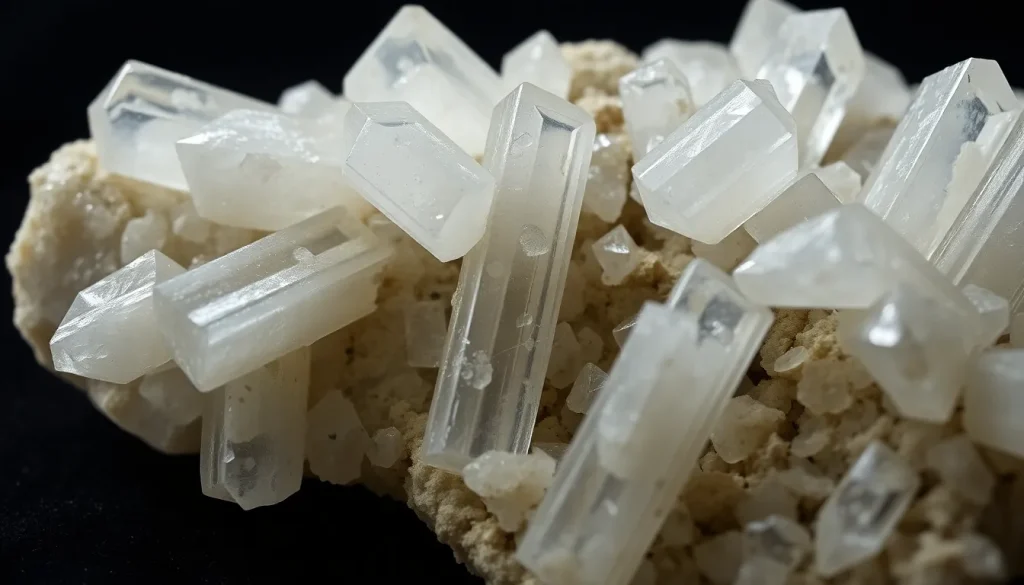
Whewellite is the mineral name for calcium oxalate monohydrate (CaC₂O₄·H₂O). It occurs as colourless to white prismatic crystals, often forming encrustations on bones, fossils, and cave walls. Although not a traditional gemstone, its delicate crystal habit and rarity in gem‑grade form make it of interest to collectors and niche jewelry designers.
History and Origin
The mineral was first described in 1828 by the English chemist William Whewell, after whom it is named. Natural deposits have been reported from sedimentary limestone regions, oxidizing environments, and as secondary mineral in hydrothermal veins. Modern occurrences are documented in Germany, the United Kingdom, the United States (Colorado), Japan, and Russia.
Meaning and Symbolism
In folklore, whewellite is sometimes linked to purity and clarity because of its transparent appearance. It is occasionally used as a symbol of resilience, reflecting the way the mineral can form in harsh, low‑pH environments.
Healing and Metaphysical Properties
Traditional crystal‑healing beliefs attribute whewellite with grounding energy, helping the wearer feel more rooted and stable. Practitioners claim it can assist in emotional detoxification and support the digestive system, though these statements are not supported by medical science.
Varieties and Types
Whewellite is generally uniform in composition, but variations in colour and crystal size occur:
- Colourless whewellite – transparent crystals, most prized for clarity.
- Pale yellow whewellite – slight yellow tint caused by trace iron or organic impurities.
- Brownish whewellite – darker specimens often found as encrustations on fossils.
In some deposits the mineral forms as a fibrous mass known as “oxalate‑vein” which is less suitable for faceting.
Jewelry Uses and Care
Because of its low hardness (2.5–3 on the Mohs scale) and perfect cleavage, whewellite is rarely set in traditional rings. When used, it is typically mounted in pendants, earrings, or brooches where the stone is protected behind a bezel or set in a protective resin. The stone should be handled gently and stored separately from harder gemstones to avoid scratches.
Buying Guide
When purchasing whewellite, consider the following:
- Clarity and colour – Transparent, colourless stones with minimal inclusions command higher value.
- Cut and size – Faceted pieces are rare; most marketable specimens are cabochons or raw crystals.
- Source documentation – Reputable dealers will provide locality information and, if possible, a gem‑ological report confirming the mineral.
- Treatment disclosure – Some sellers apply resin impregnation to improve durability; ensure any treatment is disclosed.
Because whewellite is an organic mineral, it may be more susceptible to moisture changes. Store it in a stable, low‑humidity environment.
FAQ
What is whewellite good for?
Whewellite is valued by collectors for its transparent, colourless crystals and occasionally used in niche jewelry. In crystal‑healing circles it is believed to provide grounding and emotional detoxification, though these claims are not medically verified.
Is whewellite rare?
Pure, gem‑grade whewellite crystals are relatively rare because the mineral typically occurs as a thin encrustation or in small habit. High‑clarity, colourless specimens are less common than pale or brownish material, and most occurrences are from a few localities.
How can you tell if whewellite is real?
Real whewellite is soft (Mohs 2.5–3), has perfect cleavage on {010}, and shows a white streak. It is colourless to white and exhibits a vitreous luster. Because its properties overlap with other soft minerals, a professional gem‑lab test (e.g., X‑ray diffraction) is recommended for certainty.
What chakra is whewellite associated with?
In traditional crystal‑healing belief whewellite is linked to the Root (Muladhara) chakra, thought to aid grounding and stability. This association is symbolic and not scientifically established.
How should you clean whewellite?
Clean whewellite gently with lukewarm water and a soft brush. Avoid ultrasonic cleaners and harsh chemicals. After cleaning, pat dry with a lint‑free cloth and store separately from harder gemstones to prevent scratching.
Leave a Reply