
Short Answer
Overview
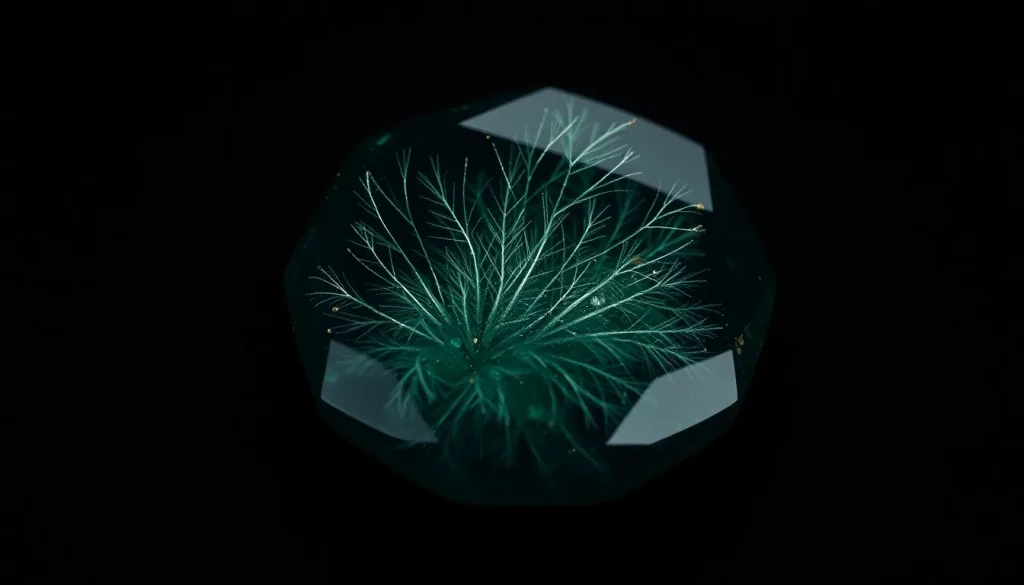
Seraphinite is a variety of the mineral clinochlore, belonging to the chlorite group of phyllosilicates. It is best known for its dark green to black base color and the distinctive feathery, metallic‑silver to gold‑colored inclusions that give the impression of angelic wings. The stone exhibits a pearly to vitreous luster and is typically translucent to opaque.
History and Origin
The name “Seraphinite” derives from the Hebrew word “seraphim,” meaning “fiery ones,” reflecting the stone’s wing‑like pattern. It was first described in the early 1970s after being mined in the Khabarovsk region of the Russian Far East. Since then, additional deposits have been identified in British Columbia (Canada), California (USA), and parts of Scandinavia, though Russian material remains the most abundant and prized.
Meaning and Symbolism
In gemstone lore, Seraphinite is associated with protection, spiritual awakening, and the higher self. Its feather‑like inclusions are said to symbolize angelic guidance, making it a popular talisman for those seeking inner peace and a sense of divine support.
Healing and Metaphysical Properties
Traditional crystal‑healing beliefs attribute the following properties to Seraphinite:
- Emotional balance: Helps release fear and anxiety, fostering a calm, centered mindset.
- Spiritual growth: Enhances meditation, intuition, and connection to higher realms.
- Physical support: Often linked to the circulatory and immune systems, though these claims are not medically verified.
These effects are considered symbolic and should not replace professional medical advice.
Varieties and Types
Seraphinite is essentially a single mineral variety, but differences arise from locality and treatment:
- Russian Seraphinite: Typically exhibits the deepest green base and the most pronounced feathering.
- North American Seraphinite: May display lighter green tones and less dense metallic inclusions.
- Heat‑treated Seraphinite: Some specimens are gently heated to enhance color contrast; reputable dealers will disclose any treatment.
n
Jewelry Uses and Care
Because of its relatively low hardness (2.5–3.5 on the Mohs scale), Seraphinite is best suited for pendants, earrings, and brooches where it is protected from abrasion. It should be set in protective mounts—often with metal that complements its green hue, such as silver or white gold.
Cleaning: Use a soft, lint‑free cloth to wipe away dust. For deeper cleaning, a mild soap solution and a soft brush are acceptable, but avoid ultrasonic cleaners and harsh chemicals, which can damage the surface or alter any treatments.
Buying Guide
When purchasing Seraphinite, consider the following factors:
- Color and pattern: Deep, uniform green with well‑defined, silvery feathering is most valued.
- Clarity: While inclusions create the characteristic pattern, excessive cloudiness can diminish brilliance.
- Origin disclosure: Reputable sellers will state the source (e.g., Russian, Canadian) and note any heat treatment.
- Certification: For higher‑value pieces, a gemological report from a recognized laboratory (e.g., GIA, IGI) provides assurance of authenticity.
- Setting suitability: Choose jewelry designs that protect the stone from impact due to its softness.
Always request detailed photographs and, when possible, view the stone in person before finalizing a purchase.
FAQ
What is Seraphinite good for?
Seraphinite is prized for its striking feather‑like appearance in jewelry and is traditionally believed to aid emotional balance and spiritual insight. It is not a substitute for medical treatment.
Is Seraphinite rare?
High‑quality Seraphinite with deep green color and vivid feathering is relatively rare, especially from the original Russian deposits. Lesser‑graded material is more abundant, and some specimens may be heat‑treated.
How can you tell if Seraphinite is real?
Real Seraphinite shows a dark green to black matrix with distinct metallic feathering and a pearly luster. Professional testing—such as refractive index measurement or X‑ray diffraction—confirms its mineral identity.
What chakra is Seraphinite associated with?
In crystal‑healing traditions, Seraphinite is most often linked to the Heart (Anahata) chakra, supporting love and compassion.
How should you clean Seraphinite?
Clean Seraphinite gently with a soft cloth and mild soapy water. Avoid ultrasonic cleaners, harsh chemicals, and high‑impact abrasion due to its low hardness.
Leave a Reply