
Short Answer
Overview
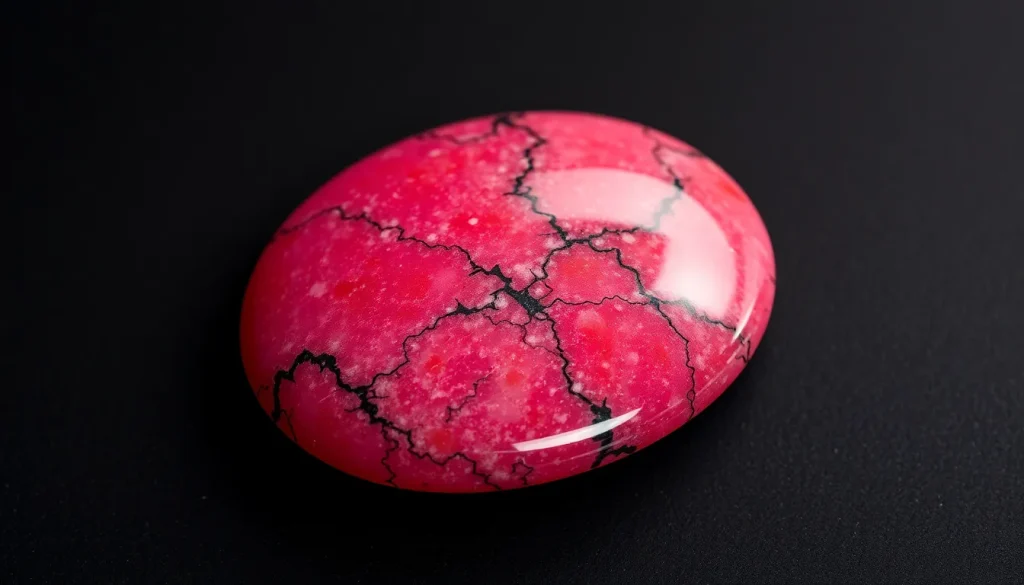
Rhodonite is a pink to rose‑red manganese inosilicate mineral prized for its striking veining and warm color. With a Mohs hardness of 5.5–6.5, it is commonly cut as cabochons or beads for jewelry and used in ornamental objects.
History and Origin
First described in 1813 from the Rhodope Mountains in Greece, rhodonite has been mined in several continents. It forms in metamorphic environments where manganese‑rich sediments are subjected to heat and pressure, producing its characteristic pink hue and black‑brown veining.
- Major historic sources: Greece, Russia (Ural Mountains), United States (California, Colorado).
- Modern commercial localities: Australia (Queensland), Finland, Canada (Ontario), Brazil.
Meaning and Symbolism
Throughout folklore, rhodonite is associated with love, compassion, and emotional balance. It is said to open the heart, promote forgiveness, and encourage honest communication.
Healing and Metaphysical Properties
In crystal‑healing traditions, rhodonite is believed to:
- Support emotional healing after loss or grief.
- Enhance self‑esteem and confidence.
- Assist in releasing past emotional wounds.
These properties are regarded as metaphysical beliefs and are not a substitute for professional medical advice.
Varieties and Types
Rhodonite occurs in several visual forms, each valued for different aesthetic qualities:
| Variety | Typical Appearance |
|---|---|
| Standard Rhodonite | Pink to rose‑red matrix with black or brown veining. |
| Rhodonite Jasper | Opaque, densely veined, often used for beads. |
| Manganese Rhodonite | Deeper red color, higher Mn content. |
| Rhodonite with White Veins | Light pink base with striking white to gray veining. |
Jewelry Uses and Care
Because of its relatively moderate hardness, rhodonite is best suited for settings that protect its surface, such as pendants, earrings, and bezel‑set rings. It should be protected from harsh impacts and prolonged exposure to acids.
Cleaning
Use warm, soapy water and a soft brush. Avoid ultrasonic cleaners and steam, which can aggravate micro‑fractures.
Storage
Store each piece separately in a soft cloth pouch or lined jewelry box to prevent scratching.
Buying Guide
When selecting rhodonite, consider the following factors:
- Color intensity: Deep, uniform pink is generally more valuable than pale or heavily mottled stones.
- Veining pattern: Fine, well‑defined black veining is prized; overly chaotic veining may lower value.
- Clarity: While rhodonite is often translucent, excessive cloudiness can indicate low quality.
- Treatment: Some specimens are stabilized or dyed; request a gemological report if possible.
- Cut and polish: A high‑quality cabochon will show a smooth, reflective surface without visible scratches.
Purchase from reputable dealers who can provide provenance and, when available, a certification from a recognized gemological laboratory.
FAQ
What is rhodonite good for?
Rhodonite is valued for jewelry making, decorative objects, and as a heart‑centered stone in crystal‑healing traditions where it is believed to support love and emotional balance.
Is rhodonite rare?
Rhodonite is relatively common in metamorphic deposits, but high‑quality, deep‑pink specimens with fine veining are less abundant and can be more valuable.
How can you tell if rhodonite is real?
Real rhodonite displays a pink to rose‑red base with distinct black or brown veining, a hardness of 5.5–6.5, and a white to light pink streak. Professional testing, such as refractive index measurement or a gemological report, confirms authenticity.
What chakra is rhodonite associated with?
Traditionally, rhodonite is linked to the Heart (Anahata) chakra, where it is believed to promote love, compassion, and emotional healing.
How should you clean rhodonite?
Clean rhodonite with warm, mildly soapy water and a soft brush. Avoid ultrasonic cleaners, steam, and harsh chemicals, and store the stone separately to prevent scratches.
Leave a Reply