
Short Answer
Overview
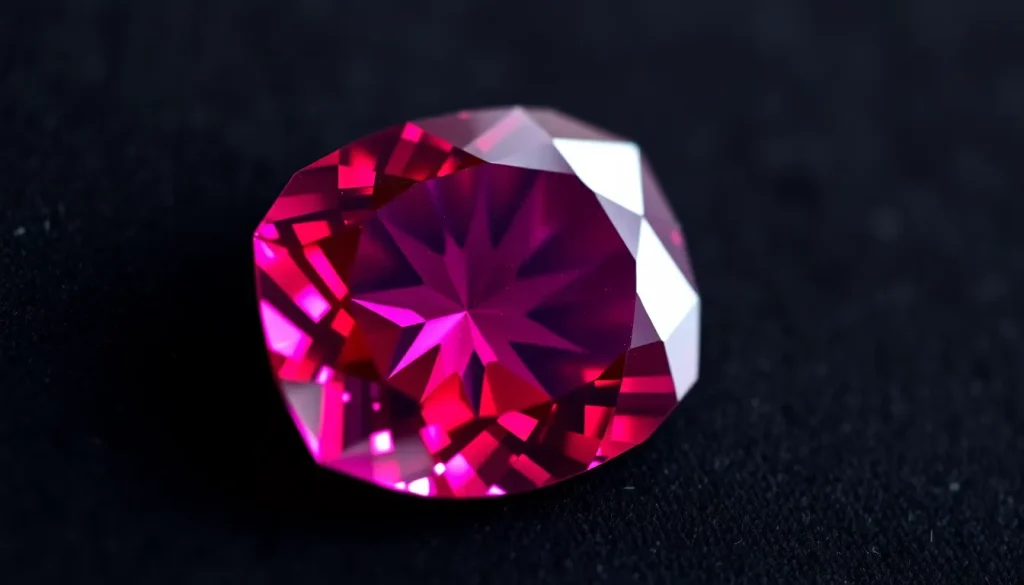
Rhodolite is a member of the garnet group, specifically a solid‑solution mixture of pyrope and almandine. Its chemical formula can be expressed as (Mg,Fe)3Al2(SiO4)3. The stone is celebrated for its intense pink‑to‑purplish‑red hue, which ranges from a soft raspberry to a deep, vibrant magenta. With a Mohs hardness of 7–7.5, rhodolite is sufficiently robust for most jewelry applications, including rings, pendants, and earrings.
History and Origin
The name “rhodolite” derives from the Greek words rhodon (rose) and lithos (stone), reflecting its characteristic rose‑red color. Historically, rhodolite was first recognized as a distinct variety of garnet in the early 20th century, although garnet stones have been used for ornamental purposes since antiquity. Major mining districts include the coastal regions of Kenya and Tanzania, the Uasin Gishu area of Kenya, the Makonde region of Tanzania, the state of Arizona in the United States, and deposits in Madagascar, India, and Mozambique. The gemstone is typically extracted from alluvial deposits and from metamorphic host rocks such as schist and gneiss.
Meaning and Symbolism
In traditional gemstone lore, rhodolite is associated with love, passion, and emotional balance. It is said to inspire confidence in personal relationships and to encourage the expression of heartfelt emotions. The stone is also linked to courage and the ability to overcome fear, making it a popular talisman for those embarking on new ventures.
Healing and Metaphysical Properties
Crystal‑healing practitioners attribute rhodolite with the ability to stimulate the heart chakra, promote emotional healing, and foster self‑acceptance. It is believed to help release old emotional patterns, encouraging renewal and inner peace. These claims are part of traditional belief systems and should not be considered medical advice.
Varieties and Types
Rhodolite is essentially a pyrope‑almandine garnet with a higher proportion of magnesium (pyrope) than iron (almandine), which gives it its characteristic pink coloration. The specific hue can vary based on the exact Fe/Mg ratio and the presence of trace elements such as manganese. While “rhodolite” is the common trade name, the stone may also be labeled as “rhodolite garnet” or simply “pink garnet” in the market.
- Pure Rhodolite: Exhibits a uniform raspberry or rose‑red color without visible zoning.
- Heat‑treated Rhodolite: Some stones are gently heated to intensify color and improve clarity; treatment is generally stable.
- Mixed‑Color Garnet: Occasionally rhodolite is found with zones of deeper red or lighter pink, creating a multicolored effect.
Jewelry Uses and Care
Because of its hardness and attractive color, rhodolite is frequently set in high‑impact jewelry such as engagement rings, cocktail rings, and statement necklaces. It can be faceted in a variety of cuts, including round brilliant, oval, cushion, and pear. Care recommendations include:
- Clean with warm, soapy water and a soft brush; avoid ultrasonic cleaners for stones with surface inclusions.
- Dry thoroughly with a lint‑free cloth before storage.
- Store separately from softer gemstones (e.g., pearls, opal) to prevent scratching.
- Avoid prolonged exposure to harsh chemicals, acids, or chlorine.
Buying Guide
When purchasing rhodolite, consider the following factors:
- Color: Look for a vivid, saturated pink‑red without brownish overtones. The most valuable stones display a consistent hue throughout.
- Cut and Clarity: Well‑cut stones maximize brilliance. Inclusions are common but should not detract from overall appearance.
- Treatment Disclosure: Reputable dealers will disclose any heat treatment. Untreated stones are rarer and may command higher prices.
- Certification: Obtain a grading report from a recognized laboratory (e.g., GIA, IGI) for provenance and authenticity.
- Price Range: Prices vary widely based on color intensity, size, and treatment status. Expect higher per‑carat costs for deep, uniform colors and larger carat weights.
Engage a qualified gemologist for in‑person verification when possible, especially for high‑value purchases.
FAQ
What is rhodolite good for?
Rhodolite is prized for its vivid pink‑red color in jewelry and is traditionally believed to promote love, emotional balance, and courage. It is also used as a decorative stone in high‑end designs.
Is rhodolite rare?
High‑quality rhodolite with deep, uniform color is relatively scarce, especially in larger sizes. The stone is more common than some rare garnet varieties, but untreated, vivid specimens are limited and command higher prices.
How can you tell if rhodolite is real?
Real rhodolite exhibits a hardness of 7–7.5, a vitreous luster, and a characteristic pink‑red color. Professional testing—such as refractive index measurement, spectroscopic analysis, and certification from a gemological laboratory—provides definitive authentication.
What chakra is rhodolite associated with?
In crystal‑healing traditions, rhodolite is linked to the Heart (Anahata) chakra, where it is thought to support emotional healing and love.
How should you clean rhodolite?
Clean rhodolite with warm soapy water and a soft brush, rinse thoroughly, and pat dry with a lint‑free cloth. Avoid ultrasonic cleaners and harsh chemicals, and store the stone separately from softer gems to prevent scratches.
Leave a Reply