
Short Answer
Overview
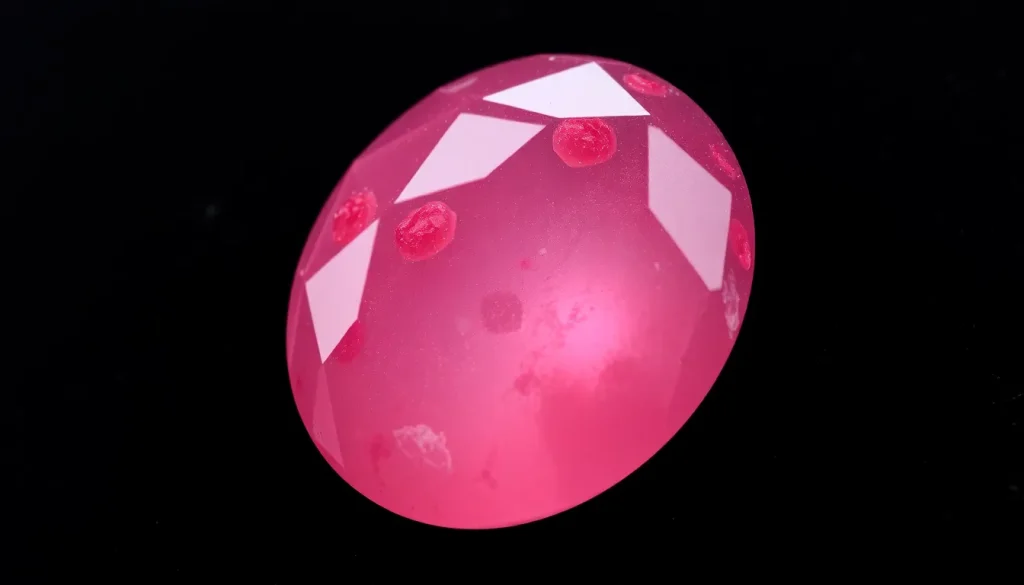
Eudialyte is a complex cyclosilicate mineral belonging to the eudialyte group. It typically forms in alkaline igneous complexes and is noted for its striking pink to red hues, although brown, black, green, and violet varieties also occur. With a Mohs hardness of 5.5–6, it is suitable for certain types of jewelry, especially cabochons and beads. The mineral’s trigonal crystal system produces characteristic hexagonal‑shaped crystals that are often highly included, giving a distinctive mottled appearance.
History and Origin
The name “eudialyte” derives from the Greek words eu (good) and dialytos (splittable), reflecting early observations of its easy cleavage in hand‑samples. First described in the 19th century from the Kola Peninsula in Russia, eudialyte has since been reported from several alkaline complexes worldwide, including Mont Saint‑Hilaire (Canada), the Ilímaussaq complex (Greenland), the Finnmark region (Norway), and isolated occurrences in Tanzania and the United States. Because it forms in rare geological settings, high‑quality, gem‑grade material is limited in supply.
Meaning and Symbolism
In traditional gemstone lore, eudialyte is associated with personal transformation and emotional balance. Its vivid colors are thought to symbolize vitality and the courage to express one’s true self. The stone is sometimes linked to the heart and crown chakras, representing a bridge between earthly emotions and higher consciousness.
Healing and Metaphysical Properties
Crystal‑healing practitioners attribute the following properties to eudialyte. These are traditional beliefs and not medical advice:
- Emotional support: Said to help release old emotional patterns and encourage self‑acceptance.
- Energy alignment: Believed to activate the heart and crown chakras, promoting a sense of unity between personal feelings and spiritual insight.
- Physical grounding: Some claim it assists the body’s detoxification pathways, particularly the lymphatic and circulatory systems.
As with all crystal work, intentions set by the user are considered the primary driver of any perceived effect.
Varieties and Types
While all specimens belong to the eudialyte group, variations arise from differing trace elements. The most common commercial varieties include:
- Red/Pink eudialyte: Rich in manganese and iron, producing deep pink to ruby tones.
- Brown/Black eudialyte: Higher titanium and iron content yields darker, earthy colors.
- Green eudialyte: Rare, with elevated chromium or vanadium.
- Violet eudialyte: Contains trace amounts of rare earth elements that shift the hue toward purple.
Because the mineral’s chemistry is highly variable, each stone can display unique zoning and inclusions that enhance its aesthetic appeal.
Jewelry Uses and Care
Eudialyte’s moderate hardness makes it best suited for pendants, earrings, and bezel‑set rings where the stone is protected from hard impact. Cabochon cuts are most common, allowing the stone’s internal color play to be showcased.
Care guidelines:
- Clean with a soft, lint‑free cloth and mild soap solution; avoid ultrasonic cleaners.
- Do not expose to harsh chemicals, as some treated specimens may be sensitive.
- Store separately from harder gemstones (e.g., quartz, sapphire) to prevent scratching.
Buying Guide
When purchasing eudialyte, consider the following factors:
- Color intensity: Deep, uniform pink or red hues are most prized; uneven zoning can be a decorative feature.
- Clarity: Inclusions are typical; however, overly cloudy stones may lack visual appeal.
- Cut and polish: Well‑cut cabochons that reveal the stone’s internal color variation command higher prices.
- Treatment disclosure: Some eudialyte is heat‑treated to enhance color; reputable dealers should disclose any treatments.
- Certification: For larger or high‑value pieces, request a gemological report from a recognized laboratory.
Because quality specimens are scarce, prices can vary widely. Buying from a trusted source and obtaining a written guarantee of authenticity are essential steps.
FAQ
What is eudialyte good for?
Eudialyte is valued for its vivid color in jewelry and as a collector’s mineral. Traditionally, it is believed to support emotional balance and spiritual connection, but these are metaphysical claims, not medical facts.
Is eudialyte rare?
High‑quality, gem‑grade eudialyte is relatively rare because it forms only in specific alkaline igneous environments and large, clear crystals are uncommon.
How can you tell if eudialyte is real?
Authentic eudialyte displays a distinctive pink‑red to brown color, a vitreous luster, and a hardness of about 5.5–6. Professional gemological testing (e.g., refractive index measurement) is recommended for certainty.
What chakra is eudialyte associated with?
In crystal‑healing traditions, eudialyte is commonly linked to the heart and crown chakras, though such associations are symbolic rather than scientific.
How should you clean eudialyte?
Clean gently with warm soapy water and a soft cloth. Avoid ultrasonic cleaners, harsh chemicals, and prolonged exposure to high heat, as some treated stones may be sensitive.
Leave a Reply