
Short Answer
Overview
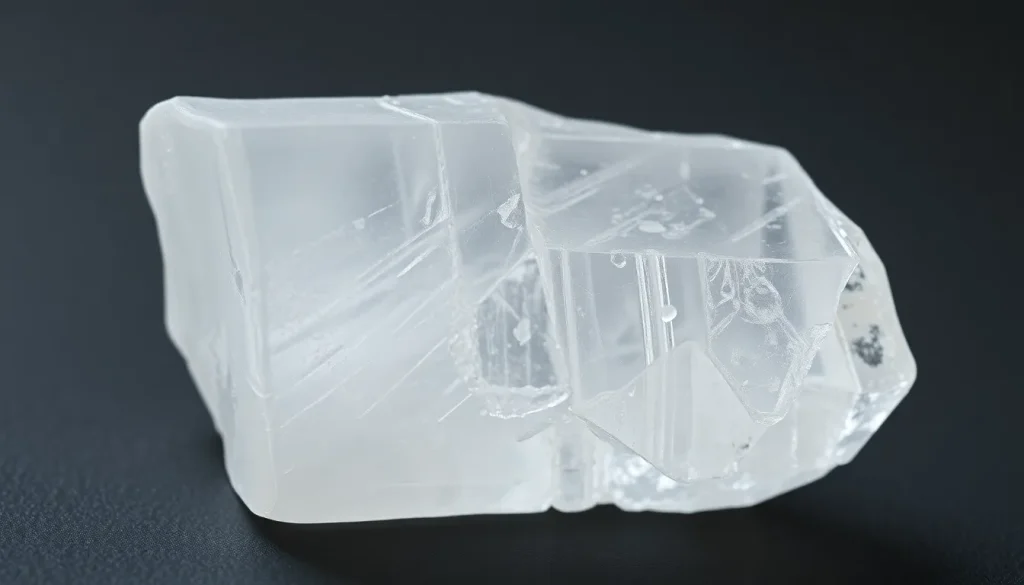
Oligoclase is a member of the plagioclase series of feldspar minerals, occupying a compositional range between albite and anorthite with a typical sodium‑to‑calcium ratio of about 70 % to 30 %. It crystallizes in the triclinic system and is most often encountered as transparent to translucent crystals that display colors from colourless and white to gray, pale green, yellow, or pink.
With a Mohs hardness of 6–6.5 and a vitreous luster, oligoclase is relatively durable for a gemstone, though its perfect cleavage in two directions makes it susceptible to breakage if struck.
History and Origin
The name “oligoclase” derives from the Greek words oligos (few) and klasis (fracture), referring to its typically limited cleavage compared with other feldspars. It was first described as a distinct mineral species in the early 19th century. Naturally occurring oligoclase is found in a variety of igneous and metamorphic rocks, especially in granites, syenites, and gneisses that have undergone moderate to high temperature metamorphism.
Historically, oligoclase was used as a decorative stone in cameo carving and in the production of ornamental objects, though it never achieved the popularity of more vivid feldspar varieties such as labradorite or moonstone.
Meaning and Symbolism
In traditional gemstone folklore, oligoclase is said to embody clarity of thought and honest communication. It is sometimes associated with the ability to “see through illusion” and to foster truth‑seeking attitudes. Because the stone often appears in subtle, muted tones, it is also linked to humility and groundedness.
Healing and Metaphysical Properties
Crystal‑healing practitioners attribute the following properties to oligoclase, based on longstanding belief systems rather than scientific evidence:
- Emotional balance: Promotes calmness and helps release repressed feelings.
- Mental clarity: Said to sharpen focus, aid decision‑making, and enhance analytical abilities.
- Physical support: Traditionally believed to assist the respiratory system and alleviate allergies, though it is not a medical treatment.
These claims are part of traditional metaphysical systems and should not replace professional medical advice.
Varieties and Types
Oligoclase occurs in several recognizable varieties, most of which are distinguished by subtle color differences or crystal habit:
- Common oligoclase: Colourless to white or gray, the most frequently encountered form.
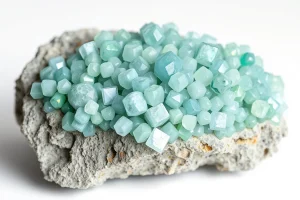
- Green oligoclase: Displays a pale green tint due to trace iron or chromium.
- Yellow or honey‑stained oligoclase: Light yellow coloration caused by natural irradiation.
- Pearl‑oyster oligoclase: Exhibits a pearlescent sheen on certain crystal faces, similar to the effect seen in moonstone.
Jewelry Uses and Care
Because of its moderate hardness and perfect cleavage, oligoclase is best suited for jewelry pieces that are not subjected to heavy impact, such as pendants, earrings, and ring settings that protect the stone with surrounding metal.
Cleaning: Use mild warm soapy water and a soft brush. Avoid ultrasonic cleaners or steam cleaning, which can exploit the perfect cleavage and cause fractures.
Storage: Keep individual stones separated in a soft pouch or fabric‑lined box. Do not store oligoclase with harder gemstones that could scratch its surface.
Settings: Protective bezel or channel settings are recommended to shield the stone’s edges. Avoid prong settings that expose the girdle to direct impact.
Buying Guide
When purchasing oligoclase, consider the following factors:
- Color and clarity: Look for even coloration and minimal inclusions. High‑clarity, near‑colourless stones command higher prices.
- Cut and proportions: Well‑cut specimens display optimal light return and minimize the visibility of cleavage planes.
- Treatment disclosure: Oligoclase is rarely treated, but some stones may be heat‑treated to enhance color. Request certification or a written statement from the seller.
- Origin: Reputable sources often provide locality information; classic localities such as the United States (Colorado, Montana) and Norway are considered reliable.
- Certification: For valuable pieces, obtain a gemological report from a recognized laboratory (e.g., GIA, IGI).
Because oligoclase is not a widely commercialized gemstone, price points vary considerably. Expect modest prices for common white specimens and higher values for rare colored or exceptionally clear crystals.
FAQ
What is oligoclase good for?
Oligoclase is appreciated for its clear to translucent appearance in jewelry and as a collector's mineral. Traditionally, it is believed to aid clear communication and mental focus, though these are metaphysical claims, not medical facts.
Is oligoclase rare?
High‑quality, colorless to near‑colorless oligoclase is moderately common, while vivid green or honey‑stained specimens are less common. Rarity increases with size, clarity, and untreated condition.
How can you tell if oligoclase is real?
Examine hardness (scratch test with a steel file should not leave a mark), check for perfect two‑direction cleavage, and observe a vitreous luster. Professional gemological testing, such as refractive index measurement, provides certainty.
What chakra is oligoclase associated with?
In crystal‑healing traditions oligoclase is sometimes linked to the throat chakra for communication, though there is no universally accepted chakra association.
How should you clean oligoclase?
Clean with mild warm soapy water and a soft brush. Avoid ultrasonic or steam cleaners, and never expose the stone to harsh chemicals or sudden temperature changes.
Leave a Reply