
Short Answer
Overview
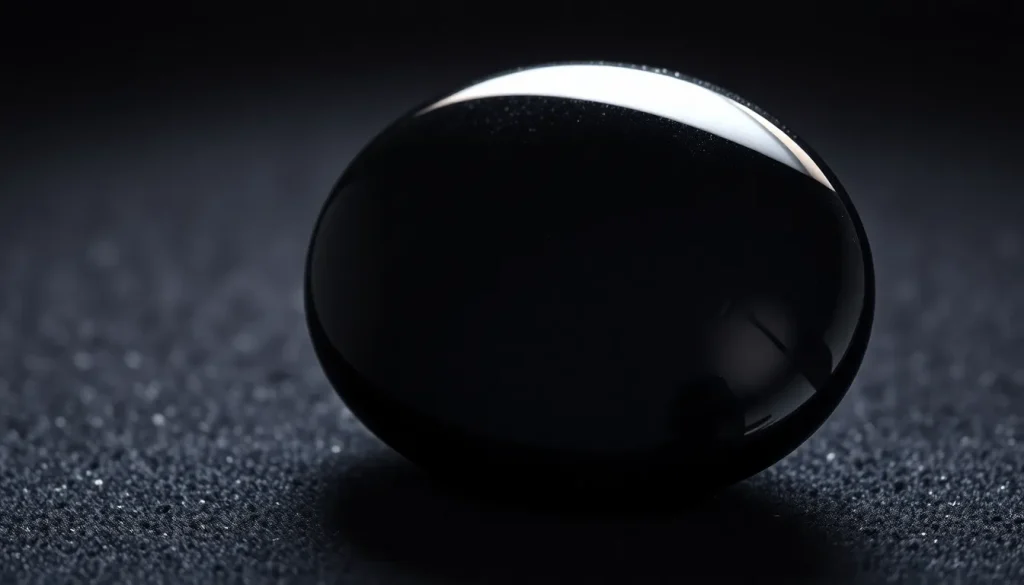
Melanite, commonly called black garnet, is the dark, often opaque, variety of the garnet species andradite. It belongs to the nesosilicate group and is chemically defined as Ca3Fe2(SiO4)3, where iron occurs in the ferric (Fe3+) state, giving the stone its characteristic black hue. Crystallising in the cubic (isometric) system, melanite displays the typical dodecahedral habit of garnets and possesses a vitreous luster with a refractive index around 1.88.
History and Origin
The name melanite derives from the Greek word melas, meaning black, and was first applied to the deep‑black garnet specimens found in the Dolomite region of northern Italy in the 19th century. Historically, melanite was valued more for its rarity than for ornamental use, as its intense color made it difficult to cut into faceted gems. Over time, advances in cutting techniques allowed the stone to appear in high‑end jewelry, especially in the United States and Europe during the early 20th century. Major localities include the Austrian Alps, the Dolomites of Italy, the United States (California, Colorado), Brazil, Madagascar, Tanzania, and parts of India.
Meaning and Symbolism
Traditional gemstone lore associates black stones with protection, grounding, and the absorption of negative energies. Melanite, as a black garnet, is said to anchor the wearer’s intentions, promote inner strength, and serve as a talisman against psychic attack. Its deep colour is also linked to resilience and the ability to transform adversity into personal power.
Healing and Metaphysical Properties
In crystal‑healing circles, melanite is believed to:
- Ground and stabilise emotional turbulence, supporting the root chakra.
- Enhance stamina and physical endurance during strenuous activities.
- Assist in the detoxification of the body’s energy field, encouraging the release of stagnant emotions.
- Promote confidence and a sense of security when facing challenging situations.
These claims are part of traditional metaphysical belief systems and are not intended as medical advice.
Varieties and Types
Melanite is a specific colour variety of the garnet species andradite. While the typical colour is jet‑black, some specimens display a dark green or brownish tint due to trace elements. Related garnet species include:
- Almandine: deep red to brownish‑red, the most common garnet used in jewelry.
- Spessartine: orange‑to‑copper red.
- Grossular: varies from green to yellow.
- Uvarovite: vivid emerald‑green.
Because melanite shares the same crystal structure as these species, it can be found in the same metamorphic environments, typically within skarn deposits and regional metamorphic rocks.
Jewelry Uses and Care
Melanite is most often cut as a cabochon, freeform, or faceted stone for rings, pendants, earrings, and brooches. Its hardness of 6.5‑7.5 on the Mohs scale makes it suitable for everyday wear, though care is needed to avoid scratches from harder materials.
Care guidelines:
- Clean with warm, soapy water and a soft brush; avoid ultrasonic cleaners if the stone has fractures.
- Dry gently with a lint‑free cloth; avoid sudden temperature changes.
- Store separately from softer gemstones to prevent abrasion.
- If the stone has been heat‑treated (a common enhancement for some garnets), use only mild cleaning methods.
Buying Guide
When selecting melanite, consider the following factors:
- Colour intensity: Deep, uniform black is most prized; any visible green or brown overtones may reduce value.
- Clarity: Inclusions are common; a clean, eye‑clean stone commands higher prices.
- Cut: Well‑proportioned cuts that maximise brilliance are preferred for faceted pieces.
- Treatment disclosure: Natural melanite is rarely treated, but some specimens may undergo heat treatment to improve colour stability. Request a gem‑ological report.
- Certification: For high‑value pieces, seek certification from GIA, IGI, or a reputable laboratory.
Because melanite is less abundant than other garnet varieties, prices can vary widely based on colour depth, size, and origin. Comparing multiple sources and verifying provenance will help ensure a fair purchase.
FAQ
What is melanite good for?
Melanite is valued for its striking black colour in jewelry and is traditionally believed to provide grounding, protection, and emotional resilience, while also being suitable for rings and pendants due to its durability.
Is melanite rare?
High‑quality melanite with deep, uniform black colour and good clarity is relatively rare compared with more common red garnets, making it less frequently encountered in the market.
How can you tell if melanite is real?
Real melanite feels heavy for its size, shows a vitreous luster, and has a hardness of 6.5‑7.5. A professional gem‑lab test, such as refractive index measurement or spectroscopy, can confirm its identity.
What chakra is melanite associated with?
In traditional crystal lore, melanite is linked to the Root (Muladhara) chakra, supporting grounding and stability.
How should you clean melanite?
Clean melanite with warm, soapy water and a soft brush, avoid ultrasonic cleaners if the stone is fractured, dry with a lint‑free cloth, and store it separately from softer gems.
Leave a Reply