
Short Answer
Overview
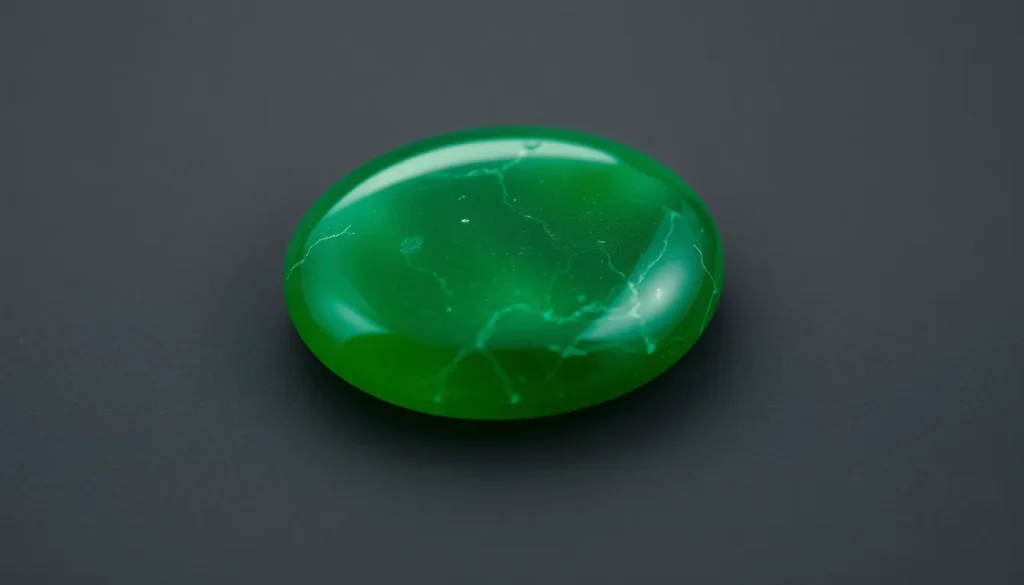
Jadeite is a member of the pyroxene group, composed of sodium aluminum silicate (NaAlSi₂O₆). It is one of the two minerals traditionally called “jade,” the other being nephrite. Jadeite’s most coveted form is the deep emerald‑green variety known as Imperial Jade, prized for its translucency and vivid color.
In the gem market, jadeite is graded by color, transparency, texture, and the presence of any treatments. Its hardness of 6.5–7 on the Mohs scale makes it suitable for many jewelry applications, though care is required to avoid chipping.
History and Origin
Jadeite has been used for ornamental and ceremonial objects for millennia, especially in East Asia. While nephrite was the primary jade used in ancient China, jadeite entered the market in the early 18th century after being discovered in the Andes of Guatemala. The most famous source, however, is the jade‑rich region of Myanmar (formerly Burma), where the finest Imperial Jade has been mined since the 1990s.
Historically, jadeite was believed to possess protective powers, and it featured prominently in royal regalia, religious artifacts, and high‑status jewelry. Its rarity and cultural value have made it a symbol of wealth and status across many societies.
Meaning and Symbolism
Traditional Chinese culture associates jadeite with purity, moral integrity, and harmony. The stone’s green hue is linked to growth, renewal, and the heart’s compassionate qualities. In modern metaphysical circles, jadeite is said to promote emotional balance, encourage self‑confidence, and attract good fortune.
Healing and Metaphysical Properties
According to crystal‑healing beliefs, jadeite is thought to aid the circulatory and renal systems, support detoxification, and help the wearer release emotional baggage. It is commonly placed on the heart chakra to foster love and empathy. These claims are not supported by medical evidence and should not replace professional health care.
Varieties and Types
Jadeite occurs in a spectrum of colors, each with distinct market values:
- Imperial Jade – Vivid emerald‑green, often semi‑translucent; the most valuable.
- Apple Green – Light to medium green, less saturated than Imperial.
- White (Mutton Fat) – Creamy white, often opaque; popular in carvings.
- Lavender – Pale violet to pink‑purple, rare and increasingly sought after.
- Black – Deep black, usually opaque; valued for contrast in inlays.
- Yellow – Golden‑yellow to amber, less common.
Most jadeite on the market has undergone some form of treatment, most commonly polymer impregnation (known as “bleaching” or “polymerization”) to improve color uniformity and translucency. Untreated, high‑quality jadeite is extremely rare and commands premium prices.
Jewelry Uses and Care
Jadeite is fashioned into rings, pendants, earrings, bangles, and intricate carvings. Its relatively high hardness allows for polishing to a high sheen, but its perfect cleavage in two directions makes it vulnerable to impact.
Care recommendations:
- Clean with warm, soapy water and a soft brush; avoid ultrasonic cleaners unless the stone is known to be untreated and free of fractures.
- Dry gently with a lint‑free cloth; do not use abrasive pads.
- Store separately from harder gemstones (e.g., diamonds, sapphires) to prevent scratching.
- Avoid prolonged exposure to harsh chemicals, high heat, or direct sunlight, which can affect surface treatments.
Buying Guide
When purchasing jadeite, consider the following factors:
- Color – Imperial and vivid apple‑green shades are the most valuable. Uniform color without brown or gray undertones is preferred.
- Transparency – Semi‑translucent stones command higher prices than opaque ones.
- Texture – Fine‑grained, “silky” texture (known as jadeite silk) is prized.
- Origin – Stones from Myanmar are generally considered superior, though provenance should be documented.
- Treatment disclosure – Reputable dealers will disclose any polymer impregnation, bleaching, or dyeing.
- Certification – Request a gemological report from a recognized laboratory (e.g., GIA, GRS) that details grade, treatment, and origin.
Because jadeite’s value is highly dependent on subtle visual cues, buying from an experienced dealer and obtaining an independent appraisal are essential steps.
FAQ
What is jadeite good for?
Jadeite is prized for high‑end jewelry, carving, and collectors’ items due to its vivid colors and translucency. Traditionally it is also believed to promote emotional balance and attract good fortune, though these are cultural beliefs, not medical facts.
Is jadeite rare?
High‑quality, untreated jadeite—especially Imperial Green from Myanmar—is rare and commands premium prices. Lower‑grade or treated stones are more common, but the overall market remains limited compared with many other gemstones.
How can you tell if jadeite is real?
Real jadeite feels cool to the touch, has a high specific gravity, and displays a fine‑grained texture. Simple tests like a hardness scratch (it resists a steel file) help, but professional gemological analysis, including spectroscopy and treatment disclosure, is needed for certainty.
What chakra is jadeite associated with?
In crystal‑healing traditions, jadeite is most often linked to the Heart (Anahata) chakra, supporting love, compassion, and emotional harmony.
How should you clean jadeite?
Clean jadeite with warm, mild soapy water and a soft brush, then pat dry with a lint‑free cloth. Avoid ultrasonic cleaners, harsh chemicals, and extreme heat, especially if the stone has undergone polymer impregnation or other treatments.
Leave a Reply