
Short Answer
Overview
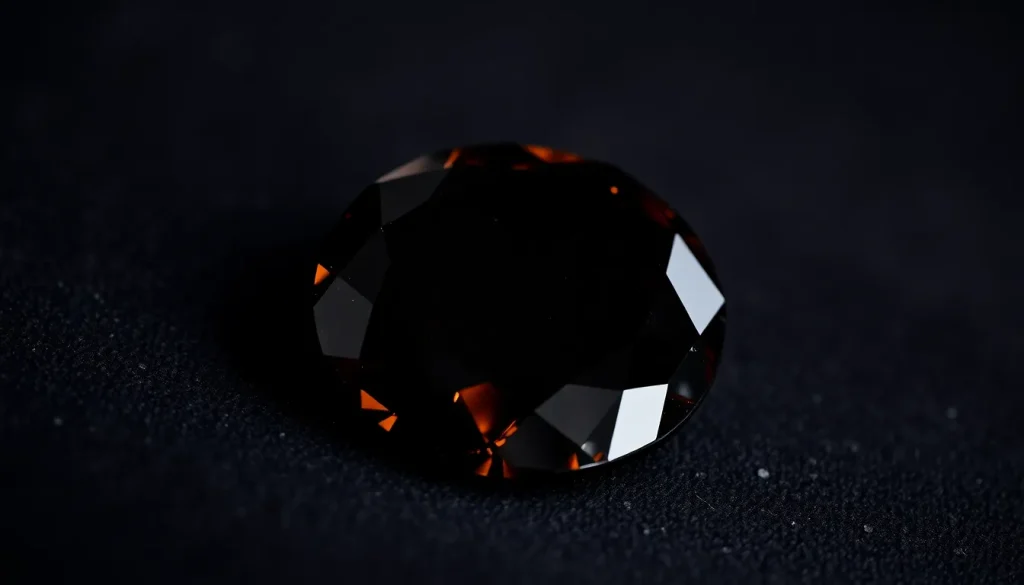
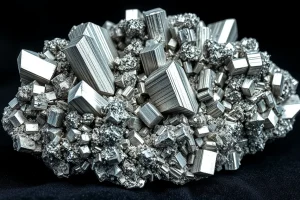
Huebnerite is the manganese‑rich member of the wolframite series, a tungstate mineral with the chemical formula MnWO4. It typically appears as dark black to brownish‑black prisms and is valued by collectors for its high specific gravity and sub‑adamantine luster. Although not a traditional gemstone in mainstream jewelry, cut and polished huebnerite is occasionally set in bespoke pieces for its unique aesthetic.
History and Origin
The mineral was first described in 1865 and named after the Austrian mineralogist Franz Xaver von Hübner. Natural occurrences are reported from several continents, most notably the ore districts of Austria, Brazil, China, Russia, and the United States (California). Huebnerite forms in high‑temperature, granitic pegmatite environments and is often associated with other tungsten minerals such as ferberite (FeWO4) and scheelite (CaWO4).
Meaning and Symbolism
In traditional gemstone lore, huebnerite is associated with strength, endurance, and grounding. Its dark, dense appearance is thought to symbolize resilience and the ability to withstand pressure. Some cultures view the stone as a protective talisman that absorbs negative energy and promotes inner stability.
Healing and Metaphysical Properties
Crystal‑healing practitioners attribute huebnerite with grounding and protective qualities. It is believed to aid in releasing fear, enhancing personal power, and supporting the root chakra. These claims are part of metaphysical belief systems and are not supported by medical science. Users are advised to treat such statements as symbolic rather than therapeutic.
Varieties and Types
- Pure Huebnerite – Dominated by manganese, exhibits the darkest coloration.
- Ferberite – The iron‑rich analogue (FeWO4), typically brown to reddish‑brown.
- Mixed‑Composition Wolframite – Solid‑solution series containing varying Mn/Fe ratios, resulting in a range of intermediate colors.
Trade names sometimes include “black wolframite” or simply “manganese tungstate” when used in industrial contexts.
Jewelry Uses and Care
Because huebnerite scores 4–4.5 on the Mohs scale, it is relatively soft compared with traditional gemstones such as sapphire or diamond. Its perfect cleavage in the [010] direction makes it susceptible to chipping if struck. When set in jewelry, protective settings (e.g., bezel or channel) are recommended.
Cleaning should be performed with mild soap and warm water, using a soft brush. Avoid ultrasonic cleaners and harsh chemicals, as they can exacerbate cleavage or affect any surface treatments.
Buying Guide
When evaluating huebnerite, consider the following factors:
- Color and Transparency – Deep, evenly dark coloration with high transparency is most prized.
- Clarity – Inclusions are common; however, large fractures or cloudiness reduce value.
- Cut – A well‑proportioned cut that protects cleavage planes enhances durability.
- Origin – Specimens from renowned localities (e.g., Austria, Brazil) may command higher prices.
- Treatment Disclosure – Ensure the seller discloses any heat or irradiation treatments, though such treatments are rare for huebnerite.
Because huebnerite is less common in the mainstream market, obtain a certificate from a reputable gemological laboratory when purchasing high‑value pieces.
FAQ
What is huebnerite good for?
Huebnerite is valued by collectors for its rarity, high density, and striking dark color. Traditionally it is believed to offer grounding and protective energies, though these are symbolic rather than scientific.
Is huebnerite rare?
High‑quality, transparent huebnerite is relatively uncommon, especially in large gem‑cut sizes. Its rarity depends on color, clarity, and locality, with specimens from classic Austrian and Brazilian deposits being especially prized.
How can you tell if huebnerite is real?
Real huebnerite has a high specific gravity (≈7.2), a sub‑adamantine luster, and a characteristic brownish‑black streak. Professional testing, such as density measurement, refractive index determination, and X‑ray diffraction, provides definitive identification.
What chakra is huebnerite associated with?
In crystal‑healing traditions huebnerite is linked to the root chakra, reflecting its grounding symbolism, though there is no universally accepted association.
How should you clean huebnerite?
Clean huebnerite with warm, soapy water and a soft brush. Avoid ultrasonic cleaners, steam, and harsh chemicals, and store the stone in a padded setting to protect its perfect cleavage.
Leave a Reply