
Short Answer
Overview
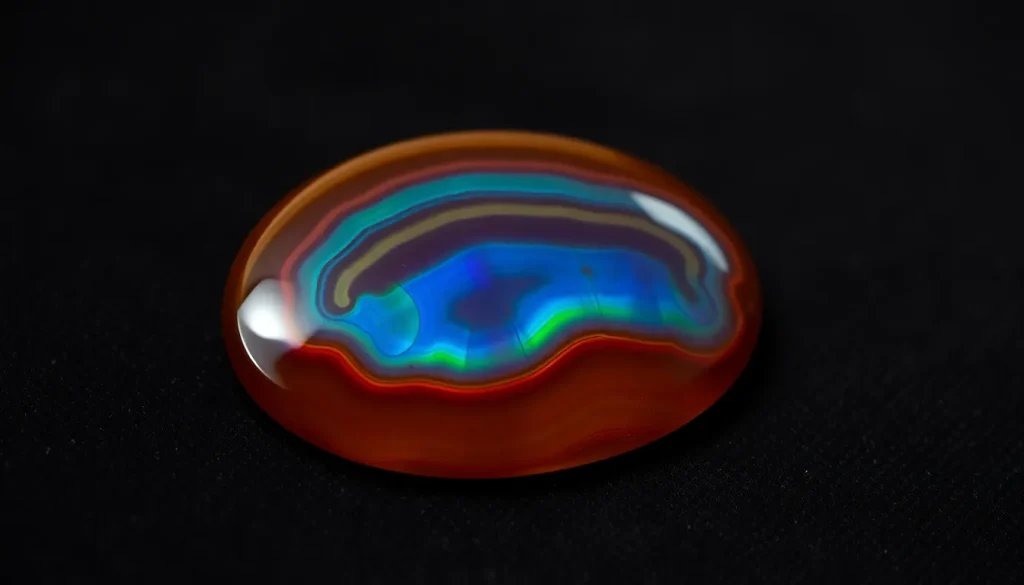
Fire agate, also called iridescent agate, is a variety of chalcedony (micro‑crystalline quartz) that exhibits a distinctive “fire‑like” play of color. The stone typically shows a brown to reddish‑orange base overlaid with shimmering bands of blues, greens, gold, and sometimes violet, created by thin layers of iron‑oxide mineral inclusions that diffract light.
History and Origin
The first documented occurrences of fire agate were in the United States, especially in the Mogollon Rim of central Arizona, where Native American peoples used the stone for ornamental beads and trade. Similar deposits have been found in northern Mexico, Brazil, Tanzania, and Peru. Historically the stone was valued for its rarity and the vivid “fire” effect, which was considered a protective talisman.
Meaning and Symbolism
Traditional folklore attributes fire agate with qualities of courage, vitality, and protection. It is said to “hold the fire of the sun” and to inspire confidence, helping the wearer to overcome fear and to pursue personal goals. In many cultures the stone is also linked to grounding and stability because of its earthy base tones.
Healing and Metaphysical Properties
According to crystal‑healing beliefs, fire agate is thought to stimulate the sacral and solar‑plexus chakras, promoting emotional balance, creativity, and personal power. Practitioners claim it can aid digestion, boost metabolism, and help the body release stagnant energy. These claims are part of traditional belief systems and are not medical advice.
Varieties and Types
Fire agate belongs to the broader family of agates, which are banded chalcedonies. Other notable agate varieties include:
- Moss agate – contains green mineral inclusions resembling moss.
- Blue lace agate – known for its soft blue, lace‑like patterns.
- Crazy lace agate – features chaotic, multicolored lace patterns.
The iridescent fire effect is unique to fire agate and is not produced by heat treatment; it results from natural mineral layering.
Jewelry Uses and Care
Because of its striking visual effect, fire agate is popular in cabochons, rings, pendants, and earrings. The stone’s hardness (6.5–7 on the Mohs scale) makes it suitable for most jewelry, though it should be protected from hard knocks that could cause chipping.
Care recommendations:
- Clean with warm, soapy water and a soft brush; avoid ultrasonic cleaners.
- Dry with a lint‑free cloth; moisture can promote mineral staining.
- Store separately from harder gemstones to prevent scratches.
- Avoid prolonged exposure to strong acids or harsh chemicals.
Buying Guide
When selecting fire agate, consider the following factors:
- Color play – Look for vivid, well‑defined iridescent flashes that contrast with a rich brown or reddish base.
- Clarity – Minor inclusions are natural; excessive cloudiness may indicate low quality.
- Cut – A well‑finished cabochon will enhance the fire effect by allowing light to enter at optimal angles.
- Treatment disclosure – Genuine fire agate displays natural iridescence; be wary of stones dyed or artificially enhanced.
- Certification – For high‑value pieces, request a gemological report from a recognized laboratory.
Prices vary widely based on size, color intensity, and origin, ranging from a few dollars per carat for rough material to several hundred dollars for polished, high‑quality specimens.
FAQ
What is fire agate good for?
Fire agate is prized for its striking visual appeal in jewelry and is traditionally believed to promote courage, vitality, and grounding. Scientifically, it is a durable chalcedony suitable for many types of ornamental use.
Is fire agate rare?
High‑quality fire agate with vivid iridescence is relatively uncommon, especially from classic localities like Arizona. Lesser‑grade material is more widely available, so rarity depends on color intensity, size, and source.
How can you tell if fire agate is real?
Real fire agate shows natural, uneven iridescent flashes that change with viewing angle, and it lacks the uniform sheen of dyed glass. A professional gemological test (e.g., refractive index, specific gravity) can confirm authenticity.
What chakra is fire agate associated with?
In crystal‑healing traditions fire agate is often linked to the sacral and solar‑plexus chakras, though there is no single standard chakra association.
How should you clean fire agate?
Clean fire agate with warm, mildly soapy water and a soft brush, avoiding ultrasonic cleaners and harsh chemicals. Dry with a lint‑free cloth and store separately from harder gemstones to prevent scratches.
Leave a Reply