
Short Answer
Overview
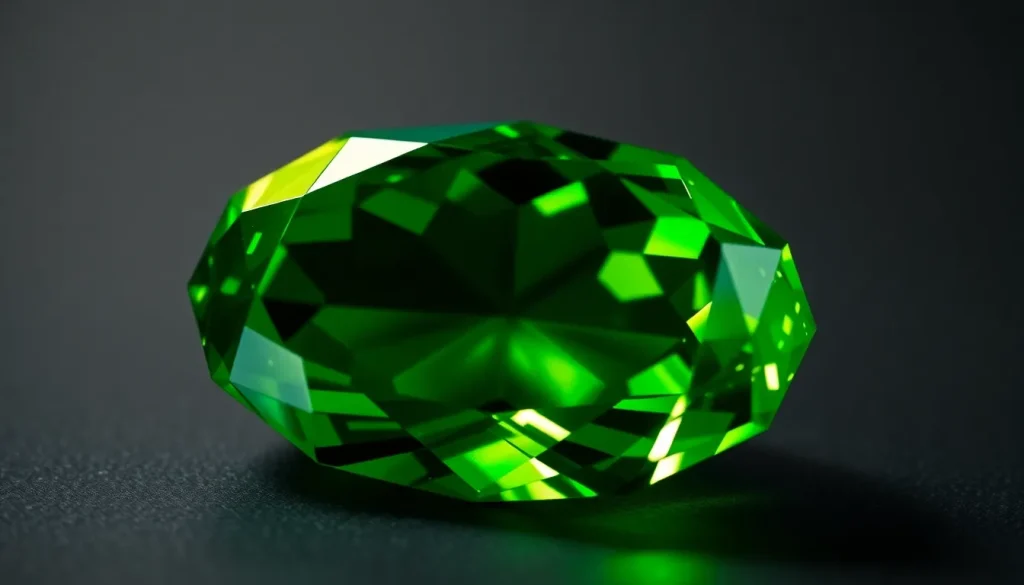
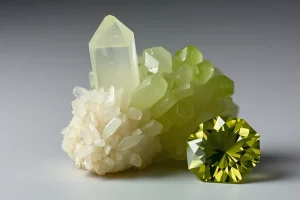
Demantoid is the green variety of the garnet species andradite (Ca3Fe2(SiO4)3). It is renowned for its high refractive index and extraordinary dispersion, which give it a fire that rivals that of diamond. The stone typically displays a vivid, emerald‑like green hue, ranging from yellow‑green to brownish‑green, and is transparent to translucent.
History and Origin
The name “demantoid” derives from the Russian word for “diamond,” reflecting early observers’ admiration for its brilliance. The first commercial crystals were discovered in the Ural Mountains of Russia in 1868 and quickly entered the European market as a substitute for emerald. Throughout the 20th century, additional deposits were identified in Namibia, Madagascar, Pakistan, Afghanistan, Italy, Iran, and the United States (Arizona). Historically, untreated Russian demantoids with a distinctive “horsetail” inclusion pattern have been especially prized.
Meaning and Symbolism
In traditional gemstone lore, demantoid is associated with renewal, hope, and abundance. Its vivid green color is linked to growth and prosperity, making it a popular talisman for those seeking new beginnings. The stone is also thought to encourage confidence and clear communication.
Healing and Metaphysical Properties
Within crystal‑healing circles, demantoid is believed to balance the heart chakra, fostering emotional healing and compassion. Practitioners claim it can aid in releasing old emotional patterns, enhancing optimism, and supporting the immune system. These claims are based on tradition and are not medical advice.
Varieties and Types
Demantoid is essentially a single variety of andradite garnet, but variations exist based on origin and inclusion patterns:
- Russian Demantoid – Often displays a characteristic “horsetail” pattern of needle‑like inclusions and is highly valued for clarity.
- Namibian Demantoid – Generally larger stones with a slightly different green hue; may exhibit fewer internal inclusions.
- Madagascar Demantoid – Known for vivid color saturation but can show more surface-reaching fractures.
Jewelry Uses and Care
Because of its hardness (6.5–7 on the Mohs scale) and durability, demantoid is suitable for rings, pendants, earrings, and high‑end watches. However, its relatively high cleavage resistance does not mean it is immune to damage; the stone can chip if struck sharply. Care recommendations include:
- Clean with warm, soapy water and a soft brush; avoid ultrasonic cleaners if the stone has surface fractures.
- Store separately from harder gemstones such as sapphire or diamond to prevent scratching.
- Limit exposure to harsh chemicals, especially chlorine, which can affect certain treatments.
- Have any treated demantoid (e.g., heat‑treated) re‑evaluated by a gemologist before extensive wear.
Buying Guide
When purchasing demantoid, consider the following factors:
- Color Saturation – Deep, vivid green without brownish overtones is most desirable.
- Clarity – Look for stones free of visible inclusions; a faint “horsetail” pattern in Russian stones is acceptable.
- Cut – Well‑cut facets maximize fire; common cuts include oval, cushion, and emerald.
- Origin – Provenance can affect value; untreated Russian demantoids typically command higher prices.
- Certification – Request a gemological report from a recognized laboratory (e.g., GIA, IGI) to verify authenticity and any treatments.
n
Because demantoid is less abundant than other garnet varieties, especially in top‑quality color and clarity, price per carat can vary widely. Always purchase from reputable dealers who provide transparent grading information.
FAQ
What is demantoid good for?
Demantoid is prized for its vivid green color and exceptional fire, making it ideal for high‑end jewelry such as rings and pendants. Traditionally, it is also associated with emotional renewal and prosperity in metaphysical practices.
Is demantoid rare?
High‑quality demantoid, especially untreated Russian stones with intense color and minimal inclusions, is considered rare. Lesser‑known deposits in Namibia, Madagascar, and other locations produce more abundant material, but top‑grade stones remain scarce.
How can you tell if demantoid is real?
Authentic demantoid exhibits a high refractive index (≈1.888) and strong dispersion. Visual clues include vivid green hue, lack of glassy inclusions, and possible horsetail patterns in Russian stones. Professional verification using spectroscopy or a gemological laboratory report is recommended.
What chakra is demantoid associated with?
In traditional crystal‑healing belief, demantoid is linked to the Heart (Anahata) chakra, supporting emotional balance and compassion.
How should you clean demantoid?
Clean demantoid gently with warm, soapy water and a soft brush. Avoid ultrasonic cleaners if the stone has surface fractures, and keep it away from harsh chemicals such as chlorine.
Leave a Reply