
Short Answer
Overview
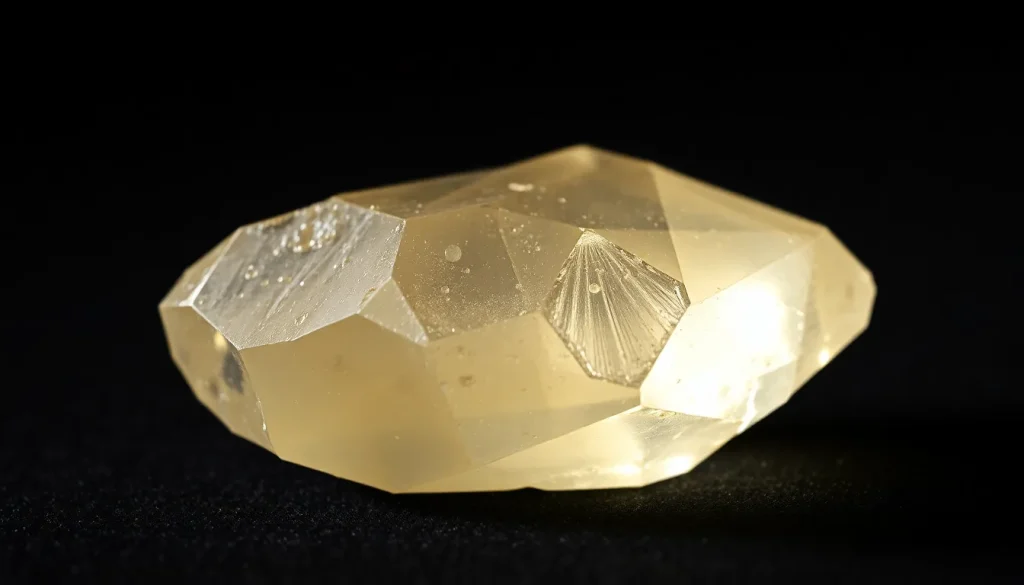
Chiolite (Na5Al3F14) is a sodium‑aluminum fluoride belonging to the halide mineral class. It crystallises in the monoclinic system and is best known for its colourless to very pale yellow, highly transparent appearance. Because of its low hardness (≈2.5–3 on the Mohs scale) chiolite is rarely used in mainstream jewelry, but finely cut specimens are prized by collectors and by designers seeking an ethereal, glass‑like stone.
History and Origin
The name “chiolite” derives from the Greek word chi̱los meaning “snow,” a reference to its typical white‑to‑snowy hue. The mineral was first described in 1862 from specimens collected in the Kangerlussuaq region of Greenland, where it occurs as a low‑temperature polymorph of cryolite. Subsequent occurrences have been documented in Canada (Nunavut), the United States (Alaska), and Russia (Kola Peninsula). Chiolite’s rarity stems from the narrow temperature range required for its formation, making it a collector’s mineral rather than a mass‑market gemstone.
Meaning and Symbolism
In traditional gemstone lore chiolite is associated with clarity of thought, inner vision, and the ability to see beyond ordinary perception. Its pristine, almost invisible colour is said to symbolize purity, spiritual illumination, and a gateway to higher consciousness. Some cultures view chiolite as a stone of protection, believed to shield the wearer from negative mental influences.
Healing and Metaphysical Properties
Crystal‑healing practitioners attribute chiolite with the following beliefs:
- Mind‑body balance: Enhances mental clarity, aids meditation, and supports decision‑making.
- Emotional grounding: Helps release fear and promotes a sense of inner peace.
- Spiritual connection: Considered a conduit to higher realms, often used in rituals aimed at expanding consciousness.
These properties are based on traditional and metaphysical teachings and are not intended as medical advice.
Varieties and Types
Chiolite is generally uniform in composition, but specimens differ in:
- Colour intensity: From perfectly colourless to very pale yellow or faint grey.
- Clarity: High‑clarity material can be virtually inclusion‑free, while lower‑grade stones may show microscopic fractures.
- Crystal habit: Prismatic, tabular, or massive aggregates; well‑formed crystals are especially sought after by collectors.
No widely recognized treatments (e.g., heating or irradiation) are applied to chiolite, as its low hardness makes it vulnerable to damage.
Jewelry Uses and Care
Because chiolite is soft and exhibits perfect cleavage, it is limited to pendant settings, earrings, or brooches where the stone can be protected by metal bezels. When set, it is often mounted in protective settings such as bezel or tension mounts that shield the stone from mechanical impact.
Care recommendations:
- Clean with a soft, lint‑free cloth; avoid ultrasonic cleaners or steam.
- Store separately from harder gemstones to prevent scratching.
- Avoid exposure to harsh chemicals, extreme heat, or prolonged sunlight, which can cause surface alteration.
Buying Guide
When purchasing chiolite, consider the following factors:
- Clarity and colour: High‑clarity, colourless stones command the highest value.
- Cut quality: Well‑proportioned cuts that showcase the stone’s transparency are preferred.
- Origin documentation: Reputable dealers will provide provenance, especially for specimens from classic localities such as Greenland.
- Treatment disclosure: Genuine chiolite is untreated; any claims of enhancement should be scrutinised.
- Certification: For larger or investment‑grade pieces, a gemological laboratory report (e.g., GIA, IGI) can verify authenticity.
Because chiolite is uncommon, expect modest market prices compared with more mainstream gemstones. Always purchase from a trusted source that offers a return policy and clear grading information.
FAQ
What is chiolite good for?
Chiolite is prized by collectors for its rare, high‑clarity appearance and is used in niche jewelry designs. In crystal‑healing traditions it is believed to aid mental clarity, meditation, and spiritual insight.
Is chiolite rare?
Yes, chiolite is considered rare due to its limited geographic occurrences and the narrow temperature range required for its formation. High‑quality, colourless, inclusion‑free specimens are especially uncommon.
How can you tell if chiolite is real?
Real chiolite is soft (Mohs 2.5–3), has perfect cleavage, and exhibits a high refractive index of about 1.34–1.35. Professional gemologists can confirm authenticity with refractometry, specific gravity testing, and microscopic examination.
What chakra is chiolite associated with?
In traditional crystal‑healing belief, chiolite is linked to the Crown Chakra, supporting higher‑mind awareness and spiritual connection.
How should you clean chiolite?
Clean chiolite gently with a soft, lint‑free cloth and lukewarm water. Avoid ultrasonic cleaners, steam, harsh chemicals, or high heat, as the stone is soft and can be damaged easily.
Leave a Reply