Short Answer
Overview
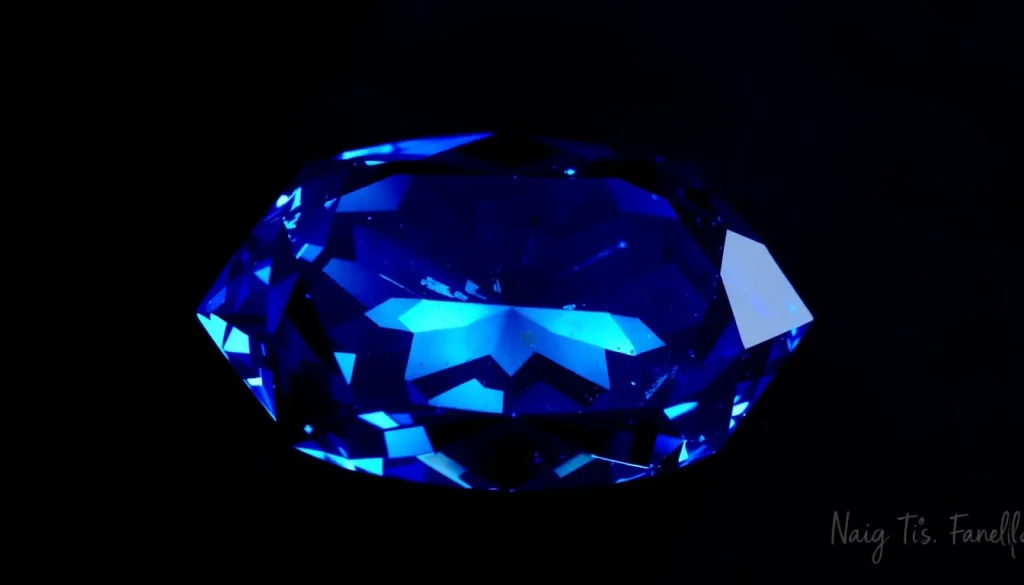
Benitoite is a barium‑titanium silicate mineral (chemical formula BaTiSi3O9) best known for its striking, vivid blue hue and high dispersion that rivals that of diamond. It crystallizes in the hexagonal system, forming well‑developed, often prismatic crystals that can display a brilliant adamantine luster. The gemstone is prized for its rarity, especially in gem‑quality, faceted form, and for its strong blue fluorescence under short‑wave ultraviolet light.
History and Origin
Benitoite was first identified in 1907 by Dr. James M. Safford in the San Benito County of California, USA. The mineral was named after the county in which it was discovered. Although initially regarded as a mineral curiosity, the first gem‑quality crystals were cut in the 1960s, leading to its recognition as California’s official state gem in 1985. Significant deposits have also been reported in Brazil’s Minas Gerais region, Japan’s Miyazaki Prefecture, and a few occurrences in Canada’s Ontario province.
Meaning and Symbolism
In traditional gemstone lore, benitoite is associated with clarity of thought, communication, and spiritual insight. Its intense blue is said to invoke the calm of a clear sky and the depth of the ocean, encouraging honesty and self‑expression. Many view it as a symbol of rare beauty and personal transformation, often given as a meaningful gift for milestones such as graduations or new beginnings.
Healing and Metaphysical Properties
Crystal‑healing practitioners attribute benitoite with the following traditional beliefs:
- Communication: Enhances verbal expression and aids in articulating thoughts clearly.
- Intuition: Stimulates psychic perception and supports meditation by aligning the third‑eye and throat chakras.
- Emotional Balance: Helps release fear and encourages a sense of inner peace.
These properties are considered metaphysical and are not a substitute for professional medical advice.
Varieties and Types
Benitoite occurs primarily in two color varieties:
- Blue Benitoite: The most prized and common gem‑quality color, ranging from light sky‑blue to deep sapphire‑blue. The blue hue intensifies under UV light due to fluorescence.
- Colourless to Pale Variants: Rare specimens may appear colourless, pink, greenish, or yellowish, but are less sought after for jewelry.
All natural benitoite is untreated; any enhancement such as heating or irradiation is not standard practice because the stone’s desirable properties are inherent.
Jewelry Uses and Care
Because benitoite rates 6–6.5 on the Mohs hardness scale, it is suitable for rings, pendants, earrings, and high‑end watch crystals when set with protective settings. Its perfect basal cleavage makes it susceptible to chips, especially along the basal plane, so designers often employ bezel or halo settings that shield vulnerable edges.
Cleaning guidelines:
- Use warm, soapy water and a soft brush; avoid ultrasonic cleaners if the piece has delicate settings.
- Dry with a lint‑free cloth; never expose the stone to harsh chemicals, acids, or prolonged high heat.
- Store separately in a soft pouch or compartment to prevent contact with harder gemstones.
Buying Guide
When purchasing benitoite, consider the following factors:
- Color Saturation: Deep, vivid blue with even tone is most valuable.
- Clarity: Inclusions are common; a clean, inclusion‑free stone commands higher prices.
- Cut Quality: Well‑proportioned cuts that maximize brilliance and fluorescence are preferred.
- Origin: Certified Californian benitoite often carries a premium due to its rarity.
- Certification: Request a gemological report from a reputable laboratory (e.g., GIA, IGI) to confirm authenticity and any treatments.
Because high‑quality benitoite is scarce, prices can vary widely. Expect a higher cost per carat for vivid blue, flawless stones from California compared with lesser‑colored or included material.
FAQ
What is benitoite good for?
Benitoite is prized for high‑end jewelry due to its vivid blue color, strong fluorescence, and diamond‑like dispersion. Traditionally, it is also believed to support clear communication and spiritual insight.
Is benitoite rare?
Yes. Gem‑quality benitoite is rare, especially in vivid blue, large, inclusion‑free specimens. The most prized material comes from California, with smaller deposits in Brazil, Japan, and Canada.
How can you tell if benitoite is real?
Real benitoite displays a high refractive index (~1.756), strong blue fluorescence under UV light, and an adamantine luster. Professional gemologists use spectroscopy, refractometry, and certification to confirm authenticity.
What chakra is benitoite associated with?
Traditional crystal‑healing beliefs associate benitoite with the Throat (Vishuddhi) chakra, and some sources also link it to the Third Eye (Ajna) chakra.
How should you clean benitoite?
Clean benitoite gently with warm soapy water and a soft brush. Avoid ultrasonic cleaners, harsh chemicals, and extreme heat. Store separately in a soft pouch to protect its perfect basal cleavage.
Leave a Reply