
Short Answer
Overview
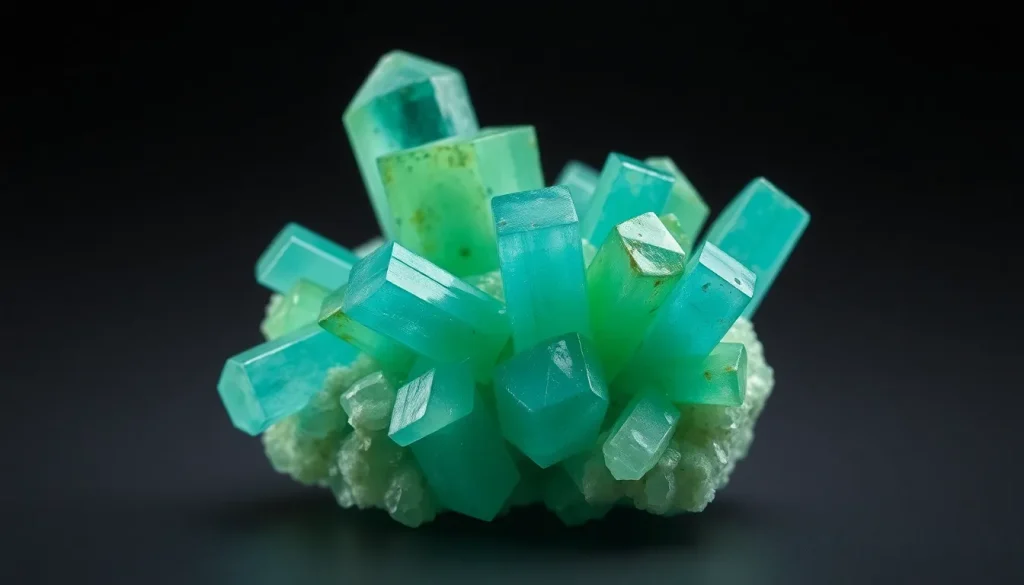
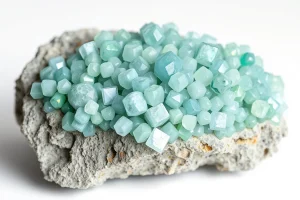
Atacamite is a secondary copper mineral with the chemical formula Cu2Cl(OH)3. It crystallises in the orthorhombic system and is best known for its intense green to turquoise hues, which can appear opaque or translucent. Though not a common gemstone, high‑quality specimens are valued by collectors for their vibrant colour and distinctive crystal habit.
History and Origin
The name “atacamite” derives from the Atacama Desert in northern Chile, where the mineral was first described in 1802. It forms in the oxidised zones of copper deposits, often as a replacement mineral on the surfaces of copper ores. Significant localities include Chile, Argentina, the United States (Arizona), Zambia, the Democratic Republic of Congo, and the Ural Mountains of Russia. Historically, atacamite has been used as a pigment and as an ornamental stone in inlay work.
Meaning and Symbolism
In traditional gemstone lore, the vivid green of atacamite is associated with growth, renewal, and abundance. Its copper content links it to the planet Venus and to themes of love and attraction. The stone is sometimes said to encourage emotional balance and to help the wearer express authentic feelings.
Healing and Metaphysical Properties
Crystal‑healing enthusiasts attribute the following properties to atacamite, based on longstanding belief rather than scientific evidence:
- Emotional support: Promotes calm, reduces anxiety, and fosters emotional resilience.
- Physical wellness: Traditionally thought to aid copper metabolism, support the immune system, and alleviate joint discomfort.
- Spiritual growth: Said to open the heart chakra, enhancing compassion and self‑acceptance.
These claims are not medically verified; individuals should seek professional health advice for medical concerns.
Varieties and Types
Atacamite occurs in several crystal habits, the most common being prismatic or tabular crystals with a distinctive green colour. Botallackite is a dimorph of atacamite that shares the same chemical composition but crystallises in a monoclinic system and typically exhibits a more bluish tone. The mineral can also appear as massive aggregates, often with a vitreous to dull luster.
Jewelry Uses and Care
Because atacamite scores only 2.5–3 on the Mohs hardness scale, it is relatively soft and can be scratched by most other gemstones. Its perfect cleavage on the [010] plane makes it prone to splitting if struck. Consequently, it is best suited for pendants, earrings, or brooches that are set in protective bezels and not subjected to daily wear.
Care recommendations:
- Clean gently with a soft, lint‑free cloth; avoid ultrasonic cleaners and harsh chemicals.
- Store separately from harder gemstones to prevent abrasion.
- Protect from prolonged exposure to moisture, as the mineral can alter when subjected to water over time.
Buying Guide
When purchasing atacamite, consider the following factors:
- Colour intensity: Deep, uniform green or turquoise hues are most desirable.
- Clarity: Look for specimens free of visible cracks or inclusions that could compromise durability.
- Cut and setting: Choose pieces where the stone is protected by a bezel or a protective setting.
- Origin documentation: Reputable dealers should provide provenance, especially for larger or rare specimens.
- Treatment disclosure: Ensure the stone has not been artificially dyed or stabilized unless clearly disclosed.
Because atacamite is relatively uncommon in the gemstone market, prices can vary widely based on colour, size, and quality. Consulting a certified gemologist for authentication is advisable before making a significant investment.
FAQ
What is atacamite good for?
Atacamite is prized for its vivid green color in ornamental jewelry and collectors’ pieces. Traditionally, it is believed to promote emotional balance and heart‑centered healing, though these effects are not scientifically proven.
Is atacamite rare?
High‑quality, deep‑green atacamite specimens are relatively rare because the mineral forms only in specific oxidised copper zones and is soft, limiting its use in jewelry. Rarity depends on colour, clarity, size, and whether the stone is untreated.
How can you tell if atacamite is real?
Genuine atacamite displays a characteristic green to turquoise hue, perfect cleavage, and a hardness of 2.5–3. Professional gemologists can confirm identity using refractive index measurement, specific gravity testing, and X‑ray diffraction. Look for provenance documentation from reputable dealers.
What chakra is atacamite associated with?
In crystal‑healing traditions, atacamite is most often linked to the Heart chakra due to its green colour, and some sources also associate it with the Throat chakra because of its occasional blue tones.
How should you clean atacamite?
Because atacamite is soft and can be damaged by chemicals, clean it gently with a soft, dry cloth. Avoid ultrasonic cleaners, steam, or harsh detergents. Store it separately from harder gemstones to prevent scratching.
Leave a Reply