
Short Answer
Overview
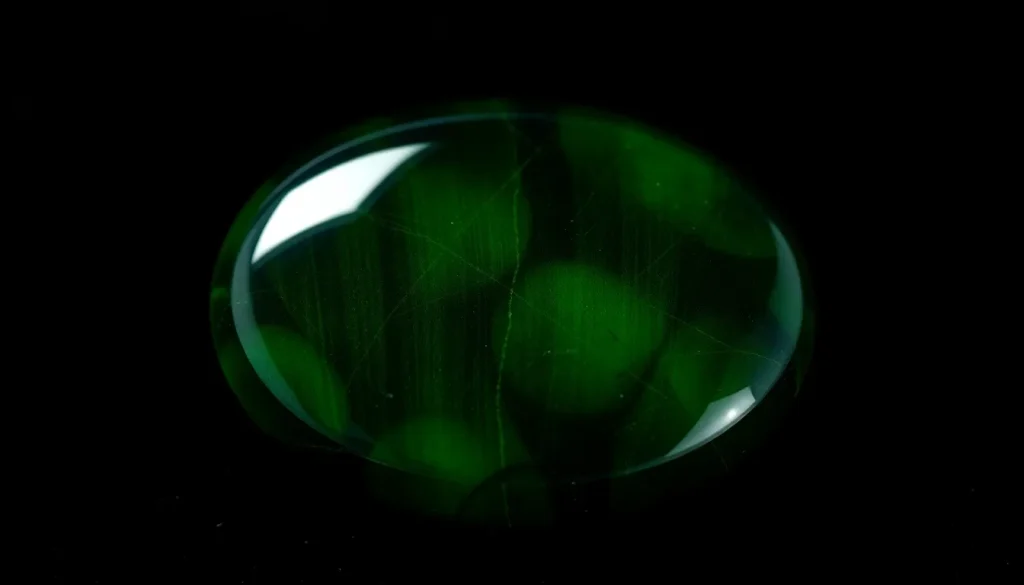
Antigorite is a member of the serpentine mineral group and is composed of a magnesium‑iron silicate hydroxide with the general formula (Mg,Fe)3Si2O5(OH)4. It forms in metamorphic environments where ultramafic rocks are altered by low‑grade heat and pressure. In gemstone form, antigorite is prized for its silky to vitreous luster and its range of colors from bright emerald‑green to deep black. The stone is typically cut as cabochons, beads, or small ornamental carvings rather than faceted gems because of its cleavage and moderate hardness.
History and Origin
The name “antigorite” honors the Italian mineralogist Antonio Antigori (1792–1855), who first described the mineral in the early 19th century. Historically, serpentine minerals—including antigorite—were used by ancient cultures for ornamental purposes and as a substitute for jade. In the 20th century, antigorite gained attention among collectors for its attractive green varieties and its occurrence in metamorphic belts of the Pacific Northwest, the Alps, and parts of Asia.
Meaning and Symbolism
Traditional beliefs attribute antigorite with qualities of renewal, growth, and emotional balance. Its green coloration is often linked to the heart’s energy, symbolizing compassion, forgiveness, and a deep connection to nature. In contemporary gemstone lore, antigorite is thought to encourage personal transformation and to help the wearer stay grounded while pursuing new opportunities.
Healing and Metaphysical Properties
Within crystal‑healing circles, antigorite is associated with the heart chakra and is believed to promote emotional healing, reduce stress, and foster a sense of inner peace. Practitioners claim it can aid in the detoxification of the body’s tissues, support joint health, and enhance the flow of chi. These are traditional beliefs and should not be taken as medical advice; individuals with health concerns should consult qualified healthcare professionals.
Varieties and Types
- Green Antigorite – The most common commercial variety, ranging from pale jade‑green to deep forest green.
- Black Antigorite – Displays a rich, opaque black that can appear slightly metallic; often used in men’s jewelry.
- Yellow‑Brown Antigorite – Occasionally found with a warm, honey‑colored hue, sometimes marketed as “golden serpentine.”
- Patterned or Veined Specimens – Natural growth can produce attractive banding or mottled patterns prized by collectors.
Jewelry Uses and Care
Because of its moderate hardness (5.5–6.5 on the Mohs scale) and perfect basal cleavage, antigorite is most often fashioned into cabochons, beads, pendants, and small ornamental pieces. It is unsuitable for rings or high‑impact settings where abrasion is likely.
Care instructions:
- Clean with warm, soapy water and a soft brush; avoid ultrasonic cleaners.
- Do not expose to harsh acids, bleach, or prolonged steam, as the mineral can degrade.
- Store separately from harder gemstones (e.g., quartz, topaz) to prevent scratching.
- Protect from direct sunlight for extended periods, which may cause fading in some green specimens.
Buying Guide
When purchasing antigorite, consider the following factors:
- Color Saturation – Deep, even green or rich black is generally more valuable than pale or mottled tones.
- Clarity – Inclusions are common; however, large cracks or exfoliation reduce durability.
- Cut and Finish – A well‑polished cabochon will showcase the stone’s silky luster.
- Treatment Disclosure – Some specimens are heat‑treated or dyed to enhance color; reputable sellers should disclose any treatments.
- Certification – For higher‑value pieces, request a gemological report from a recognized laboratory.
Because antigorite is not widely mined as a high‑grade gemstone, market prices are modest and vary with color intensity, size, and treatment status.
FAQ
What is antigorite good for?
Antigorite is valued for its attractive green to black colors in jewelry, especially as cabochons and beads. Traditionally, it is believed to support emotional balance and heart‑centered healing, though these claims are not medically verified.
Is antigorite rare?
Antigorite is not considered a rare gemstone; it occurs in many metamorphic regions worldwide. However, high‑quality, deep‑green or richly black specimens without fractures are less common and may command higher prices.
How can you tell if antigorite is real?
Real antigorite feels cool, has a silky to vitreous luster, and exhibits perfect basal cleavage when scratched. A professional gemologist can confirm authenticity with refractive index measurements and, if needed, spectroscopic analysis.
What chakra is antigorite associated with?
In crystal‑healing traditions antigorite is linked to the Heart (Anahata) chakra, where it is thought to promote love, compassion, and emotional harmony.
How should you clean antigorite?
Clean antigorite with warm soapy water and a soft brush. Avoid ultrasonic cleaners, harsh chemicals, or prolonged exposure to acids. Store separately from harder stones to prevent scratching.
Leave a Reply