
Short Answer
Overview
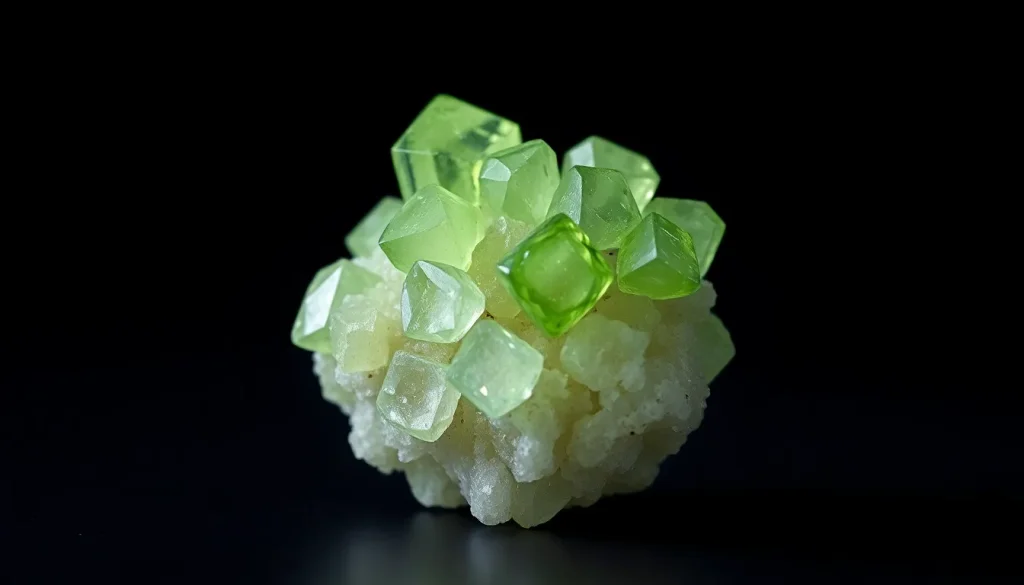
Annabergite is a bright‑green nickel arsenate mineral with the chemical formula Ni2(AsO4)(OH)2·4H2O. It crystallizes in the monoclinic system and typically appears as apple‑green to emerald‑green aggregates or tabular crystals. With a Mohs hardness of 2.5‑3, it is relatively soft and is most often encountered as a collector’s mineral rather than a mainstream gemstone.
History and Origin
The mineral was first described in 1858 from the Annaberg district of Saxony, Germany, after which it was named. Annabergite forms as a secondary product in the oxidation zones of nickel‑bearing sulfide ores, especially where arsenic is present. Today it is reported from nickel districts worldwide, including Canada, the United States, Australia, and New Zealand.
Meaning and Symbolism
In traditional gemstone symbolism, the vivid green of Annabergite is associated with growth, renewal, and the heart’s emotional balance. The mineral’s nickel content links it to resilience and the ability to adapt under pressure. Collectors often value Annabergite for its striking color and its connection to the earth’s mineral wealth.
Healing and Metaphysical Properties
Crystal‑healing practitioners attribute Annabergite with heart‑chakra activation, believing it can promote compassion, emotional openness, and inner healing. Some traditions suggest it helps release past emotional wounds and encourages personal growth. These claims are based on long‑standing belief systems and are not supported by medical science; Annabergite should never be used as a substitute for professional health care.
Varieties and Types
While the name Annabergite refers to the nickel‑rich green variety, related arsenate minerals display a range of colors:
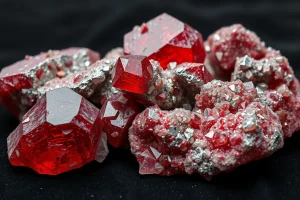
- Erythrite – a cobalt arsenate that forms vivid pink to purple crystals.
- Nickel‑green specimens – variations in nickel concentration can produce lighter or deeper green tones.
- Hydrated vs. partially dehydrated forms – loss of water molecules can affect translucency and luster.
Jewelry Uses and Care
Because of its low hardness, Annabergite is used sparingly in jewelry, typically as a cabochon, bead, or ornamental inlay rather than a faceted gemstone. When set, it should be protected from hard impacts and abrasive cleaning. Gentle care includes:
- Wiping with a soft, damp cloth; avoid ultrasonic cleaners.
- Using mild soap and lukewarm water for deeper cleaning.
- Storing separately from harder gemstones to prevent scratching.
Buying Guide
When purchasing Annabergite, consider the following factors:
- Color intensity – deep, uniform green is most desirable.
- Clarity – specimens free of surface weathering or heavy inclusions are preferred.
- Cut and setting – a well‑polished cabochon enhances color while protecting the stone’s softness.
- Origin documentation – reputable dealers often provide locality information, which can add value.
- Treatment disclosure – Annabergite is rarely treated, but any artificial enhancement should be disclosed.
Because the mineral is not commonly found in commercial jewelry, prices are modest and primarily driven by specimen quality and rarity of fine‑cut pieces.
FAQ
What is Annabergite good for?
Annabergite is valued by collectors for its vivid green color and unique nickel‑arsenate chemistry. In crystal‑healing circles it is believed to support heart‑chakra balance and emotional renewal, though these uses are based on tradition rather than scientific evidence.
Is Annabergite rare?
High‑quality, deep‑green Annabergite specimens are uncommon because the mineral forms only in specific nickel‑rich, arsenic‑bearing environments. However, it is not among the world’s rarest minerals; more abundant, lower‑grade material is found in several mining districts.
How can you tell if Annabergite is real?
Real Annabergite displays a characteristic apple‑green to emerald‑green hue, a vitreous‑pearly luster, and a light‑green streak. Its low hardness (2.5‑3) means it scratches easily with a fingernail. Professional gemologists can confirm identity using X‑ray diffraction or a refractometer.
What chakra is Annabergite associated with?
Traditionally Annabergite is linked to the Heart / ANAHATA chakra, reflecting its green color and the belief that it promotes emotional openness and compassion.
How should you clean Annabergite?
Because Annabergite is soft and can be porous, clean it gently with a soft, damp cloth and mild soap. Avoid ultrasonic cleaners, harsh chemicals, or prolonged soaking. Store it separately from harder stones to prevent scratching.
Leave a Reply