
Short Answer
Overview
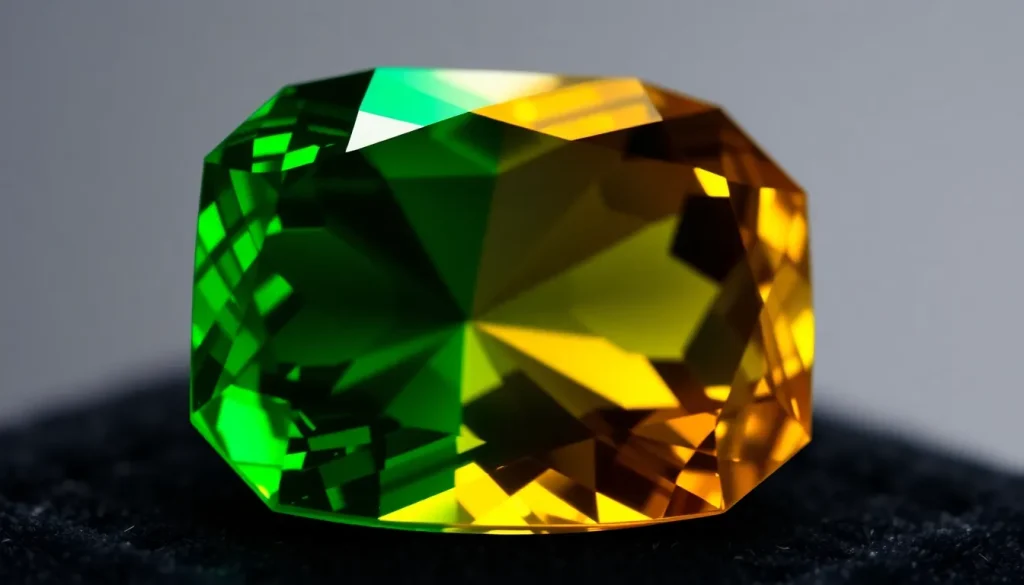
Andradite‑grossular refers to the solid‑solution series between two species of the garnet group: andradite (Ca3Fe2(SiO4)3) and grossular (Ca3Al2(SiO4)3). Both crystallise in the cubic (isometric) system and share the characteristic garnet dodecahedral habit. The series exhibits a broad colour palette—most famously the vivid green of demantoid (andradite) and the honey‑yellow of hessonite (grossular)—making it a popular choice for fine jewellery.
History and Origin
The garnet group has been known since antiquity, but the distinct varieties of andradite and grossular were identified in the 19th century. Demantoid, the most prized green member of the series, was first discovered in the Ural Mountains of Russia in the 1820s and later in Sweden’s Gotland region, where it achieved fame for its high dispersion (fire). Grossular’s honey‑coloured form, hessonite, was reported from Sri Lanka in the early 1800s and later from India and Madagascar. Throughout the 20th century, new localities such as Namibia (tsavorite, a vivid green grossular) and the United States (California and Arizona) expanded the market.
Meaning and Symbolism
In traditional gemstone lore, andradite‑grossular garnets symbolize renewal, protection, and personal growth. Their green tones are linked to the heart’s vitality, while the warmer yellow‑brown hues are associated with confidence and optimism. Historically, the stones were used as talismans to ward off negative energy and to attract success in artistic or commercial endeavours.
Healing and Metaphysical Properties
Crystal‑healing practitioners attribute the following properties to the garnet series:
- Emotional balance: The green varieties are believed to open the heart chakra, encouraging compassion and emotional resilience.
- Physical vitality: Yellow‑brown hues are said to stimulate the circulatory system and promote metabolic health.
- Protection: Both colours are thought to create an energetic shield against negativity and psychic intrusion.
These claims are based on traditional beliefs and are not supported by scientific medical evidence.
Varieties and Types
The andradite‑grossular series includes several well‑known gemstone varieties:
| Variety | Typical Colour | Key Localities |
|---|---|---|
| Demantoid (Andradite) | Vivid green, sometimes with orange undertones | Ural (Russia), Gotland (Sweden), Namibia |
| Melanite (Andradite) | Deep black | Ural, Madagascar, USA (California) |
| Tsavorite (Grossular) | Bright emerald‑green | Kenya, Tanzania, Tanzania |
| Hessonite (Grossular) | Honey‑yellow to orange | Sri Lanka, India, Madagascar |
Because the two end‑members share the same crystal structure, intermediate compositions can display mixed colours and physical properties that fall between the extremes.
Jewelry Uses and Care
With a Mohs hardness of 6.5–7.5, andradite‑grossular garnets are suitable for many jewellery settings, including rings, pendants, earrings, and brooches. The stone’s relatively high fracture toughness makes it less prone to chipping than some softer gems, but care is still required:
- Cleaning: Use warm, soapy water and a soft brush. Avoid ultrasonic cleaners for stones that have been heat‑treated or are set with delicate metals.
- Storage: Keep separate from softer gems (e.g., pearls, opal) to prevent scratching.
- Heat sensitivity: Most natural garnets tolerate normal jewellery‑making heat, but extreme temperatures can affect colour in heat‑treated specimens.
Buying Guide
When purchasing an andradite‑grossular garnet, consider the following factors:
- Colour and clarity: Vivid, evenly distributed colour and minimal inclusions increase value, especially for demantoid and tsavorite.
- Cut: Well‑proportioned cuts maximize fire (especially for demantoid) and brilliance.
- Treatment disclosure: Many grossular stones are heat‑treated to improve colour; reputable dealers will disclose any treatments.
- Certification: Obtain a GIA or IGI report for high‑value pieces to verify origin and any enhancements.
- Origin: Certain locales, such as Swedish demantoid, command premium prices due to rarity.
Always buy from a certified gem dealer and request a written guarantee of authenticity.
FAQ
What is Andradite‑grossular good for?
Andradite‑grossular is prized for its beauty in jewellery, especially in rings and pendants, and is traditionally believed to promote emotional balance and protection.
Is Andradite‑grossular rare?
Rarity depends on colour, clarity and origin; vivid green demantoid from Sweden and high‑quality tsavorite are relatively rare, while brown or yellow grossular is more common.
How can you tell if Andradite‑grossular is real?
Examine colour, refractive index, and fire; a professional gemologist can perform a hardness test, spectroscopic analysis, and provide certification for certainty.
What chakra is Andradite‑grossular associated with?
Traditional crystal‑healing beliefs link the green varieties to the Heart chakra, while some sources list no single standard chakra for the whole series.
How should you clean Andradite‑grossular?
Clean with warm soapy water and a soft brush; avoid ultrasonic cleaners for treated stones and store separately from softer gems to prevent scratches.
Leave a Reply