
Short Answer
Overview
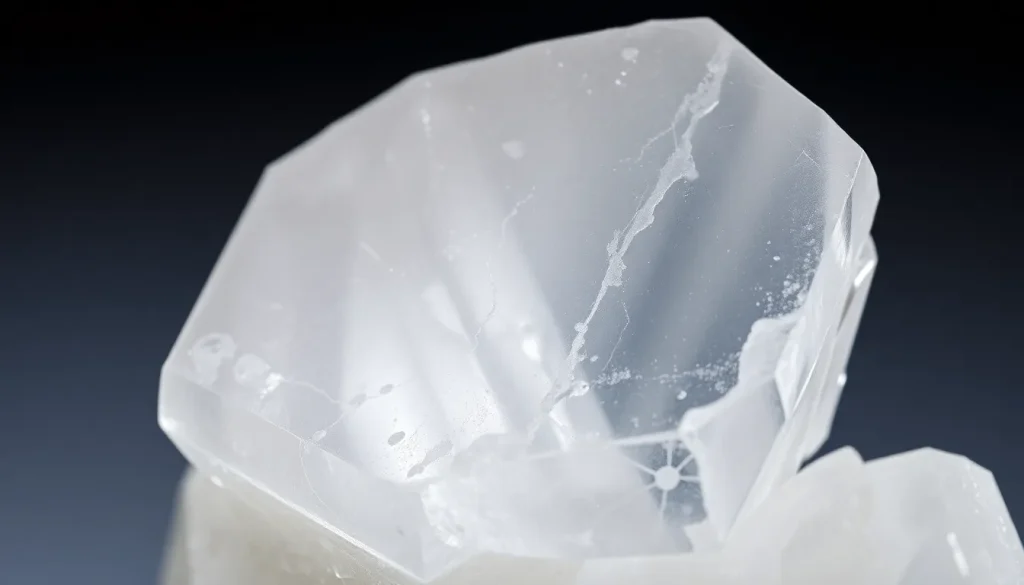
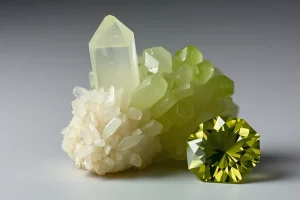
Albite is a member of the plagioclase series of feldspar minerals, chemically defined as sodium aluminium silicate (NaAlSi3O8). It typically forms in white, colour‑less, or very light gray crystals with a vitreous luster and perfect cleavage on two directions. Though primarily a collector’s mineral, albite can be cut into cabochons or beads for subtle jewelry pieces.
History and Origin
The name albite derives from the Latin albus, meaning “white,” reflecting its common colour. Albite was first described in the early 19th century as a distinct mineral species within the feldspar group. It occurs in a range of geological settings, including granitic pegmatites, metamorphic gneisses, and volcanic rocks where sodium‑rich magmas have crystallised.
Meaning and Symbolism
In traditional gemstone lore, albite is associated with clarity of thought and emotional balance. Its transparent appearance is said to promote honesty and a clear sense of purpose. Some cultures view it as a stone that helps to release old patterns, encouraging a fresh start.
Healing and Metaphysical Properties
Crystal‑healing practitioners attribute the following beliefs to albite, though these are not medically verified:
- Emotional support: Enhances calmness and reduces anxiety.
- Physical aid: Thought to assist the nervous system and aid in detoxification.
- Spiritual growth: Believed to open the mind to new ideas and promote mental clarity.
These claims are based on long‑standing traditions and should not replace professional medical advice.
Varieties and Types
Albite occurs in several forms, distinguished mainly by crystal habit and impurity content:
- Massive albite: Large, granular aggregates without well‑developed crystal faces.
- Albite microcline twins: Intergrowths where albite and microcline share a common twin law, creating striking cross‑hatched patterns.
- Albite‑rich pegmatite crystals: Well‑formed, often tabular crystals prized by collectors.
Jewelry Uses and Care
Because albite ranks 6–6.5 on the Mohs scale, it is suitable for pendants, earrings, and brooches that are not subject to heavy wear. Its perfect cleavage means it can be prone to chipping if struck. Care recommendations include:
- Clean with a soft, lint‑free cloth and mild soap solution; avoid ultrasonic cleaners.
- Store separately from harder gemstones to prevent scratches.
- Protect from sudden impacts; consider setting albite in protective bezels.
Buying Guide
When purchasing albite, consider the following factors:
- Clarity: Look for specimens free of visible fractures or cloudiness.
- Colour: The most valued pieces are pure white or colourless; subtle greys or yellows are also acceptable.
- Cut and symmetry: Well‑cut cabochons or faceted stones display the mineral’s natural luster.
- Origin: Reputable sources from known localities such as the United States, Norway, or Russia often provide higher quality.
- Certification: For higher‑value pieces, request a gemological report confirming identity and any treatments.
Always buy from a trusted dealer who offers a return policy and clear information about any enhancements.
FAQ
What is albite good for?
Albite is valued by collectors for its clear, white appearance and perfect cleavage. Traditionally it is believed to promote mental clarity and emotional balance, though these effects are not scientifically proven.
Is albite rare?
Albite is not considered rare in raw form; however, high‑quality, well‑cleaved, colourless specimens suitable for jewelry are less common and can be more valuable.
How can you tell if albite is real?
Real albite shows perfect cleavage on two directions, a vitreous luster, and a white streak. A professional gemologist can confirm identity with refractive index measurements and X‑ray diffraction.
What chakra is albite associated with?
In crystal‑healing traditions albite does not have a single standard chakra association; some sources link it loosely to the Crown or Third Eye chakras for mental clarity.
How should you clean albite?
Clean albite with a soft cloth and mild soapy water. Avoid ultrasonic cleaners and harsh chemicals, and store it separately from harder gemstones to prevent scratches.
Leave a Reply