
Short Answer
Overview
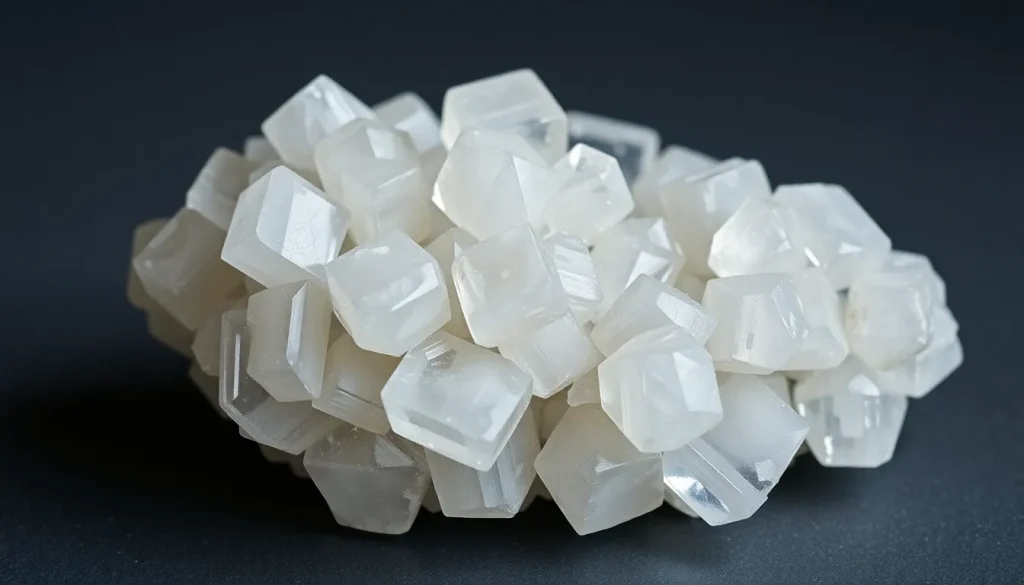
Agrellite is a rare cyclosilicate mineral belonging to the cancrinite group. Chemically it is a sodium‑calcium fluoride silicate with the formula NaCa₂Si₄O₁₀F₂. Crystals typically appear as prismatic or tabular hexagonal forms and display a vitreous to pearly luster. Colors range from colorless and pure white to a faint gray, and the stone is usually transparent to translucent. With a Mohs hardness of 5.5–6, agrellite is relatively durable for a collector’s gem but is not commonly used in mainstream jewelry because of its scarcity.
History and Origin
The mineral was first described in 1968 and named after the Swedish mineralogist Sten Agrell. The type locality is the Ilímaussaq intrusive complex in southwestern Greenland, a world‑renowned source of unusual alkaline silicates. Since its discovery, agrellite has also been reported from a few other alkaline complexes, including the Kola Peninsula in Russia and the Nunavut region of Canada. Specimens are prized by mineral collectors for their well‑formed hexagonal crystals and occasional fluorescence under short‑wave ultraviolet light.
Meaning and Symbolism
In traditional gemstone lore, agrellite is associated with clarity of thought and spiritual insight. Its clear, luminous appearance is said to symbolize purity and the opening of higher consciousness. Collectors often view the stone as a reminder to stay true to one’s inner truth and to seek knowledge beyond the material world.
Healing and Metaphysical Properties
Crystal‑healing practitioners attribute a range of metaphysical qualities to agrellite. It is believed to enhance mental focus, support meditation, and facilitate communication with higher realms. Some traditions claim it can help release old emotional patterns, promote inner peace, and strengthen the aura. These claims are based on folklore and should not be considered medical advice.
Varieties and Types
Agrellite does not have widely recognized commercial varieties, but subtle differences can be observed among specimens:
- White agrellite – the most common appearance, completely colorless to milky white.
- Gray‑tinged agrellite – exhibits a faint gray hue caused by microscopic inclusions.
- Fluorescent agrellite – shows blue‑white fluorescence under short‑wave UV light, a feature valued by collectors.
Jewelry Uses and Care
Because of its rarity and modest hardness, agrellite is primarily used in collector’s pieces, cabochons, and occasional beadwork rather than in high‑impact jewelry. When set, it is often mounted in protective settings such as bezel or channel settings to shield the stone from knocks.
Care recommendations:
- Clean with a soft, lint‑free cloth and warm soapy water; avoid ultrasonic cleaners.
- Do not expose to harsh acids or alkaline cleaners, as the fluoride component can be sensitive.
- Store separately from harder gemstones (e.g., quartz, topaz) to prevent scratching.
- Avoid prolonged exposure to direct sunlight, which can cause surface discoloration over many years.
Buying Guide
When purchasing agrellite, consider the following criteria:
- Authenticity – Request a certificate of origin from a reputable gemological laboratory or a recognized mineral dealer.
- Crystal quality – Look for well‑formed, unfractured crystals with a clear vitreous luster. Inclusions are common but should not dominate the surface.
- Color and clarity – Pure white or colorless stones are generally more valued; gray‑tinged specimens are accepted but may be priced lower.
- Cut and finish – Cabochons and polished beads are typical; ensure the finish is even and free of polishing scratches.
- Price range – Due to limited supply, agrellite can command premium prices for high‑quality specimens. Expect a wide range depending on size, clarity, and provenance.
Because synthetic or treated agrellite is virtually nonexistent, any claim of lab‑grown material should be approached with caution.
FAQ
What is agrellite good for?
Agrellite is valued primarily by collectors for its rare, well‑formed crystals and occasional fluorescence. Tradition attributes it with mental clarity and spiritual insight, but these are metaphysical beliefs, not medical facts.
Is agrellite rare?
Yes. High‑quality agrellite is uncommon because it forms only in a few alkaline igneous complexes worldwide. Specimens of good size, clarity, and color are especially scarce, which influences price and availability.
How can you tell if agrellite is real?
Authentic agrellite displays a vitreous luster, a Mohs hardness of about 5.5–6, and a characteristic hexagonal crystal habit. Professional gemological testing, such as X‑ray diffraction or a certified mineral identification, is recommended for certainty.
What chakra is agrellite associated with?
In crystal‑healing traditions agrellite is linked to the Crown Chakra, supporting higher‑level consciousness and spiritual connection.
How should you clean agrellite?
Clean agrellite gently with warm soapy water and a soft cloth. Avoid ultrasonic cleaners, harsh chemicals, and prolonged sunlight exposure. Store separately from harder gemstones to prevent scratching.
Leave a Reply