
Short Answer
Overview
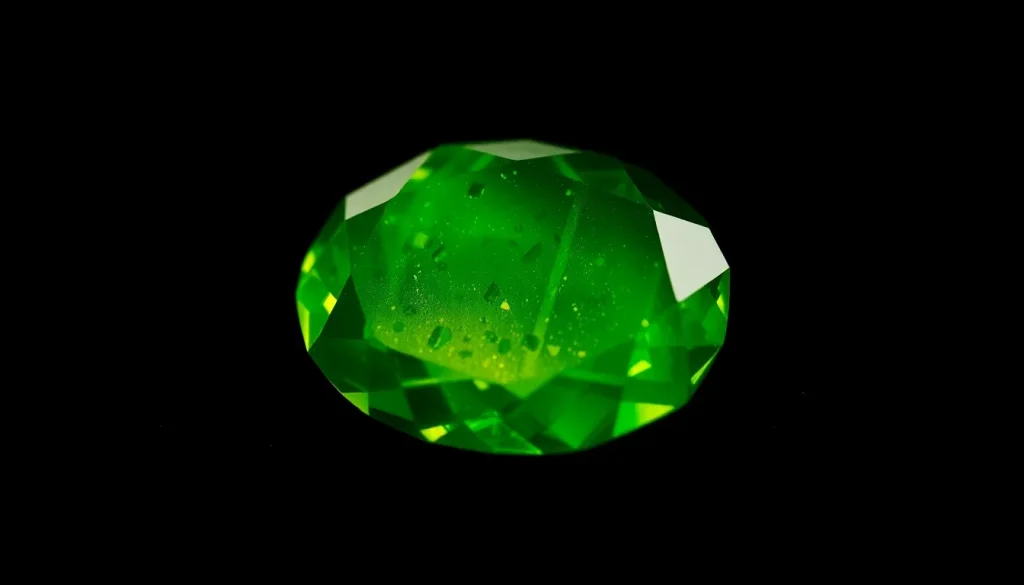
Kornerupine is a relatively uncommon gemstone belonging to the borosilicate group of minerals. It crystallises in the orthorhombic system and is prized for its high refractive index (1.660–1.699) and strong dispersion, which give it a brilliance comparable to that of sapphire. The stone occurs in a range of colours, most notably vivid green, yellow‑green, brown, and occasional colorless or bluish tones. Its hardness of 6.5–7 on the Mohs scale makes it suitable for many types of jewellery, although care is required due to its perfect {010} cleavage.
History and Origin
The mineral was first described in 1884 from specimens found in southern Greenland and was named after the Danish mineralogist Andreas Nikolaus Kornerup. Early gem‑cutting attempts were limited because large, clean crystals are rare. Commercial production began in the mid‑20th century after significant deposits were discovered in Sri Lanka, Madagascar, and later in Myanmar, Tanzania, Brazil, and the United States (North Carolina). Today, kornerupine remains a collector’s stone, valued for its rarity and the depth of its colour.
Meaning and Symbolism
In traditional gemstone lore, kornerupine is associated with growth, renewal and the heart’s aspirations. Its rich green tones are thought to echo the vitality of nature, symbolising personal development and emotional balance. The stone is sometimes referred to as “green sapphire,” highlighting its perceived connection to wisdom and truth.
Healing and Metaphysical Properties
Crystal‑healing practitioners attribute the following properties to kornerupine, based on longstanding belief rather than scientific evidence:
- Emotional Healing: Supports the heart chakra, encouraging compassion, forgiveness, and emotional openness.
- Physical Support: Said to aid the circulatory and immune systems, and to help detoxify the body.
- Mental Clarity: Believed to sharpen intuition and enhance decision‑making, especially in matters of personal growth.
These claims should be regarded as traditional beliefs and not as medical advice.
Varieties and Types
Kornerupine exhibits a broad colour spectrum, largely dictated by iron and manganese content. Common varieties include:
- Green Kornerupine: Ranges from pale apple‑green to deep forest green.
- Yellow‑Green and Brown: Often display a warm, earthy hue.
- Colorless: Rare, highly prized for its clarity.
- Heat‑Treated Specimens: Some stones are gently heated to enhance colour saturation; treatment is usually disclosed by reputable dealers.
Because the gemstone can display strong pleochroism, the orientation of the cut influences the observed colour.
Jewelry Uses and Care
Thanks to its brilliance, kornerupine is cut into faceted gems such as round brilliant, oval, and cushion cuts. It is popular in rings, pendants, earrings, and high‑end watches. When setting kornerupine, jewelers avoid deep prongs that could stress the {010} cleavage plane.
Cleaning and Maintenance:
- Use mild soap and lukewarm water with a soft brush.
- Avoid ultrasonic cleaners and steam cleaning, which may exacerbate cleavage or affect any heat treatment.
- Store separately in a soft pouch or a compartment lined with felt to prevent scratches.
Regular inspection by a qualified gem‑cutter is recommended, especially for pieces worn daily.
Buying Guide
When purchasing kornerupine, consider the following factors:
- Colour Saturation: Deep, even colour without brown or gray overtones commands the highest value.
- Clarity: Inclusions are common; however, stones with minimal visible inclusions and no surface blemishes are preferred.
- Cut Quality: A well‑oriented cut will showcase the stone’s pleochroism and maximise brilliance.
- Treatment Disclosure: Ask for a certification that states whether the stone is natural, heat‑treated, or enhanced.
- Certification: Reputable laboratories such as GIA, IGI, or the European Gemological Laboratory provide reliable grading reports.
Because large, clean specimens are scarce, expect price variation based on size, colour intensity, and provenance.
FAQ
What is kornerupine good for?
Kornerupine is valued for its vivid green to brown hues, high brilliance, and suitability in fine jewellery. Traditionally, it is also believed to promote emotional balance and personal growth, though these metaphysical claims are not scientifically proven.
Is kornerupine rare?
High‑quality kornerupine is considered rare because large, clean crystals are uncommon and the stone is found in limited localities. Rarity increases with deep, saturated colour, excellent clarity, and larger carat weight.
How can you tell if kornerupine is real?
Real kornerupine exhibits a high refractive index (1.660–1.699), distinct {010} cleavage, and often pleochroism. A gem‑cutter can test hardness (6.5–7) and examine under magnification for characteristic inclusions. Professional certification from a recognized laboratory provides definitive verification.
What chakra is kornerupine associated with?
In crystal‑healing traditions, kornerupine is most commonly linked to the Heart chakra, supporting love, compassion, and emotional healing.
How should you clean kornerupine?
Clean kornerupine with warm, soapy water and a soft brush. Avoid ultrasonic cleaners, steam, or harsh chemicals, as the stone’s perfect cleavage can be damaged and heat‑treated stones may be sensitive.
Leave a Reply