Short Answer
Overview
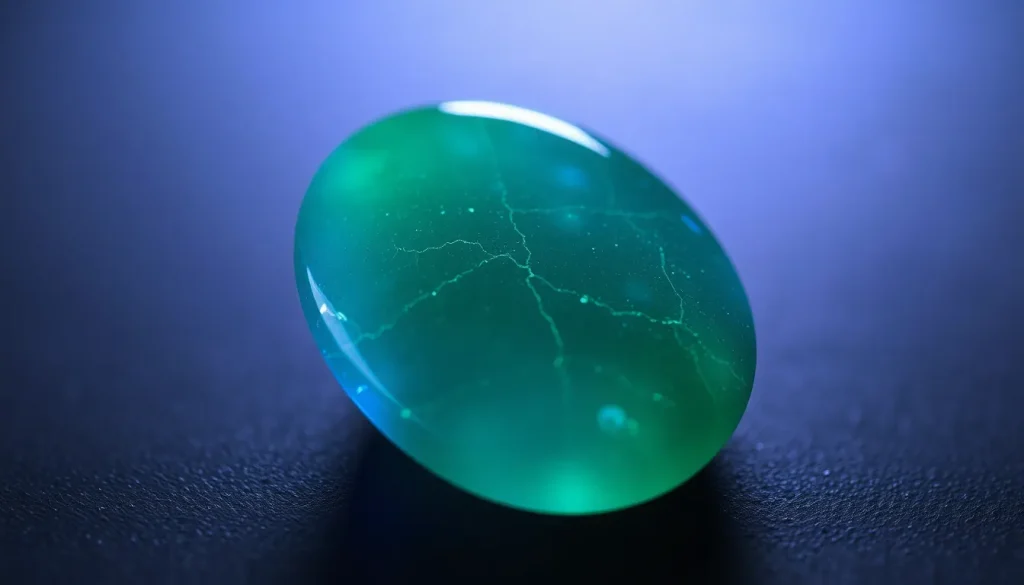
Fluorapatite is a member of the apatite group of phosphate minerals, with the ideal chemical formula Ca5(PO4)3F. It occurs in a wide range of colors, most famously vivid greens, blues, yellows, and occasional pinks or violet hues. Because of its relatively low hardness (Mohs 5) and perfect basal cleavage, it is more often used in cabochon or bead form rather than faceted settings. Nevertheless, high‑clarity, well‑colored specimens are valued by collectors and some designers for their unique hue and fluorescence.
History and Origin
The name “apatite” derives from the Greek word apaptos, meaning “to lie away” or “to be deceptive,” a reference to the mineral’s tendency to be mistaken for other phosphates. Fluorapatite, the fluorine‑bearing variety, was first described in the late 19th century when fluorine was recognized as a distinct chemical component of apatite. Natural deposits are found worldwide, often forming in igneous, metamorphic, and sedimentary environments where phosphate‑rich fluids precipitate the mineral in cavities, veins, or as a replacement of calcium‑bearing rocks.
Historically, apatite has been used as a source of phosphorus for fertilizer production. In the gem trade, bright green fluorapatite—sometimes called “green apatite”—gained popularity in the early 20th century as an affordable alternative to emerald. Today, collectors prize fluorapatite for its fluorescence under ultraviolet light, which can range from deep blue to violet, a property that helped early mineralogists distinguish it from other apatite varieties.
Meaning and Symbolism
In traditional gemstone lore, fluorapatite is associated with growth, renewal, and personal transformation. Its green hues are linked to the heart’s energy, symbolizing compassion and emotional balance. Blue and violet specimens are said to encourage clarity of thought and spiritual insight. Because fluorapatite often forms in crystal clusters, it is also viewed as a stone that promotes teamwork and collective progress.
Healing and Metaphysical Properties
Crystal‑healing practitioners attribute a range of metaphysical qualities to fluorapatite. It is believed to aid in the absorption and assimilation of new information, making it a popular stone for students and lifelong learners. Green fluorapatite is thought to support emotional healing, helping release past hurts and fostering forgiveness. Blue varieties are said to enhance communication and intuition, while yellow fluorapatite is linked to confidence and personal power. These claims are based on traditional beliefs and should not replace professional medical advice.
Varieties and Types
Fluorapatite occurs in several color varieties, each with subtle differences in trace element chemistry:
- Green fluorapatite – Often contains trace amounts of chromium or iron, producing emerald‑like shades.
- Blue to violet fluorapatite – Fluorescence under UV light is prominent; color is influenced by rare earth elements.
- Yellow to brown fluorapatite – Colored by manganese or iron oxidation states.
- Colourless or pink fluorapatite – Rare, with coloration from minimal trace impurities.
In addition to natural colors, fluorapatite may be heat‑treated to enhance or modify hue, though such treatments are less common than in other gemstone groups.
Jewelry Uses and Care
Because of its perfect basal cleavage and moderate hardness, fluorapatite is best set in protective settings such as bezel or channel settings, or used in cabochons, beads, and pendants. It is unsuitable for rings that are subject to frequent impact.
Cleaning: Use a soft, lint‑free cloth and mild soapy water. Avoid ultrasonic cleaners and harsh chemicals, which can stress the crystal lattice and promote cleavage. For stubborn grime, a soft brush with a gentle detergent is acceptable.
Storage: Keep fluorapatite separate from harder gemstones (e.g., quartz, sapphire) to prevent scratching. Store in a padded jewelry box or a soft pouch.
Durability: While fluorapatite can withstand everyday wear when well‑protected, it may chip or split if dropped onto a hard surface. Avoid exposure to prolonged heat, as excessive temperature changes can cause micro‑fracturing.
Buying Guide
When purchasing fluorapatite, consider the following factors:
- Color saturation: Look for vivid, evenly distributed color without excessive zoning or brownish overtones.
- Clarity: Inclusions are common; however, a stone with minimal visible cracks or cloudiness will display better brilliance.
- Cut and shape: Cabochons that showcase the stone’s natural luster and fluorescence are preferred. Faceted pieces should have generous pavilion depth to protect the cleavage.
- Origin and treatment disclosure: Reputable dealers will disclose the locality and any heat or radiation treatments applied.
- Certification: For high‑value specimens, request a gem‑ological report from a recognized laboratory such as GIA or IGI.
Prices vary widely based on color, size, and clarity. Fine green fluorapatite over 10 mm with excellent transparency can command premium prices, while smaller or lower‑grade material is more affordable.
FAQ
What is fluorapatite good for?
Fluorapatite is prized for its vivid colors and fluorescence, making it suitable for jewelry, decorative pieces, and collector specimens. Traditionally, it is also believed to support learning, emotional healing, and communication, though these are metaphysical concepts, not medical facts.
Is fluorapatite rare?
Fluorapatite is not extremely rare as a mineral, but high‑quality, vivid green or deep blue specimens suitable for fine jewelry are less common. Rarity increases with size, clarity, and untreated color.
How can you tell if fluorapatite is real?
Real fluorapatite exhibits a hardness of about 5, perfect basal cleavage, and a specific gravity around 3.1‑3.2. It may fluoresce blue under UV light. Professional testing such as refractive index measurement or a gemological lab report confirms authenticity.
What chakra is fluorapatite associated with?
In crystal‑healing traditions, fluorapatite is sometimes linked to the heart chakra for green stones and the throat or third‑eye chakras for blue/violet specimens, but there is no universally accepted chakra assignment.
How should you clean fluorapatite?
Clean fluorapatite with mild soapy water and a soft cloth. Avoid ultrasonic cleaners, harsh chemicals, and extreme heat. Store separately from harder gemstones to prevent scratching, and protect the stone in a padded setting.
Leave a Reply