
Short Answer
Overview
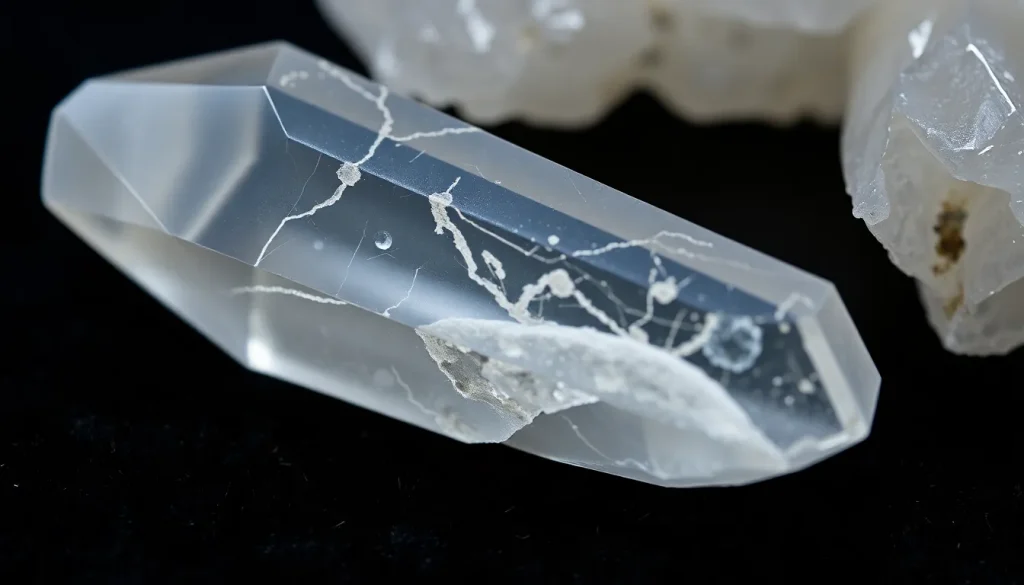
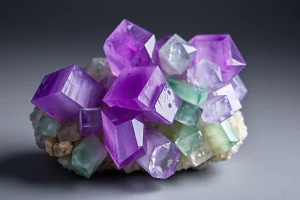
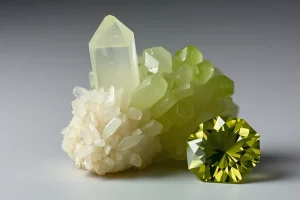
Apophyllite is a member of the apophyllite group of phyllosilicate minerals. It forms well‑developed, tabular crystals that are often colourless, white, pale yellow, or very light green. The mineral is prized for its vitreous to pearly luster and its distinctive perfect basal cleavage, which gives the crystals a delicate, sheet‑like appearance.
History and Origin
The name “apophyllite” derives from the Greek words apo (away) and phyllon (leaf), referring to the mineral’s tendency to split away in thin sheets. First described in the late 19th century from specimens in the United States, apophyllite has since been reported from volcanic and hydrothermal environments worldwide, particularly in alkaline, silica‑rich rocks.
Meaning and Symbolism
In traditional crystal lore, apophyllite is associated with clarity of thought, spiritual insight, and the opening of higher‑consciousness channels. It is often described as a stone that helps “clear the mind” and supports the expression of inner truth.
Healing and Metaphysical Properties
According to crystal‑healing beliefs, apophyllite is thought to promote mental clarity, aid meditation, and stimulate the crown chakra. Practitioners claim it can assist in releasing old patterns, enhancing intuition, and encouraging a sense of calm. These attributes are regarded as spiritual or energetic benefits and are not medical advice.
Varieties and Types
The two most common varieties are:
- K‑Apophyllite – potassium‑rich, typically colourless to white.
- Na‑Apophyllite – sodium‑rich, often displaying a very pale yellow or green hue.
Both share the same crystal habit and physical properties but differ slightly in chemical composition.
Jewelry Uses and Care
Because of its relatively low hardness (4.5–5.5 on the Mohs scale) and perfect basal cleavage, apophyllite is best suited for pendants, earrings, and brooches where the stone can be set securely and protected from impact. It should be mounted in protective settings such as bezel or prong styles that minimize pressure on the crystal faces.
Care instructions:
- Clean with a soft, lint‑free cloth; mild soapy water can be used if necessary.
- Avoid ultrasonic cleaners and steam, as rapid temperature changes may cause splitting.
- Store separately from harder gemstones to prevent scratching.
Buying Guide
When purchasing apophyllite, consider the following factors:
- Clarity and Color – Look for specimens that are free of inclusions and display a uniform, gentle colour.
- Cut and Setting – Well‑cut stones will showcase the characteristic tabular habit and luster.
- Origin – Reputable sources will disclose the mining locality; common sources include Nevada (USA), Mexico, Brazil, Pakistan, and Australia.
- Treatment Disclosure – Natural apophyllite is rarely treated, but any enhancement (e.g., dye) should be disclosed.
For valuable pieces, request a gemological report or verification from a certified laboratory.
FAQ
What is apophyllite good for?
Apophyllite is valued for its delicate beauty in jewelry, its clear crystal habit for collectors, and, in traditional crystal lore, for promoting mental clarity, meditation support, and crown‑chakra activation.
Is apophyllite rare?
High‑quality, well‑formed apophyllite is less common than more abundant quartz varieties, especially in larger sizes or vivid colors, but the mineral is not considered extremely rare overall.
How can you tell if apophyllite is real?
Real apophyllite exhibits perfect basal cleavage, a pearly to vitreous luster, and a Mohs hardness of 4.5‑5.5. Professional testing, such as refractive index measurement or X‑ray diffraction, confirms authenticity.
What chakra is apophyllite associated with?
Traditional crystal‑healing beliefs link apophyllite primarily to the Crown Chakra, with some practitioners also associating it with the Third Eye chakra.
How should you clean apophyllite?
Gently wipe with a soft cloth; if needed, clean with mild soapy water. Avoid ultrasonic cleaners, steam, or harsh chemicals, and store separately to prevent scratches.
Leave a Reply