
Short Answer
Overview
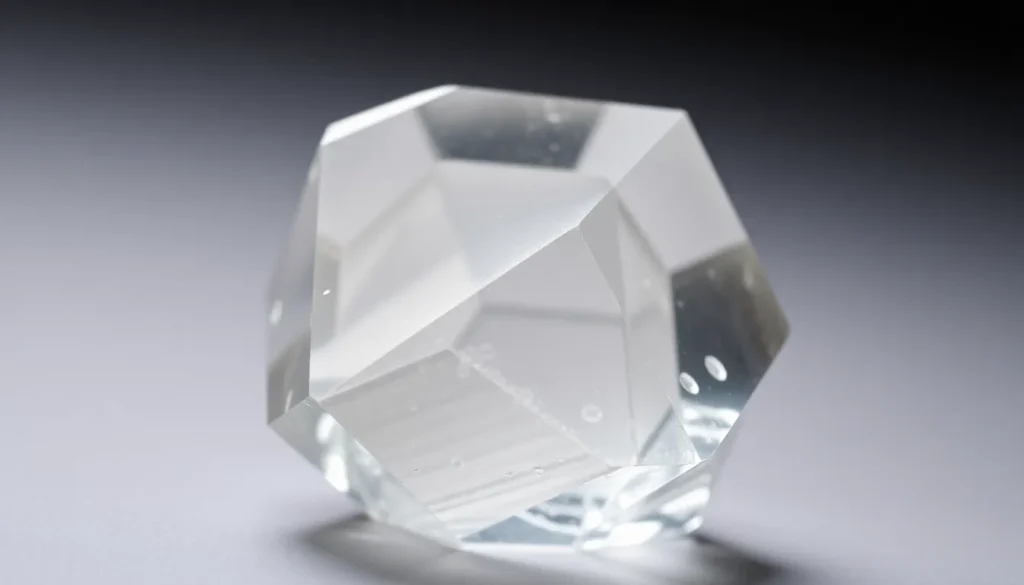
Phenakite is a rare beryllium silicate mineral prized for its exceptional clarity and high refractive index, which give it a brilliance comparable to diamond. Natural crystals are typically colourless, though they may exhibit pale yellow, brown, or gray hues. Because of its hardness and optical properties, phenakite is occasionally cut for high‑end jewelry, but its scarcity makes it a collector’s gem.
History and Origin
The name “phenakite” derives from the Greek word phenakos meaning “imposter,” a reference to its early confusion with quartz and topaz. First described in the early 19th century from deposits in Brazil, phenakite has since been reported from several pegmatitic and metamorphic settings worldwide, including Madagascar, the Ural Mountains of Russia, California (USA), Pakistan, and Tanzania. Historically it was used as a “diamond simulant” before the development of modern synthetic alternatives.
Meaning and Symbolism
In traditional gemstone lore, phenakite is associated with clarity of thought, spiritual insight, and higher consciousness. It is said to encourage mental focus, support the pursuit of truth, and aid in the realization of one’s life purpose. Its clear, glass‑like appearance reinforces symbolism of purity and transparency.
Healing and Metaphysical Properties
Crystal‑healing practitioners attribute phenakite with the ability to amplify energy, enhance intuition, and promote communication with higher realms. It is believed to stimulate the Crown chakra, fostering spiritual awakening and inner wisdom. Some claim it can assist in relieving mental fatigue and supporting the endocrine system, though these statements are not medically verified.
Varieties and Types
Phenakite occurs in several visual varieties:
- Colourless Phenakite: The most common form, prized for its diamond‑like brilliance.
- Pale Yellow or Brown Phenakite: Colour caused by trace iron or manganese.
- Crystal‑Habit Phenakite: Well‑developed hexagonal prisms or tabular crystals often displayed in mineral collections.
All varieties share the same chemical composition (Be₂SiO₄) but differ in trace impurities that affect colour.
Jewelry Uses and Care
Because phenakite rates 7.5–8 on the Mohs scale and possesses an adamantine luster, it can be set in rings, earrings, pendants, and high‑end watch bezels. However, its perfect cleavage is absent, and it exhibits a conchoidal fracture, making it relatively tough but still susceptible to chipping under sharp impact.
Recommended care:
- Clean with warm, soapy water and a soft brush; avoid ultrasonic cleaners if the stone is heat‑treated.
- Dry with a lint‑free cloth; store separately from softer gems to prevent scratching.
- Inspect settings regularly; professional polishing may be required to maintain brilliance.
Buying Guide
When purchasing phenakite, consider the following factors:
- Clarity: Inclusions are visible under magnification; higher clarity commands higher price.
- Colour: Colourless stones are rarer and more valuable than tinted specimens.
- Cut: Well‑cut facets maximize its high refractive index; poor cuts reduce brilliance.
- Origin: Provenance from recognized localities (e.g., Brazil, Madagascar) can add confidence.
- Certification: Request a gemological report from a reputable laboratory (GIA, IGI) to confirm authenticity and any treatments.
Because phenakite is uncommon, price ranges can vary widely. Comparing multiple sources and obtaining a guarantee of natural, untreated material will help ensure a satisfactory purchase.
FAQ
What is phenakite good for?
Phenakite is valued for its high brilliance in gemstone jewelry and as a collector’s mineral; traditionally it is believed to enhance mental clarity and spiritual insight.
Is phenakite rare?
High‑quality, colourless phenakite is rare due to limited large deposits and the difficulty of finding stones without inclusions; lower‑grade material is more common but still less abundant than many other gems.
How can you tell if phenakite is real?
Professional identification uses refractive index measurement (≈1.65–1.67), specific gravity testing, and spectroscopic analysis; visual clues include its adamantine luster and lack of cleavage. A certified gemological report is recommended for certainty.
What chakra is phenakite associated with?
In crystal‑healing traditions phenakite is most commonly linked to the Crown Chakra, though some practitioners also connect it to the Third Eye chakra.
How should you clean phenakite?
Clean phenakite gently with warm soapy water and a soft brush, rinse, and pat dry with a lint‑free cloth. Avoid harsh chemicals, ultrasonic cleaners (especially for treated stones), and store it separately from softer gems.
Leave a Reply